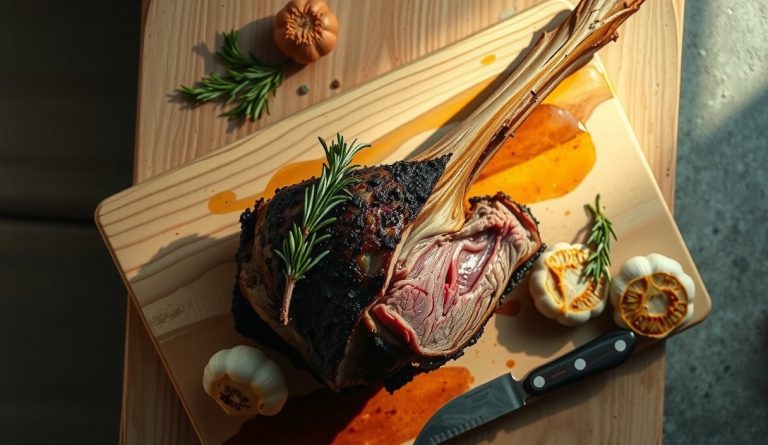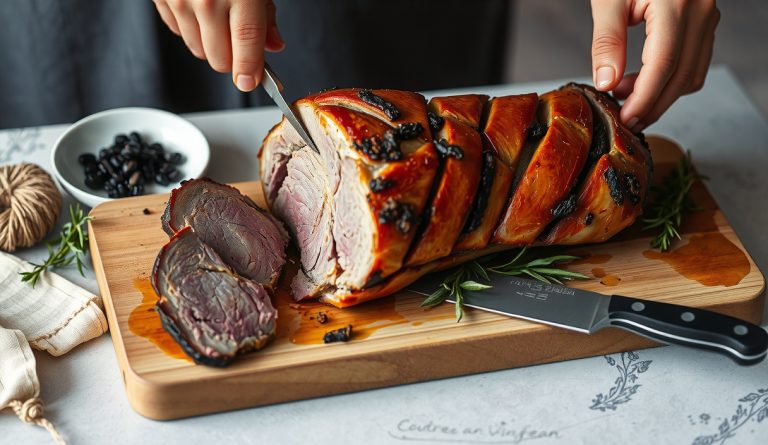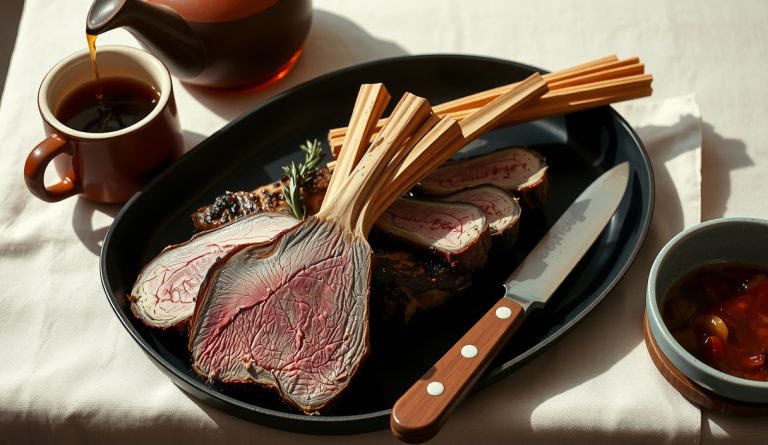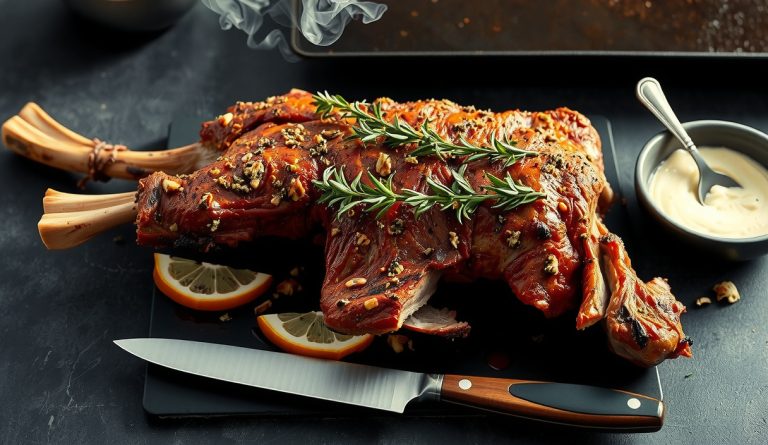
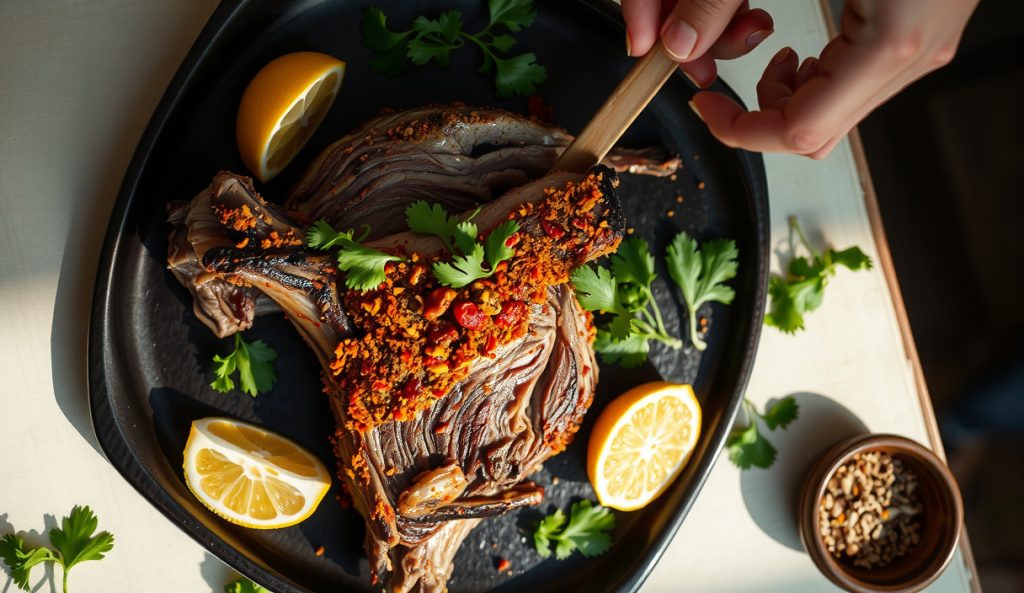
Moroccan and broader North African culinary tradition has centered lamb as its prestige protein for centuries, building a spice vocabulary — cumin, coriander, cinnamon, preserved citrus — that is structurally well-suited to the smoke environment. This chermoula variation swaps the rosemary-Dijon paste for a North African-inspired rub that produces a deeply aromatic bark with a warm, complex finish rather than the resinous, herbal crust of the canonical recipe.
The substitution is not arbitrary. Rosemary’s dominant aromatic compounds are monoterpenes — primarily camphor and 1,8-cineole — that bind to the branched-chain fatty acids responsible for lamb’s characteristic gamey note, moderating perceived intensity. Cumin and coriander bring terpenoid and aldehyde compounds (carvone, linalool, decanal) with a comparable thermodynamic affinity for those same fatty acids. The mechanism of aroma modulation is essentially identical; the sensory destination is entirely different.
What changes with the chermoula crust?
Replace the rosemary-Dijon paste entirely with the following blend, processed to a rough paste in a food processor or mortar: 1 tablespoon ground cumin, 1 tablespoon ground coriander, 1 teaspoon smoked paprika, 1 teaspoon ground cinnamon, a pinch of cayenne, 6 garlic cloves, the juice and zest of one preserved lemon, and 3 tablespoons of olive oil. Apply the chermoula in the same way as the canonical paste — coat the scored surface generously and work the mixture into the slits around the garlic cloves.
Preserved lemon contributes fermented saline brightness that functions similarly to Dijon mustard as both a binder and a flavor bridge between the spice rub and the lamb’s surface fat. Pair the finished roast with charred flatbread and a harissa yogurt sauce in place of the canonical pan sauce.
What stays the same as the original recipe?
The smoker temperature, pull temperature, dry-brine protocol, garlic-studding technique, and resting window are all identical to the canonical recipe. This is a surface-chemistry change, not a structural one. The smoke wood recommendation — cherry or oak — remains appropriate for the chermoula version, as both complement the warm spice profile without competing with it.
When is the chermoula crust the better choice?
Choose the chermoula profile when the occasion calls for a Middle Eastern or North African table spread, when guests find rosemary’s resinous note too assertive, or when a visually distinctive bark matters. The cinnamon and smoked paprika deepen the Maillard crust to a mahogany-brick tone that photographs and plates with more visible color complexity than the rosemary version.
Use the full method, equipment, and structural technique from the original Smoked Leg of Lamb — Garlic-Rosemary Crust.