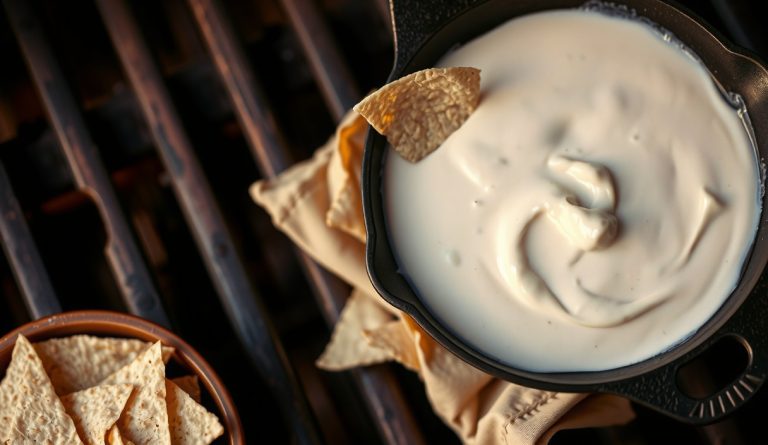
Velveeta’s convenience is structural, not cosmetic. Its emulsifying salts — primarily sodium citrate and disodium phosphate — keep casein proteins from aggregating and fat from separating when the cheese is heated. Natural cheeses lack those salts, which is why a bowl of shredded cheddar heated over a flame produces a greasy, broken puddle instead of a smooth dip. This natural-cheese variation does not ask you to abandon real cheese; it asks you to add the one ingredient — sodium citrate — that makes natural cheese behave like processed cheese.
What changes when you swap Velveeta for natural cheese?
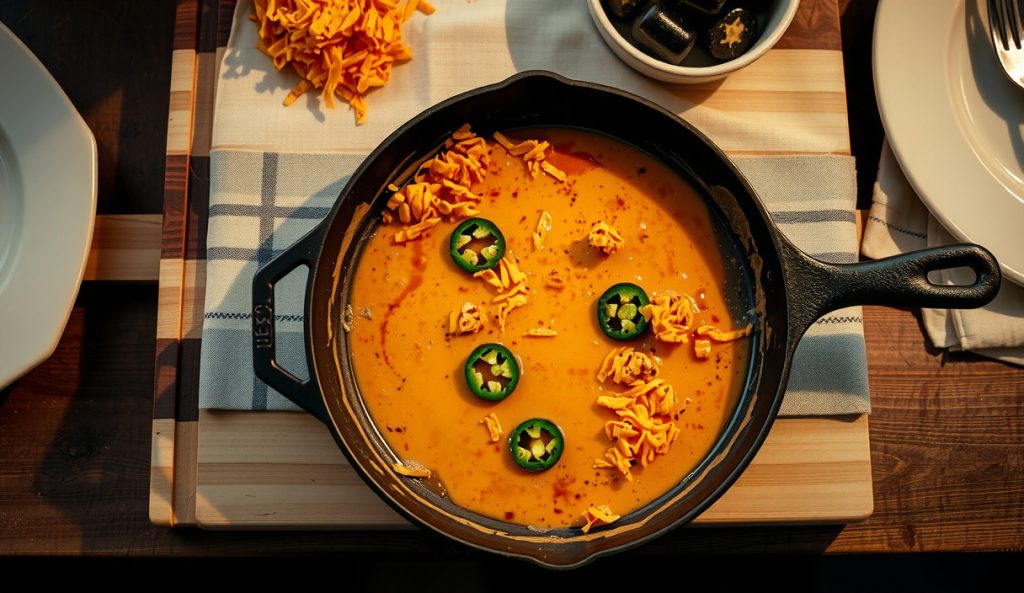
Replace the Velveeta entirely with a 50/50 blend of shredded Monterey Jack and sharp cheddar — one pound total per batch. Before anything goes into the foil pan, dissolve approximately 14 grams of food-grade sodium citrate (just under one tablespoon by weight) in two tablespoons of water. Add the sodium citrate solution to the pan first, then add the shredded cheese on top of it.
The citrate ions chelate calcium ions in the casein matrix, preventing the proteins from cross-linking during heat exposure. This keeps the emulsion intact as fat renders out and the cheese melts — the same mechanism at work inside every block of Velveeta, now replicated from scratch using natural cheese.
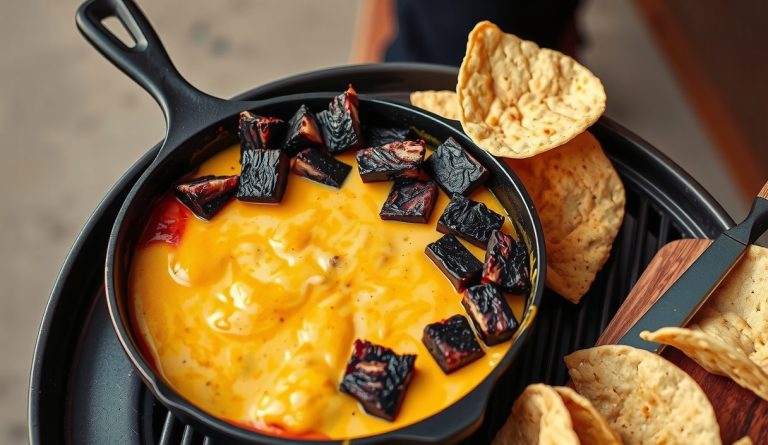
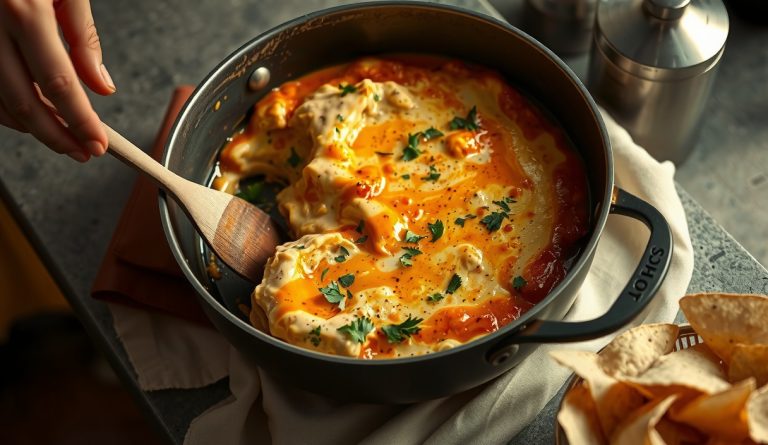
Do not add the Rotel or pre-cooked chorizo until the cheese has been on the smoker for approximately 20 minutes and the emulsion has visibly established — the surface should look smooth and cohesive rather than grainy or separated. Once the cheese base is stable, add the Rotel and chorizo and continue the cook as written for the remaining 40 minutes, stirring at the usual intervals. Adding acidic Rotel too early — before the emulsion sets — can tip the balance toward protein aggregation and produce a broken sauce. The citrate is present in sufficient concentration to prevent this, but staging the additions gives you a margin of safety.
What stays the same in this natural-cheese version?
Grill temperature (250°F), total cook time (approximately 60 minutes after the emulsion establishes), foil pan format, pellet wood selection, and all chorizo prep steps remain unchanged from the canonical recipe. The stir schedule applies from the 20-minute mark onward, once the Rotel and chorizo have been added.
When is the natural-cheese variation the better choice?
Choose this variation when flavor complexity matters more than convenience — natural Monterey Jack and aged cheddar deliver a sharper, more layered dairy profile than processed cheese can. This variation is also the right choice for guests who prefer to avoid processed food products entirely.
The tradeoff is a narrower margin for error: without precise sodium citrate measurement (14 grams) and the staged addition sequence, the dip will break. The process is not difficult, but it is less forgiving than the Velveeta-based canonical. Accurate measurement and patience at the 20-minute mark are the two non-negotiable steps.
Pan setup, chorizo cooking method, pellet recommendations, and serving suggestions are all detailed in the original Smoked Queso Dip (Pellet Grill).