Kansas City sauce is not traditionally a hot sauce — it leads with sweetness and a slow molasses finish. But a meaningful contingent of pitmasters wants that richness to carry real capsaicin heat, not merely the whisper of chili powder. This variant adds cayenne and a splash of liquid hot sauce to push the sauce firmly into spicy territory without disrupting its signature body or gloss.
What changes to make this Kansas City sauce spicy?
Add 1 teaspoon of cayenne pepper alongside the chili powder, and stir in 1 tablespoon of Crystal or Frank’s RedHot at the same point you would normally add the Worcestershire. Cayenne increases the free capsaicin load substantially — capsaicin and its analogue dihydrocapsaicin bind TRPV1 thermoreceptors with far greater aggression than the milder capsaicinoids in standard chili powder, so even a single teaspoon shifts the perceived heat ceiling noticeably.
The liquid hot sauce contributes additional acetic acid from its fermented mash base. Because the canonical recipe is already balanced around a specific pH window using apple cider vinegar, reduce the ACV by roughly 1 teaspoon to compensate and keep the sauce from reading too sharp on the palate. The rest of the acid-sweetness ratio holds.
No adjustment to reduction time is needed. Capsaicin is heat-stable and does not volatilize meaningfully during the cook, so the heat you build in is the heat you get in the finished jar. Taste the spicy Kansas City sauce at the 20-minute mark before it thickens to its final viscosity — the sauce will taste slightly hotter than the cooled product because capsaicin perception is amplified at elevated temperatures.
What stays the same in the spicy Kansas City variant?
The tomato paste and ketchup base, the full molasses quantity, the onion-and-garlic aromatic foundation, the brown sugar, and the reduction target all remain identical. This spicy variant is still unambiguously a Kansas City sauce — thick, glossy, and sweet-forward — with heat layered on top rather than substituted in.
When is the spicy Kansas City sauce the better choice?
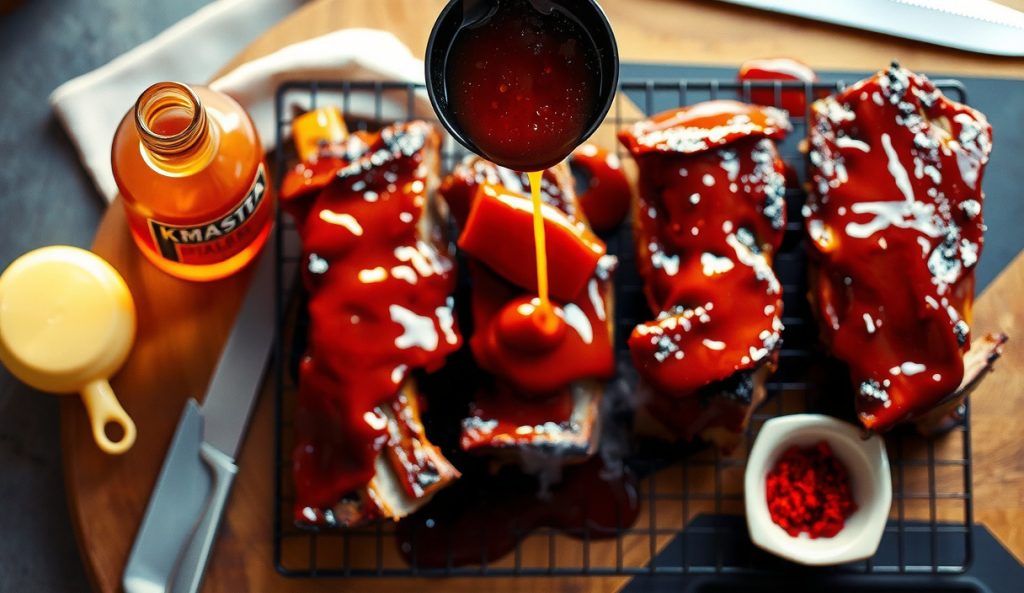
Serve this version when the table includes guests who find the canonical sauce too mild, or when you are building a glaze for beef short ribs or burnt ends where a higher Maillard crust benefits from competing bitterness and heat rather than pure sweetness. The spicy Kansas City sauce also works well as a dipping sauce paired with smoked sausage, where capsaicin heat cuts the fat more decisively than the original.
Use the full method, equipment, and base measurements from the original Kansas City BBQ Sauce — Molasses-Tomato.