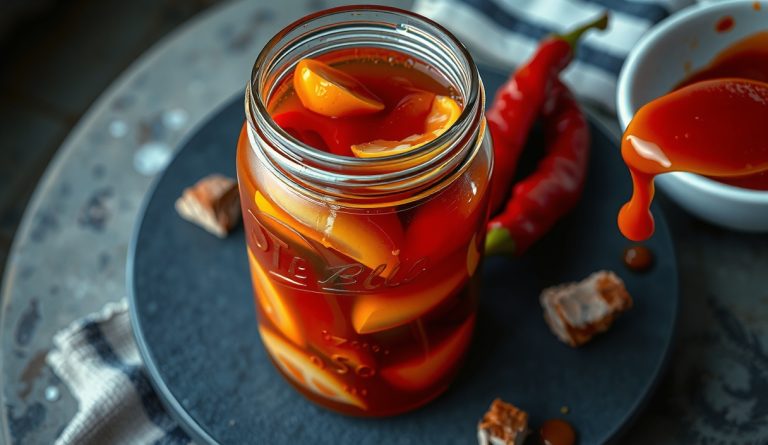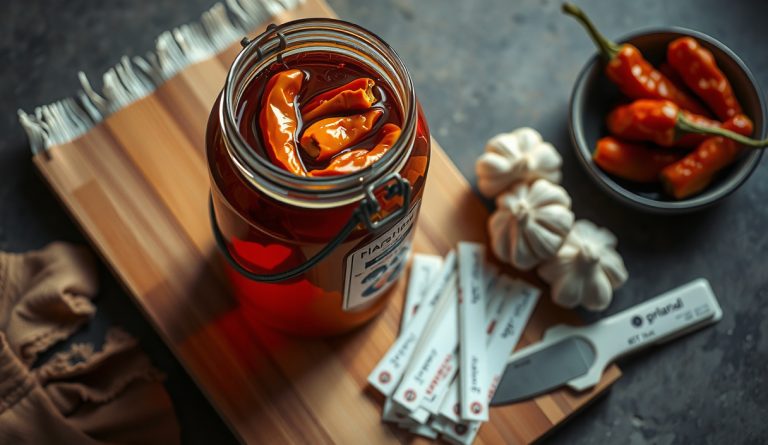
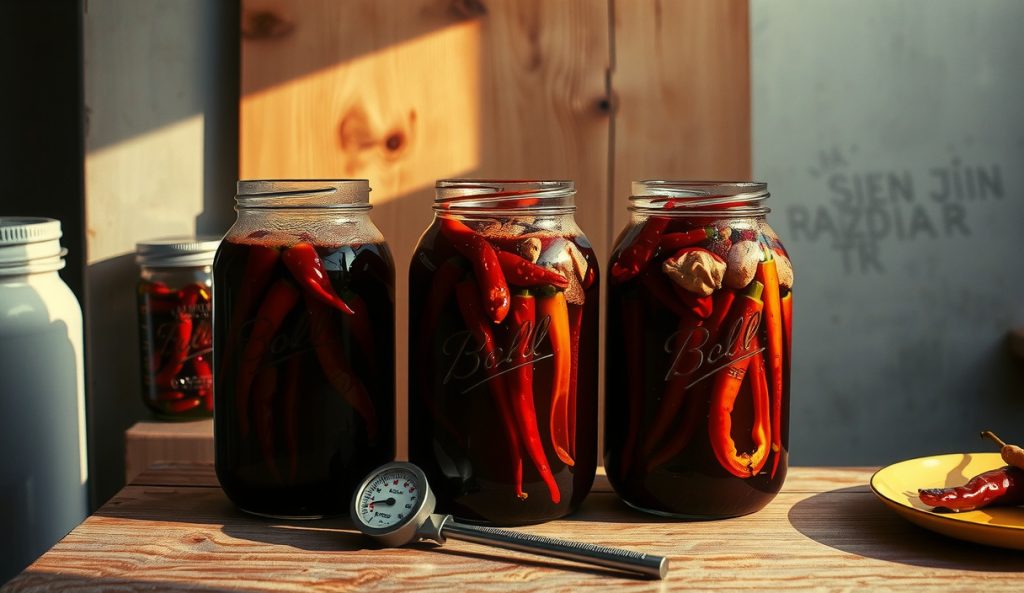
One of the structural advantages of a brine-based lacto-ferment is that it scales with near-perfect linearity. The canonical brine ratio — 3.5 grams of non-iodized salt per 100 mL of filtered water, a 3.5% w/v concentration — holds at any batch size without adjustment. For a double batch, a half-gallon wide-mouth jar accommodates the increased volume comfortably while maintaining the headspace needed for CO2 off-gassing and a secure fermentation weight to keep all solids submerged.
What changes when you scale up a lacto-ferment?
Fermentation time is not governed by volume — it is governed by microbial kinetics, ambient temperature, and the ratio of available substrate to salt concentration. Doubling or tripling the batch does not extend the seven-day target window in any meaningful way under standard conditions. What does shift is thermal behavior: larger vessels carry greater thermal mass and insulate their interior more effectively than small jars. In a cool room or during seasonal temperature swings, a half-gallon vessel may run 2–4°F cooler at its thermal center than a pint jar sitting in the same location, occasionally adding 12–24 hours to the total timeline before the pH target is reached.
For this reason, increase pH monitoring frequency on large batches — check twice daily starting on day four rather than once daily. Use a calibrated pH meter rather than strips at this scale, as the precision margin matters more when a single batch represents significant ingredient investment. All solids must remain fully submerged; a larger fermentation weight or a purpose-built fermentation lid with an airlock is worth the investment at half-gallon scale and above.
What stays the same no matter the batch size?
The following parameters are unchanged at any batch size: the 3.5% w/v brine ratio, the pH target of 3.4–3.6, the smoking step, the ambient temperature recommendation of 65–75°F, and the blending and straining process after fermentation. No starter culture is required for scaled batches as long as brine concentration remains at 3.5% w/v.
When is a large-batch fermentation the better choice?
Scale up when producing lacto-fermented smoked pepper hot sauce for gifting, restaurant use, or staggered seasonal batches during peak pepper harvest. A single large fermentation run is more efficient than consecutive small batches when the smoking step — the most time-intensive preparation in the process — can be performed once for the full quantity of peppers.
Use the full method, equipment, and rub measurements from the original Lacto-Fermented Smoked Pepper Hot Sauce.