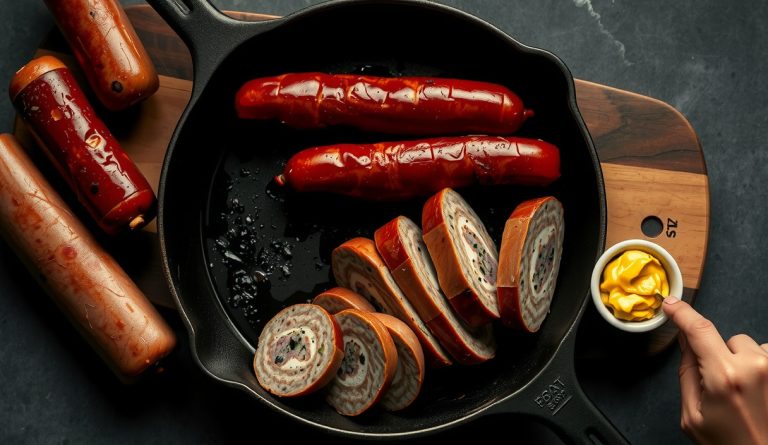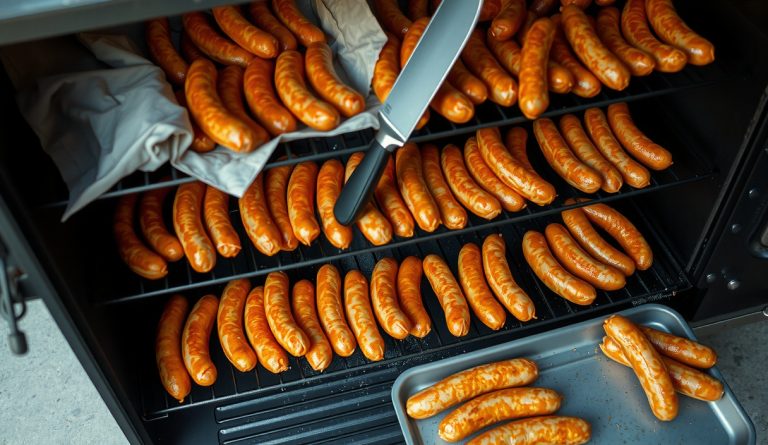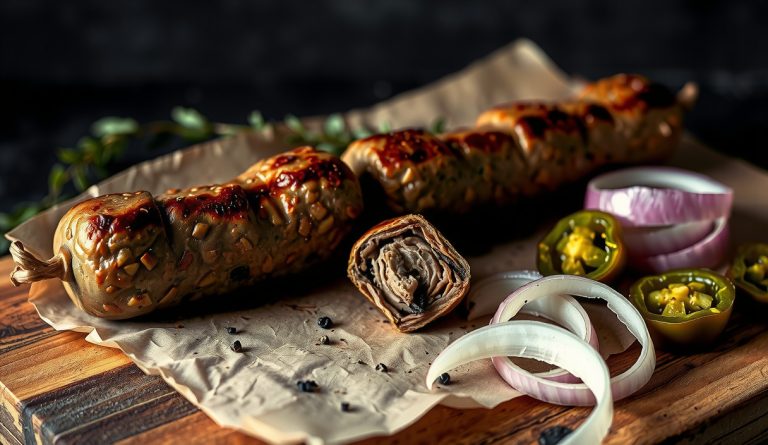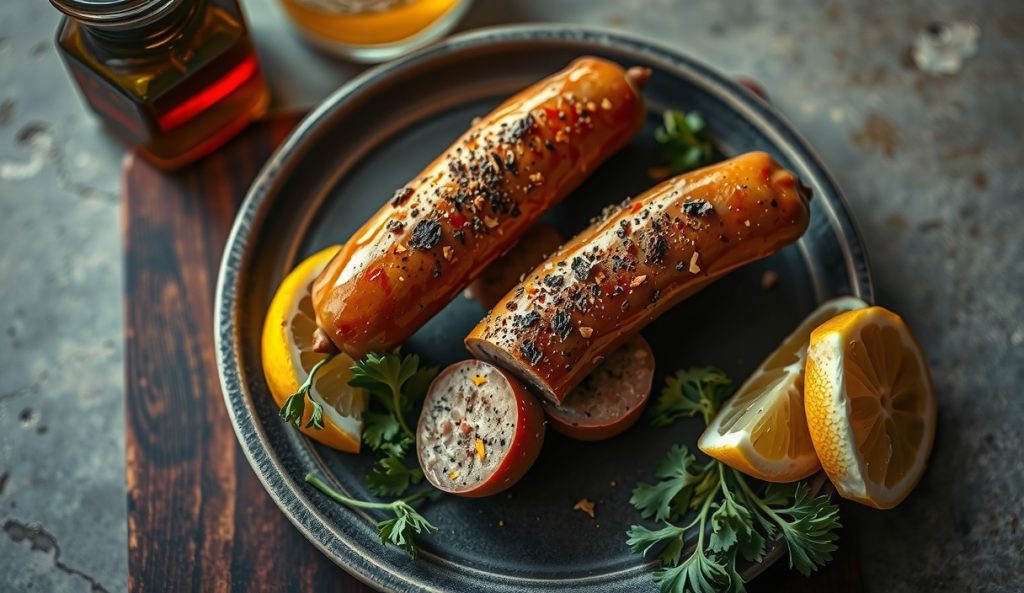
Reducing sodium in a cured, smoked sausage is a more consequential intervention than it is in most BBQ applications, and it deserves an honest accounting of what salt is actually doing before the cutting begins. This adaptation does not eliminate sodium — Prague Powder #1’s cure salt cannot be reduced arbitrarily without compromising food safety — but it achieves a meaningful reduction in total sodium per link through deliberate seasoning reformulation and a targeted flavor-rebuild strategy.
What changes in the low-sodium version?
The cure rate is non-negotiable. Prague Powder #1 at 0.25% of total meat weight is a food-safety floor, not a flavor preference. The sodium nitrite delivered at that concentration suppresses Clostridium botulinum in the anaerobic interior of the casing during the slow climb through the 40–140°F danger zone. Do not reduce the Prague Powder rate. The sodium contributed by the cure at this fixed rate is approximately 200–250mg per pound of meat — a cost that cannot be engineered away.
The seasoning salt is where the sodium reduction lives. Standard Hot Guts recipes call for 1.5–2% total salt by meat weight, with cure salt accounting for roughly 0.5–0.6% of that figure. The remaining seasoning salt component can be cut by 50–60% — dropping from roughly 1% down to 0.4–0.5% of meat weight. That single adjustment reduces total sodium per link from approximately 480–550mg to 280–320mg without altering the cure rate at all.
Bark compensation is required. Salt denatures surface proteins and lowers water activity at the casing wall — both mechanisms that drive bark formation. With less seasoning salt on the low-sodium Hot Guts, bark development will be marginally softer. The fix is to extend the pellicle drying phase from a minimum of 1 hour to 2–3 hours in front of a fan before the smoke begins. Lower surface moisture accelerates the early drying stage inside the smoker that builds the mahogany crust characteristic of Central Texas sausage.
A deliberate flavor rebuild replaces salt’s sensory role. Increase black pepper by 25% — its piperine bite is independent of sodium. Add lemon zest at 1 teaspoon per 5 lbs of meat; the citric acid registers as sharpness that the palate partially interprets as saltiness. Mushroom powder at 0.5% of meat weight contributes glutamate-driven savory depth without adding sodium. If using a potassium chloride salt substitute such as Nu-Salt or NoSalt, cap the substitution at 30–40% of the displaced seasoning salt: above that threshold, potassium chloride produces a metallic-bitter finish that paprika and post oak smoke cannot mask.
What stays the same in the low-sodium Hot Guts?
The 3/8-inch coarse grind, Prague Powder #1 cure rate, post oak smoke at 200°F, and 152°F internal temperature target are all unchanged from the standard recipe. Post oak smoke itself compensates perceptually for reduced sodium: phenolic compounds in post oak smoke activate the same trigeminal receptors that salt does, creating a sensation of depth and intensity that partially bridges the gap left by the reduced seasoning salt.
Who is the low-sodium Hot Guts the better choice for?
This version is appropriate for sodium-restricted diets — cardiovascular, renal, and hypertensive — where the guest still wants the full Central Texas sausage experience. The trade-off is a slightly less aggressive bark and a finish that leans harder on smoke and pepper than on salt. That is a different emphasis, not a lesser sausage.
Full cure rates, stuffing technique, and smoking method are at the original Texas-Style Hot Guts Sausage recipe.