Sous Vide Smoked Chicken Breast
Equipment
- 1 Immersion circulator (sous vide) Must hold 145.0°F ±0.5°F. Verify against a calibrated instant-read thermometer before the cook.
- 1 Large pot or cambro container Minimum 8-quart capacity to allow full water circulation around the bags.
- 1 Vacuum sealer or 1-gallon zipper-lock bags Vacuum seal preferred. Zipper bags work via water-displacement method — submerge until just the zipper is above water, then seal.
- 1 Smoker or kettle grill (indirect setup) Pellet grill at 350°F with apple or cherry pellets is ideal. Kettle charcoal with a fruitwood chunk over 2-zone indirect heat also works.
- 1 Instant-read thermometer Required to confirm the bath temperature and to pull the breast at 150°F during the smoker finish.
- 1 Wire rack over sheet pan For air-drying the breast after the bath. Elevating the breast ensures airflow under the skin.
Ingredients
Chicken
- 4 bone-in, skin-on chicken breast halves 10–12 oz each. Uniform size matters for even bath equilibration. Boneless skinless works — see Variations section.
Dry Brine
- 1 tbsp kosher salt (Diamond Crystal) If using Morton kosher salt, reduce to 2 teaspoons — it is roughly 1.5x denser than Diamond Crystal.
- 1 tsp black pepper, coarsely ground
BBQ Rub (apply before smoker)
- 1 tbsp smoked paprika
- 1 tsp garlic powder
- 1 tsp onion powder
- 1 tsp brown sugar Adds reducing sugars that accelerate Maillard browning and caramelization on the smoker surface.
- 0.5 tsp cayenne pepper Optional. Reduce or omit for a milder profile.
- 0.5 tsp kosher salt
- 1 tsp neutral oil (avocado or refined coconut) Binds the rub to the skin and helps droplet formation for Maillard onset under convective heat.
Wood Smoke
- 2 oz apple or cherry wood chunks (or pellets) Fruitwoods are low-phenol and complement chicken without turning acrid at short exposure times. Avoid mesquite.

Instructions
Dry Brine
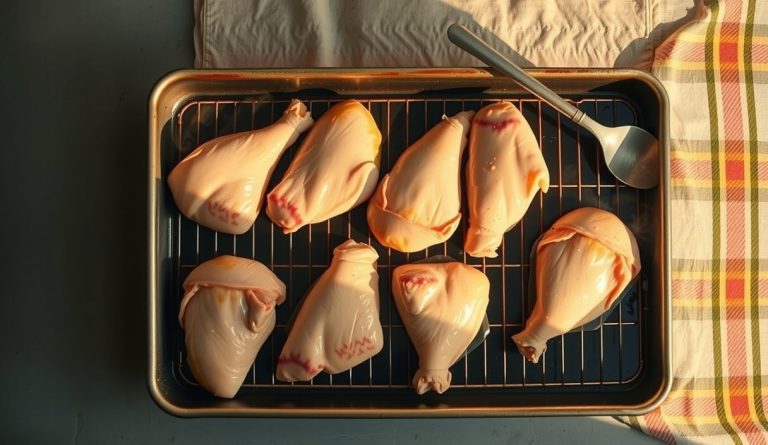
- Pat the chicken breast halves completely dry with paper towels. Combine the kosher salt and coarsely ground black pepper, then season all surfaces of each breast evenly, including under the skin flap if accessible. Place on a wire rack set over a sheet pan, uncovered, and refrigerate for a minimum of 4 hours and ideally overnight (12–16 hours). The salt will first draw surface moisture out, then dissolve and redistribute back into the muscle, raising intracellular ionic strength and improving water-holding capacity during the bath.1 tsp black pepper, coarsely ground
Sous Vide Bath
- Set the immersion circulator to 145.0°F (62.8°C) and allow the bath to come fully to temperature. Verify with a calibrated instant-read thermometer — do not load the chicken until the water is stable at the target.
- Place each breast half in an individual vacuum bag or in a 1-gallon zipper-lock bag using the water-displacement method. Do not crowd multiple large breasts into a single bag — water circulation must contact all surfaces. Seal the bags, removing as much air as possible.
- Submerge the sealed bags in the preheated bath. The bags must be fully submerged; clip to the side of the vessel if needed. Cook at 145°F for 90 minutes. Do not open or disturb the bags during the cook. At 90 minutes the chicken is fully pasteurized and the core is in equilibrium with the bath temperature.
- If finishing immediately: Proceed to the next step. If finishing within 48 hours: Transfer sealed bags to an ice water bath for 15 minutes to chill the core below 40°F, then refrigerate. Remove from the refrigerator 20 minutes before the smoker step.
Pre-Smoke Prep
- Preheat your smoker or indirect grill to a stable 350°F. Add the apple or cherry wood chunks or pellets now so they are smoldering and producing thin blue smoke by the time the chicken goes on. Avoid thick white smoke — it deposits acrid creosote.2 oz apple or cherry wood chunks (or pellets)
- Remove the chicken from the bags and pat every surface thoroughly dry with paper towels — skin-side in particular must be as dry as possible. Wet skin steams instead of crisping. For extra bark development, rest uncovered on the wire rack for 15–30 minutes at room temperature after patting dry.
- Combine all BBQ rub ingredients in a small bowl: smoked paprika, garlic powder, onion powder, brown sugar, cayenne, and salt. Brush or rub the neutral oil lightly over the skin surface, then apply the rub evenly to all sides, pressing gently to adhere. The oil acts as a binder and helps the rub form a continuous reactive surface on the smoker.1 tbsp smoked paprika, 1 tsp garlic powder, 1 tsp onion powder, 1 tsp brown sugar, 0.5 tsp cayenne pepper, 0.5 tsp kosher salt, 1 tsp neutral oil (avocado or refined coconut)
Smoker Finish
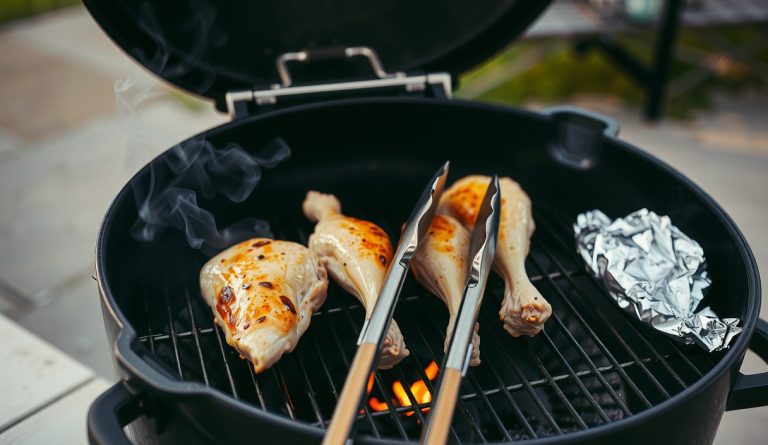
- Place the breasts skin-side up on the smoker grate over indirect heat. Close the lid and cook at 350°F for 12–15 minutes. Do not flip — skin-side up keeps the fat rendering down through the meat and prevents the crust from sticking to the grate.2 oz apple or cherry wood chunks (or pellets)
- Begin probing at the 10-minute mark. Insert an instant-read thermometer into the thickest part of the breast, avoiding the bone. Pull the chicken when the internal temperature reads 148–150°F. The breast is already pasteurized; you are chasing texture, not safety. Above 155°F the actin network begins to stress; above 160°F you have undone the moisture work the bath achieved.
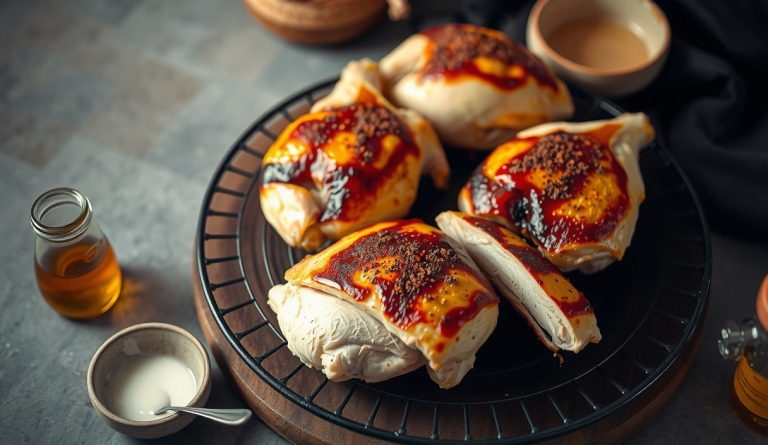
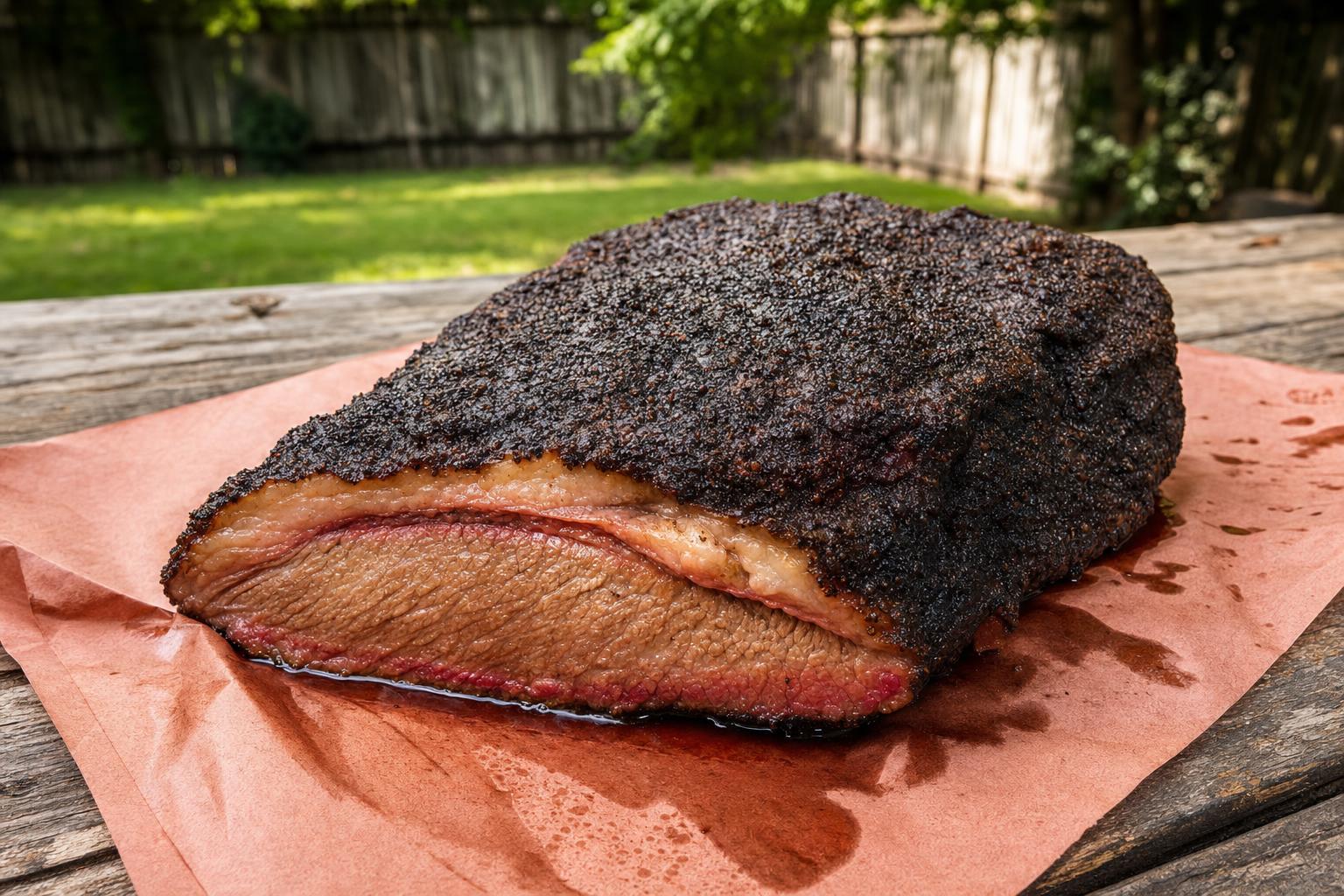
- Transfer the finished breasts to a cutting board and rest loosely tented with foil for 3–5 minutes. The bark will firm slightly as the surface temperature equilibrates. You should see a visible pink smoke ring just below the skin — this is myoglobin reacting with nitric oxide from the wood combustion, a sign of genuine smoke penetration.
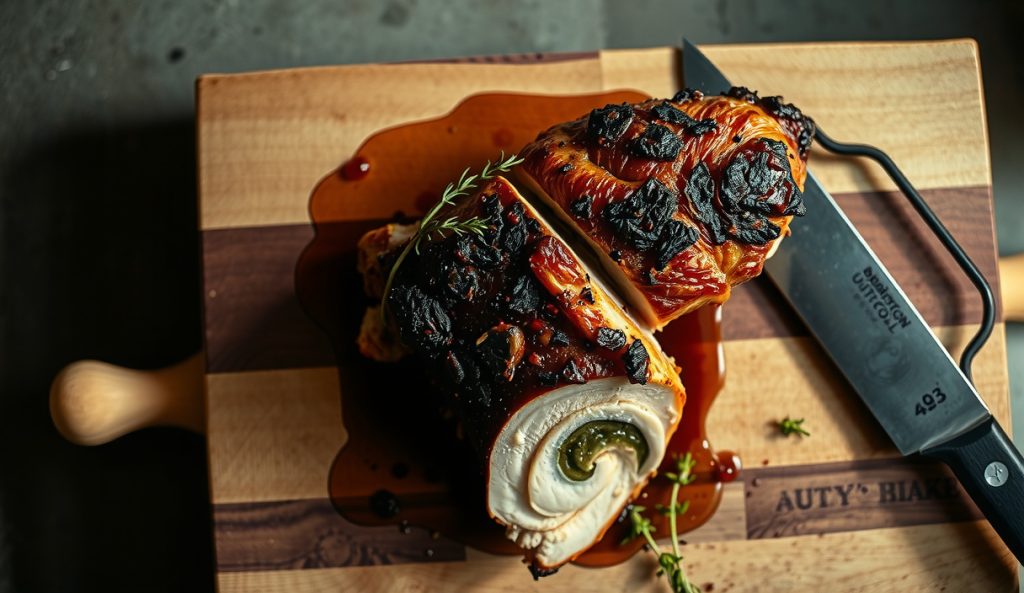
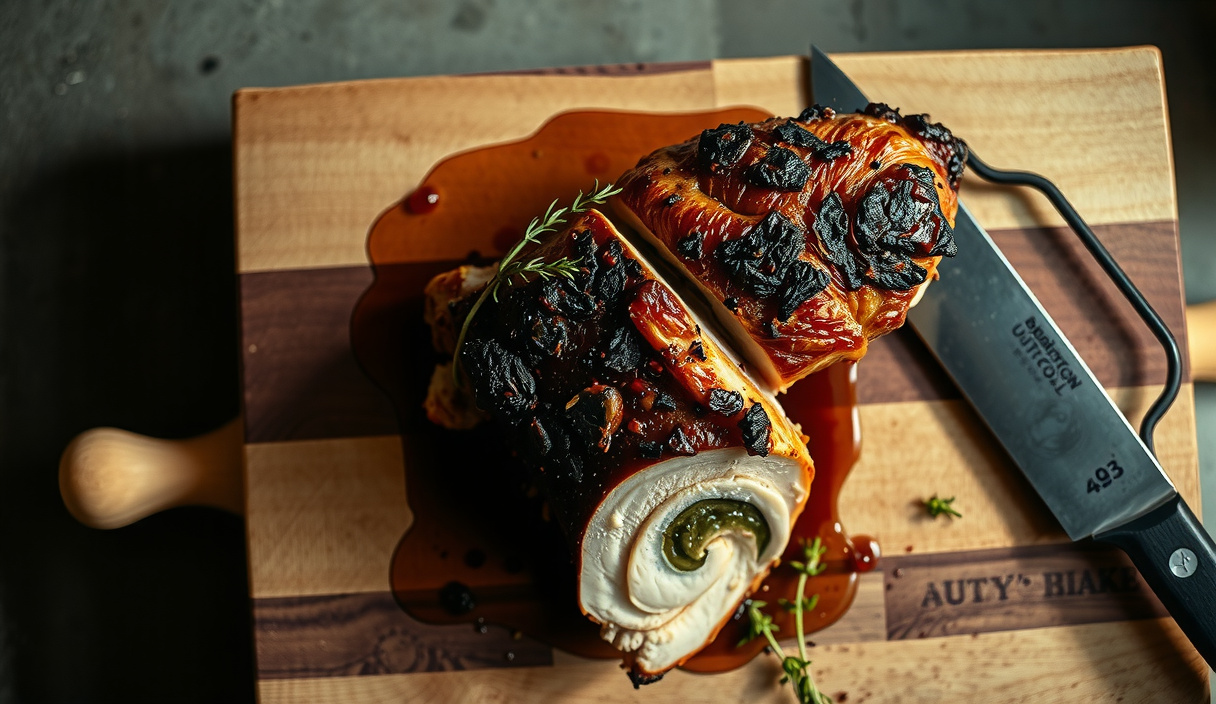
- Slice against the grain at a 45-degree bias, cutting perpendicular to the long axis of the muscle fibers. Serve immediately. The cross-section should show the smoke ring at the perimeter, a uniformly pale-pink silky interior — not white, not chalky, not grey — and a dry, crackling bark on the skin.
Notes
Nutrition
Every pitmaster has stood over a chicken breast that looked perfect from the outside and turned out dry enough to sand drywall. The problem is not the smoker, the rub, or the wood choice. The problem is a physics mismatch baked into the cut itself. Chicken breast is a slab of lean, low-collagen, low-fat muscle tissue that contains almost no internal buffer against overcooking. The moment the core pushes past the actin denaturation threshold — somewhere north of 165°F by conventional guidance — the protein network contracts violently, the water-holding capacity craters, and the result is cotton. This recipe fixes that problem by decoupling pasteurization from cooking.
The approach is two-stage. Stage one: a 90-minute sous vide bath at exactly 145°F pasteurizes the chicken breast to a validated 7-log reduction in Salmonella without pushing the core past the danger zone for actin collapse. The myosin network is long denatured and locked into a tender gel state; the actin stays below its catastrophic 165°F threshold. Stage two: a pre-heated smoker or indirect grill at 350°F gives the skin twelve to fifteen minutes of convective and radiant heat to run a blistering Maillard cascade on the surface — turning pale, wet skin into amber, snapping bark — while the already-pasteurized interior sits protected, well below overcook territory. The result is a breast with a real smoke ring, real bark, and a core that reads 145–150°F on a probe: silky, not stringy.
Why does sous vide smoked chicken breast work? The science
Sous vide smoked chicken breast works because it holds the meat’s core precisely in the post-myosin, pre-actin window, where the texture is tender and the moisture is locked in. Chicken breast muscle is dominated by two protein fractions with radically different thermal personalities: myosin and actin. Myosin begins denaturation around 104–116°F, completing its collapse and forming the primary coagulated gel of cooked chicken between 140°F and 150°F. Actin does not denature meaningfully until 154–165°F, and when it goes, it takes the water with it — the actomyosin complex undergoes violent lateral and longitudinal contraction, expelling intracellular moisture in a process that can drop water-holding capacity by thirty percent or more in minutes.
Traditional roasting blasts past both protein thresholds simultaneously because the oven must be hot enough to generate surface Maillard chemistry, and conduction relentlessly drives heat into the core. A 145°F sous vide bath parks the core precisely in the post-myosin, pre-actin window and holds it there indefinitely while the bath equilibrates every millimeter of the meat — something no conventional oven can replicate.
Pasteurization is a time-temperature relationship, not a single threshold number. The FDA’s validated pathogen-reduction curves for poultry show that 145°F held for 8.4 minutes achieves a 7-log reduction in Salmonella — the same lethality as 165°F instantaneous. Ninety minutes in the bath gives a massive safety buffer beyond what any regulatory body requires, while keeping the core temperature firmly below the actin collapse window. The physics are unambiguous: safe does not require dry. What it requires is time-at-temperature, and that is exactly what a precisely controlled water bath provides.
The smoker finish at 350°F is not reheating — it is surface engineering. At 350°F, convective and radiant energy arriving at the skin surface desiccates the boundary layer in under five minutes, crashing local water activity below the 0.70 threshold that gates Maillard onset. From there, the amino acids and reducing sugars in the skin — concentrated by the dry brine phase — undergo Schiff base formation, Amadori rearrangement, and Strecker degradation, generating the melanoidin pigments and pyrazine-rich volatile profile that constitute bark. Smoke particulates and phenolic compounds (guaiacol, syringol) deposit on this sticky, reactive surface during the same window, embedding smoke flavor directly into the crust. Twelve to fifteen minutes is sufficient; the already-pasteurized interior never climbs past 155°F in that timeframe, preserving the silky texture the bath built.
What equipment and ingredients do I need?
- Immersion circulator: Precision of ±0.5°F or better is non-negotiable. Budget circulators that drift by 2–3°F will either fail pasteurization or climb into the actin-collapse range. Set to 145.0°F and trust the display after verifying with a calibrated instant-read thermometer in the bath.
- Vacuum sealer or zipper bags (displacement method): A proper vacuum seal prevents float and guarantees contact with the water. The water-displacement method in a zipper-lock bag works fine — submerge the bag with the breast inside until only the zipper seal is above water, then seal. No air pockets means no cold spots.
- Smoker or indirect kettle grill: Convective airflow at 350°F is the target. A pellet grill dialed in at 350°F with apple or cherry pellets is ideal. A kettle charcoal grill set for 2-zone indirect with a chunk of fruitwood on the coals also delivers. Chips on a gas grill work in a pinch — they will not produce as deep a smoke ring but will still develop bark.
- Skin-on, bone-in vs. boneless skinless: Skin-on bone-in splits are the best vehicle for this technique — the skin protects the breast during the bath and provides the canvas for bark. Boneless skinless breasts work but skip the bark expectation; pat them bone-dry before the smoker finish and consider wrapping in a strip of thin-cut bacon to replicate the fat layer.
- Dry brine timing: The 4-hour minimum dry brine with kosher salt dissolves and redistributes ionic solutes through the meat, raising the ionic strength of the muscle water slightly and improving water-holding capacity. Overnight (12–16 hours) is measurably better — the salt denatures a thin outer protein layer that seals against moisture loss in the bath.
- Wood choice: Apple and cherry are low-phenol fruitwoods that complement chicken without overwhelming it. Hickory and oak work but can turn acrid at the thin volumes deposited in a 12-minute window. Avoid mesquite for this application.
Sous Vide Smoked Chicken Breast
Equipment
- 1 Immersion circulator (sous vide) Must hold 145.0°F ±0.5°F. Verify against a calibrated instant-read thermometer before the cook.
- 1 Large pot or cambro container Minimum 8-quart capacity to allow full water circulation around the bags.
- 1 Vacuum sealer or 1-gallon zipper-lock bags Vacuum seal preferred. Zipper bags work via water-displacement method — submerge until just the zipper is above water, then seal.
- 1 Smoker or kettle grill (indirect setup) Pellet grill at 350°F with apple or cherry pellets is ideal. Kettle charcoal with a fruitwood chunk over 2-zone indirect heat also works.
- 1 Instant-read thermometer Required to confirm the bath temperature and to pull the breast at 150°F during the smoker finish.
- 1 Wire rack over sheet pan For air-drying the breast after the bath. Elevating the breast ensures airflow under the skin.
Ingredients
Chicken
- 4 bone-in, skin-on chicken breast halves 10–12 oz each. Uniform size matters for even bath equilibration. Boneless skinless works — see Variations section.
Dry Brine
- 1 tbsp kosher salt (Diamond Crystal) If using Morton kosher salt, reduce to 2 teaspoons — it is roughly 1.5x denser than Diamond Crystal.
- 1 tsp black pepper, coarsely ground
BBQ Rub (apply before smoker)
- 1 tbsp smoked paprika
- 1 tsp garlic powder
- 1 tsp onion powder
- 1 tsp brown sugar Adds reducing sugars that accelerate Maillard browning and caramelization on the smoker surface.
- 0.5 tsp cayenne pepper Optional. Reduce or omit for a milder profile.
- 0.5 tsp kosher salt
- 1 tsp neutral oil (avocado or refined coconut) Binds the rub to the skin and helps droplet formation for Maillard onset under convective heat.
Wood Smoke
- 2 oz apple or cherry wood chunks (or pellets) Fruitwoods are low-phenol and complement chicken without turning acrid at short exposure times. Avoid mesquite.
Instructions
Dry Brine
- Pat the chicken breast halves completely dry with paper towels. Combine the kosher salt and coarsely ground black pepper, then season all surfaces of each breast evenly, including under the skin flap if accessible. Place on a wire rack set over a sheet pan, uncovered, and refrigerate for a minimum of 4 hours and ideally overnight (12–16 hours). The salt will first draw surface moisture out, then dissolve and redistribute back into the muscle, raising intracellular ionic strength and improving water-holding capacity during the bath.1 tsp black pepper, coarsely ground
Sous Vide Bath
- Set the immersion circulator to 145.0°F (62.8°C) and allow the bath to come fully to temperature. Verify with a calibrated instant-read thermometer — do not load the chicken until the water is stable at the target.
- Place each breast half in an individual vacuum bag or in a 1-gallon zipper-lock bag using the water-displacement method. Do not crowd multiple large breasts into a single bag — water circulation must contact all surfaces. Seal the bags, removing as much air as possible.
- Submerge the sealed bags in the preheated bath. The bags must be fully submerged; clip to the side of the vessel if needed. Cook at 145°F for 90 minutes. Do not open or disturb the bags during the cook. At 90 minutes the chicken is fully pasteurized and the core is in equilibrium with the bath temperature.
- If finishing immediately: Proceed to the next step. If finishing within 48 hours: Transfer sealed bags to an ice water bath for 15 minutes to chill the core below 40°F, then refrigerate. Remove from the refrigerator 20 minutes before the smoker step.
Pre-Smoke Prep
- Preheat your smoker or indirect grill to a stable 350°F. Add the apple or cherry wood chunks or pellets now so they are smoldering and producing thin blue smoke by the time the chicken goes on. Avoid thick white smoke — it deposits acrid creosote.2 oz apple or cherry wood chunks (or pellets)
- Remove the chicken from the bags and pat every surface thoroughly dry with paper towels — skin-side in particular must be as dry as possible. Wet skin steams instead of crisping. For extra bark development, rest uncovered on the wire rack for 15–30 minutes at room temperature after patting dry.
- Combine all BBQ rub ingredients in a small bowl: smoked paprika, garlic powder, onion powder, brown sugar, cayenne, and salt. Brush or rub the neutral oil lightly over the skin surface, then apply the rub evenly to all sides, pressing gently to adhere. The oil acts as a binder and helps the rub form a continuous reactive surface on the smoker.1 tbsp smoked paprika, 1 tsp garlic powder, 1 tsp onion powder, 1 tsp brown sugar, 0.5 tsp cayenne pepper, 0.5 tsp kosher salt, 1 tsp neutral oil (avocado or refined coconut)
Smoker Finish
- Place the breasts skin-side up on the smoker grate over indirect heat. Close the lid and cook at 350°F for 12–15 minutes. Do not flip — skin-side up keeps the fat rendering down through the meat and prevents the crust from sticking to the grate.2 oz apple or cherry wood chunks (or pellets)
- Begin probing at the 10-minute mark. Insert an instant-read thermometer into the thickest part of the breast, avoiding the bone. Pull the chicken when the internal temperature reads 148–150°F. The breast is already pasteurized; you are chasing texture, not safety. Above 155°F the actin network begins to stress; above 160°F you have undone the moisture work the bath achieved.
- Transfer the finished breasts to a cutting board and rest loosely tented with foil for 3–5 minutes. The bark will firm slightly as the surface temperature equilibrates. You should see a visible pink smoke ring just below the skin — this is myoglobin reacting with nitric oxide from the wood combustion, a sign of genuine smoke penetration.
- Slice against the grain at a 45-degree bias, cutting perpendicular to the long axis of the muscle fibers. Serve immediately. The cross-section should show the smoke ring at the perimeter, a uniformly pale-pink silky interior — not white, not chalky, not grey — and a dry, crackling bark on the skin.
Notes
Nutrition
How do I nail it every time? Tips for success
- Do not skip the ice bath if not smoking immediately: If the gap between the sous vide bath and the smoker is more than 30 minutes, shock the sealed bags in ice water for 15 minutes. This drops the core below 40°F rapidly, preventing the slow creep through the bacterial danger zone (40–130°F). Refrigerate and smoke within 48 hours.
- Dry the skin aggressively before the smoker: Use paper towels and press firmly. Wet skin steams instead of crisping. If time allows, leave the breasts uncovered on a wire rack in the refrigerator for 1–2 hours after opening the bags — this air-dries the surface and accelerates bark formation on the smoker.
- Do not chase a high finish temperature: Pull the breast at 150°F internal — it has been pasteurized for 90 minutes at 145°F, so food safety is not the question. The question is texture. At 155°F the actin is beginning to stress; above 160°F the work the bath did is being erased. Trust the process.
- Manage smoker temperature, not smoke volume: Thick, billowing white smoke deposits acrid creosote. The target is thin blue smoke. If the smoker is dumping white smoke, open the vents wider, let the combustion stabilize, and introduce the chicken only when the smoke clears to nearly invisible.
- Rest briefly, not long: Three to five minutes tented loosely with foil allows the surface temperature to equalize slightly and firms the bark. Unlike a large brisket, a chicken breast does not need a long rest — the moisture is already locked in by the bath, not by carryover equilibration.
- Slice against the grain at a bias: Chicken breast has long, parallel myofibrils. Slicing perpendicular to them shortens the effective fiber length in each bite, reducing the perception of chewiness. A 45-degree bias maximizes surface area and makes a standard breast look genuinely impressive on the board.
What variations can I make with this technique?
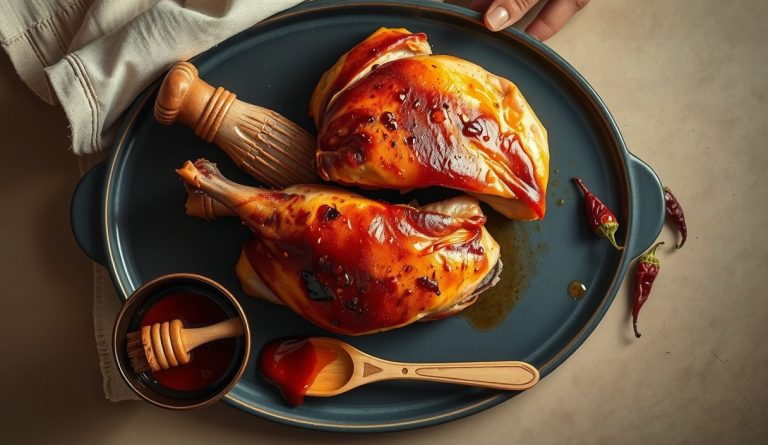
Honey-chipotle glaze: In the final 3 minutes of the smoker finish, brush the skin with a mixture of 2 tablespoons honey, 1 teaspoon chipotle powder, and 1 teaspoon apple cider vinegar. The honey provides reducing sugars that dramatically accelerate Maillard browning and caramelization at 350°F, creating a lacquered, deeply colored glaze. Watch closely — sugars burn fast. Pull immediately when the glaze sets to a glossy, tacky surface.
Boneless, skinless version: Skip the dry brine and instead brine in a 5% salt solution (50g kosher salt per 1 liter water) for 30–60 minutes before bagging. The wet brine adds sodium ions and water to the muscle fibers directly, offsetting the lack of a protective fat layer. After the bath, pat completely dry, brush with a thin coat of high-smoke-point oil (avocado or refined coconut), apply rub, and finish on the smoker. The bark will be thinner but still present.
Scaling for a crowd: The sous vide bath scales linearly as long as the bags are not crowded — the circulator needs to maintain even water circulation around every bag. Use multiple bags with one or two breasts each rather than stacking four into a single bag. The smoker grate space is the limiting factor on the back end; a full 22-inch kettle can handle six to eight halves in one pass. The rub recipe scales directly by weight.
Indirect-grill finish without a dedicated smoker: Set a kettle or gas grill for two-zone indirect cooking at 350°F. For a kettle, bank coals to one side and add one fist-sized chunk of apple or cherry wood directly on the coals. On a gas grill, place a foil pouch of soaked wood chips over a lit burner, leave the opposite burners off, and cook the chicken on the unlit side. Smoke penetration will be less than a dedicated smoker produces, but the technique and timing remain identical.
Frequently asked questions
Is 145°F actually safe for chicken? Yes, per validated FDA pathogen-reduction tables. Lethality is a function of time at temperature. At 145°F held for 8.4 minutes, poultry achieves a 7-log (99.99999%) reduction in Salmonella — the same lethality as an instantaneous 165°F reading. Ninety minutes at 145°F is orders of magnitude beyond the required safety threshold. The meat will look slightly pink and feel silky rather than firm — that is the correct result, not an undercooked one.
Can I do the sous vide step the night before? Absolutely. After the bath, immediately transfer the sealed bags to an ice water bath and chill for 15 minutes until the core is below 40°F, then refrigerate in the sealed bags for up to 48 hours. When ready, pull the bags 20 minutes before the smoker finish to let the surface temperature rise slightly — a refrigerator-cold breast going directly onto a hot grate will take longer to develop bark and risks a temperature overshoot on the outer centimeter while the cold core catches up.
What if I do not have a smoker — can I use a cast iron pan sear instead? Yes, though the smoke ring and bark will be traded for a deep brown sear crust. After the bath, dry the breast aggressively, then sear in a pre-heated cast iron pan with a neutral high-smoke-point oil at the highest heat the burner can produce — 500°F surface temperature or above. Sear skin-side down for 90 seconds without moving, flip for 30 seconds, then finish with a baste of clarified butter and thyme. The smoke-ring chemistry will not occur, but the Maillard surface will be excellent and the interior will be identically silky.