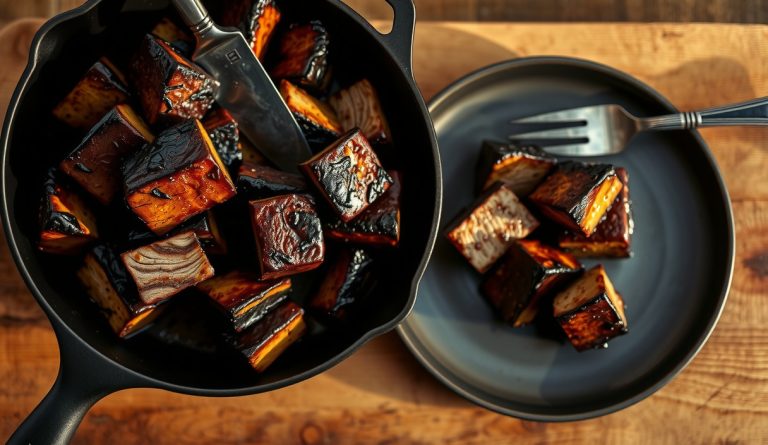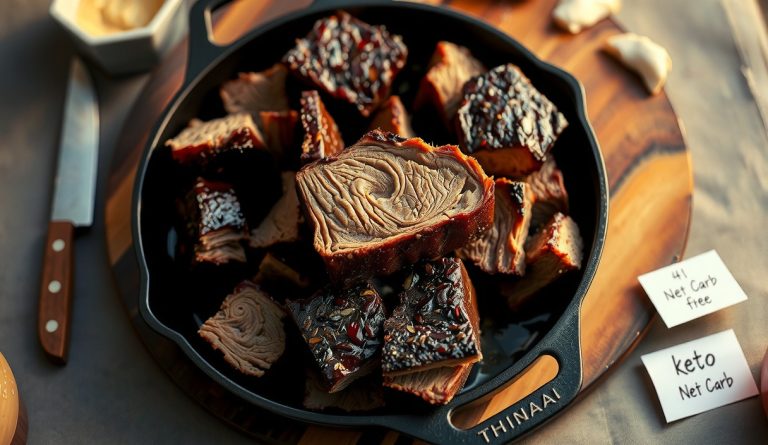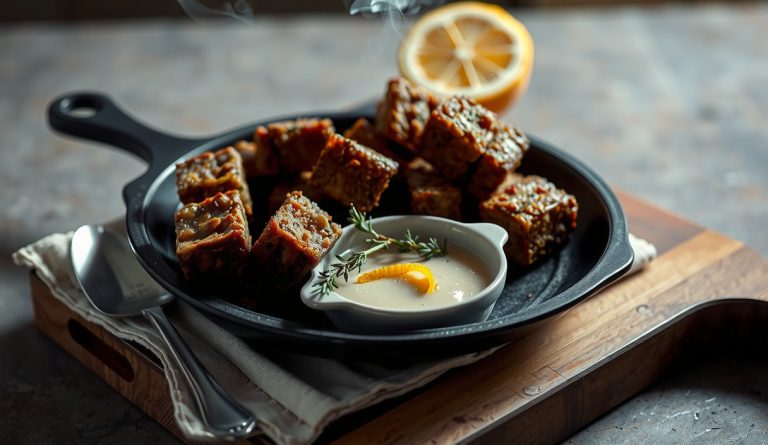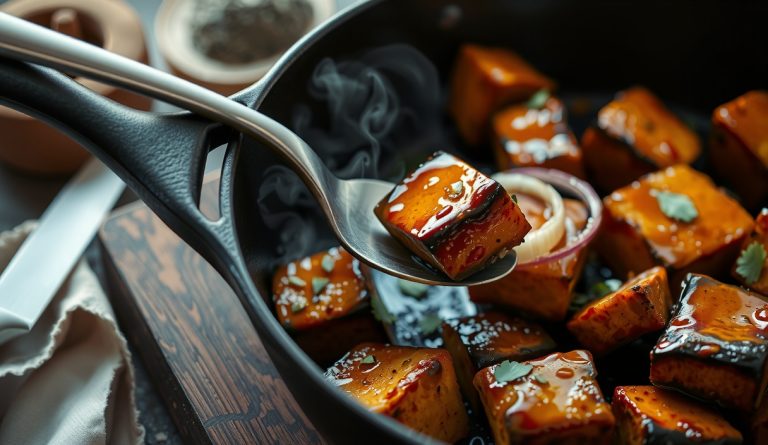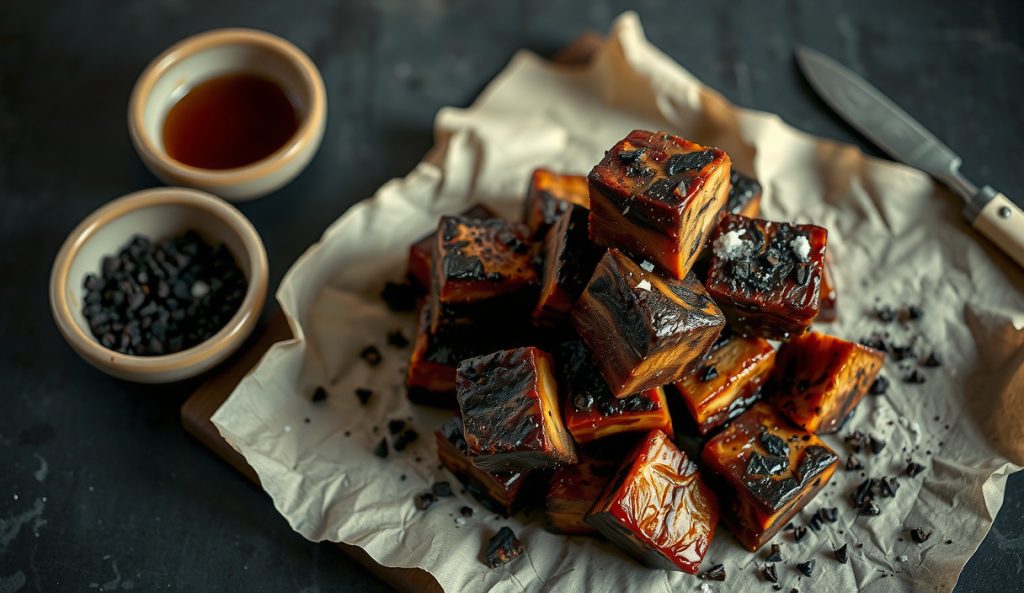
Central Texas barbecue occupies a distinct philosophical lane from Kansas City: where KC leans into sweet-tangy glaze and mahogany lacquer, the central Texas tradition strips back to beef, smoke, salt, and pepper. This variant applies that ethos to the burnt end format — same cube geometry, same double-cook structure, no sauce whatsoever.
The result is closer in character to the bark-heavy exterior of a smoked beef rib than to a traditional burnt end. These Texas-style burnt ends reward cooks who find the KC sweet profile cloying and want to taste Maillard compounds and smoke phenolics without competition from sugar.
What changes in the Texas-style build?
After cubing the cooked brisket point, toss the cubes in rendered brisket tallow — fat collected from the initial cook or from a separate trim render — using enough to lightly coat each surface without pooling. Season aggressively with coarse-ground black pepper and kosher salt, then return the cubes to the smoker at 275°F uncovered, with no covered braise phase at any point.
Because no sugar is present in the coating, caramelization does not occur. Bark development is driven entirely by Maillard browning of the meat proteins and the oxidative polymerization of the tallow layer. The resulting bark is thinner and more brittle than the KC build, but savory intensity is noticeably higher.
The tallow layer performs two functions simultaneously: it bastes the cube surface during the return smoke, and it carries fat-soluble smoke phenolics — guaiacol and syringol — deeper into the exterior crust than a water-based sauce would allow. This amplifies perceived smokiness without adding cook time.
What stays the same as the Kansas City original?
The brisket point is still smoked low and slow to full probe tenderness before any cubing occurs. Cube size, smoker temperature for the initial cook, and the resting protocol all carry over from the canonical Kansas City method. The structural logic — cook the whole muscle to collagen conversion, then expose maximum surface area for a second bark phase — is identical between the two builds.
When is the Texas-style build the better choice?
Choose this build when serving guests who prefer savory over sweet, when pairing with acidic sides like pickled onions or vinegar slaw that would clash with a sweet glaze, or when working with a particularly high-quality brisket whose beef flavor you do not want masked. It is also the correct move if your rendered tallow is rich and well-seasoned from the cook — waste nothing.
- Serving guests who prefer savory over sweet profiles
- Pairing with acidic sides — pickled onions, vinegar slaw — that would clash with a sweet glaze
- Showcasing a high-quality brisket whose beef flavor should not be masked
- Using rich, well-seasoned rendered tallow from the cook
Use the full method, equipment, and rub measurements from the original Kansas City Burnt Ends.