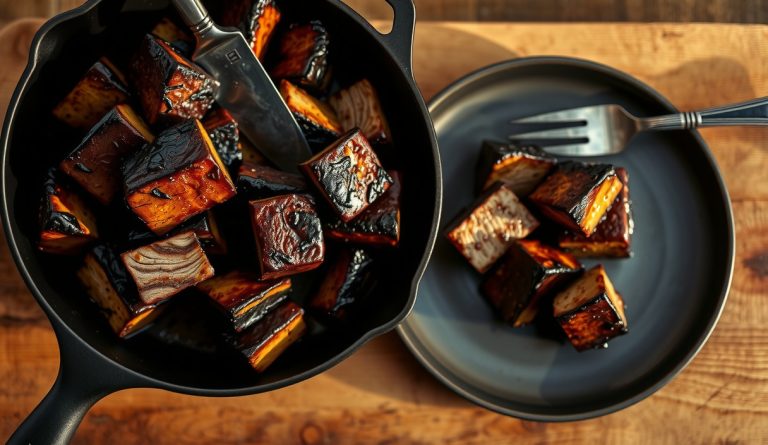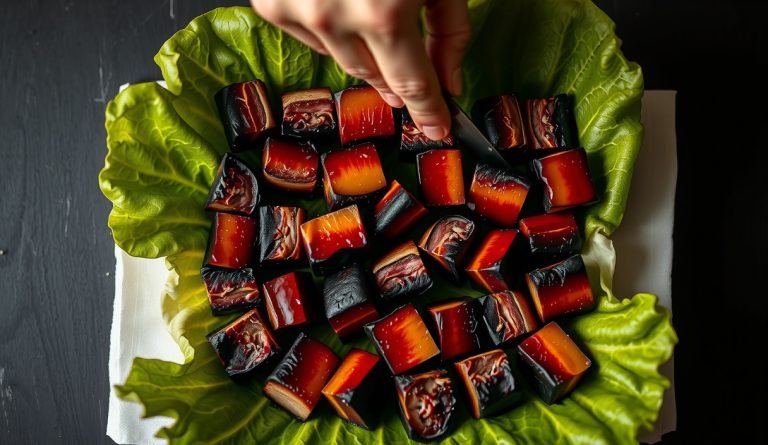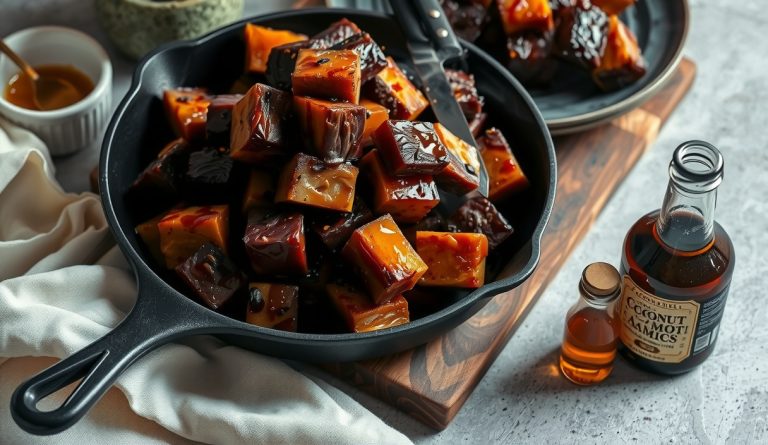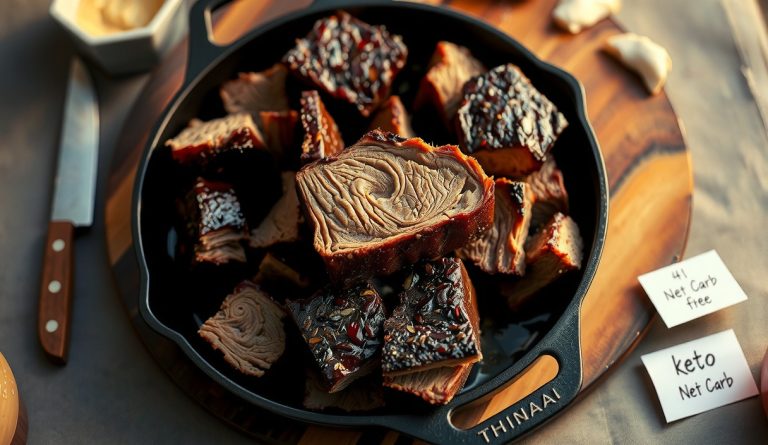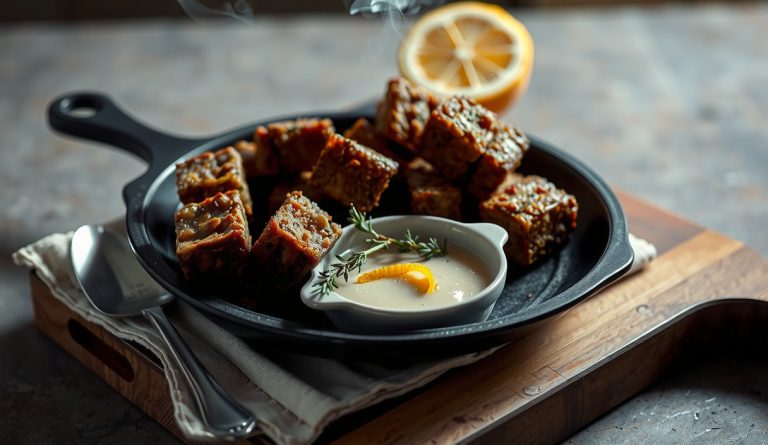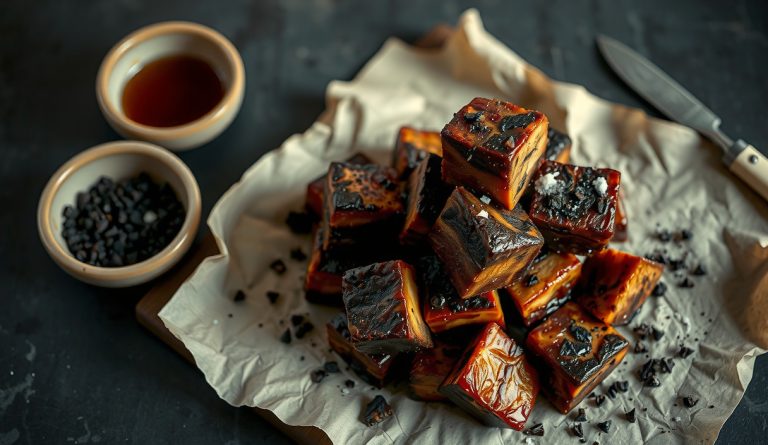
For competition catering runs or large-format service, the canonical single-point Kansas City Burnt Ends recipe scales more gracefully than most braise-dependent barbecue preparations — but the scaled version has one critical constraint that is easy to miss until you are already committed to a pan of steamed, under-glazed cubes. Understanding precisely where the physics hold and where they break down saves the cook before it matters.
What changes when you scale up Kansas City Burnt Ends?
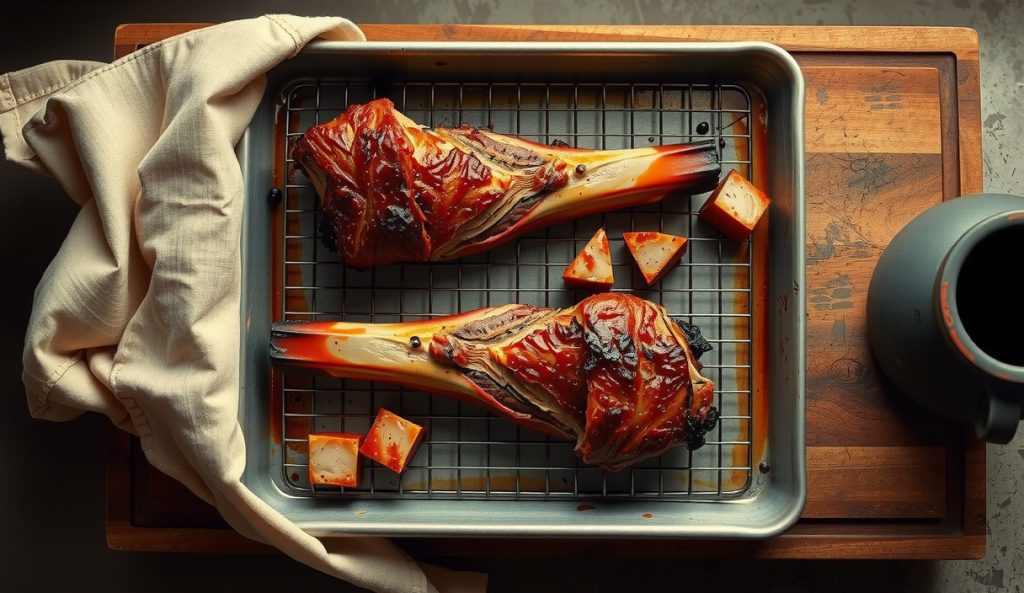
The initial smoke phase scales linearly. Two or three brisket points placed on separate grate positions cook identically to a single point, provided they are not stacked and maintain adequate spacing — at minimum 2 inches between pieces — for unobstructed air and smoke circulation. Crowding disrupts convective heat flow and creates cold zones that delay bark formation and produce uneven probe tenderness across the batch.
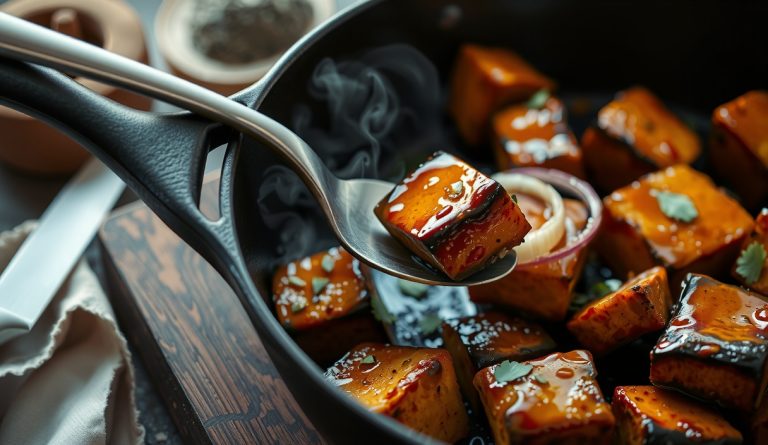
The braise phase does not scale the same way. When more than approximately 4 pounds of cubes are loaded into a single half-pan, the combined thermal mass of the cubes and the moisture they release during braising raises the equilibrium vapor pressure inside the covered pan enough to shift the cooking environment from glazing to steaming. Steam-cooked burnt ends lose bark integrity entirely, emerging with a soft, pale exterior instead of the lacquered crust the method is designed to produce. The fix is structural, not temporal: use multiple half-pans, keep cubes in a strict single layer with minimal overlap, and distribute sauce evenly across all pans. Braise-phase cook time does not change regardless of how many pans are in use.
What stays the same no matter how large the batch?
All temperatures, cube dimensions, sauce ratios per pound of trimmed point meat, and the uncovered return-phase timing remain identical to the canonical single-point method. Scale the rub and sauce quantities linearly by total weight of trimmed point meat. The double-bark logic — full cook to probe tenderness, cube, braise, return uncovered — does not change at any batch size.
When is scaling up the right call?
Any time you are feeding more than 8 people, running a competition turn-in alongside other meats, or staging burnt ends for catering service where hold time matters, scaling up is simply necessary. The single-layer pan rule — no more than 4 pounds of cubes per half-pan — is the only meaningful operational change. Planning your pan count before you cube is the entire difference between a scaled batch that performs identically to the original and one that disappoints.
Use the full method, equipment, and rub measurements from the original Kansas City Burnt Ends.