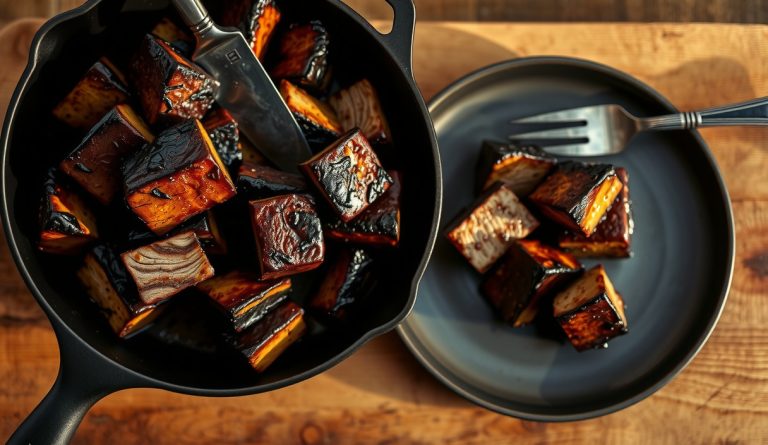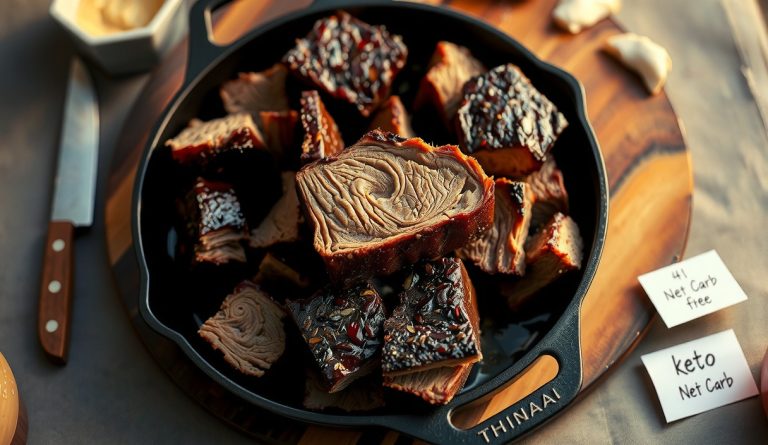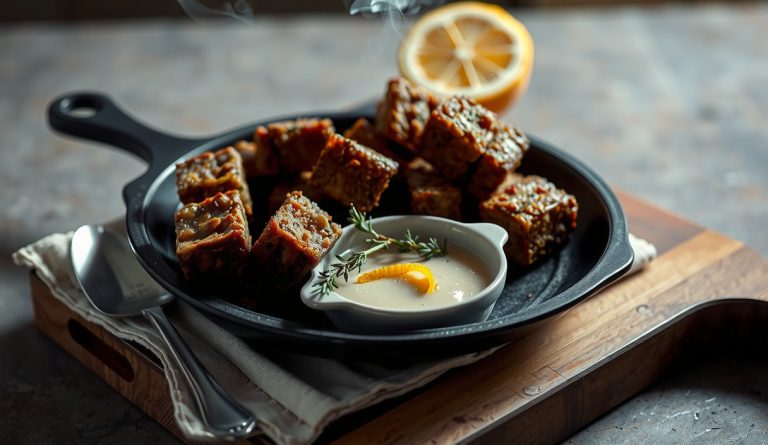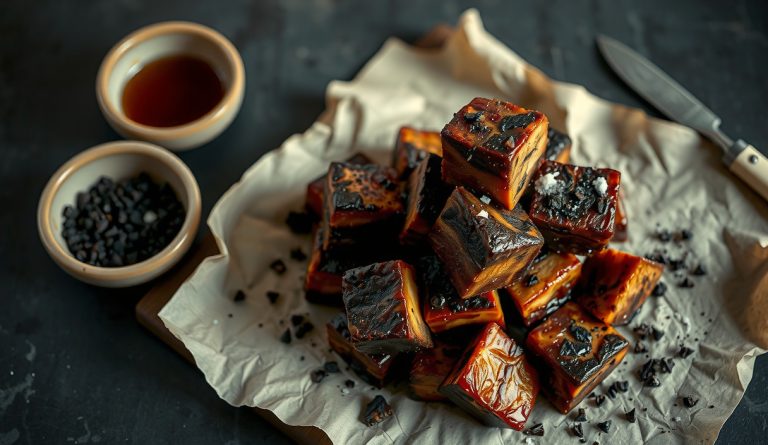
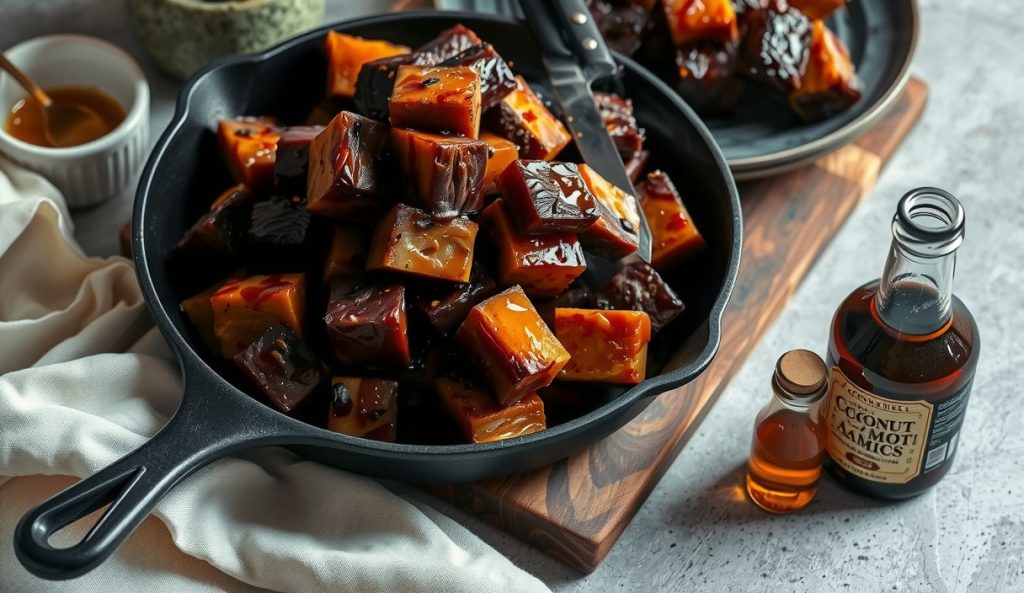
Gluten-free Kansas City Burnt Ends are less an adaptation than a verification exercise. The dry rub components — spices, sugars, salt — contain no gluten. The smoked brisket point is unprocessed whole muscle. Kansas City–style barbecue sauce is almost universally gluten-free by formulation. The one ingredient that demands label scrutiny before committing to a fully certified GF batch is Worcestershire sauce.
What needs to change for a gluten-free batch?
Check the label on your Worcestershire sauce before using it in a certified gluten-free batch. Several widely distributed brands — particularly some British-origin formulations — use malt vinegar as the acidulant. Malt vinegar is barley-derived, and barley contains hordein, a prolamin protein in the same family as wheat’s gliadin. For individuals managing celiac disease, cross-reactivity with hordein is clinically significant, not merely a labeling technicality.
If your Worcestershire sauce lists malt vinegar, replace it with a certified gluten-free Worcestershire — several major brands now carry GF certification and are widely available — or substitute with a combination of coconut aminos and tamarind concentrate. Use approximately 1 tablespoon of coconut aminos plus 1 teaspoon of tamarind concentrate per tablespoon of Worcestershire called for in the recipe.
The coconut aminos and tamarind substitution works because it replicates the functional flavor chemistry of Worcestershire: coconut aminos delivers fermented umami depth and background sweetness from coconut sap sugars, while tamarind concentrate contributes the tartaric and malic acid brightness that defines Worcestershire’s characteristic tang. The resulting flavor profile will be marginally fruitier and slightly less anchovy-forward, but the functional role in the sauce is equivalent.
What stays exactly the same?
Every other component, quantity, temperature, timing, and technique in the canonical recipe carries over without modification. The gluten-free version is not a reformulation — it is a single-ingredient audit. The double-bark method, the braise phase, the return smoke, and all rub and sauce ratios are identical to the original.
When is the gluten-free version the right call?
Run this verification checklist any time you are cooking Kansas City Burnt Ends for a guest managing celiac disease, non-celiac gluten sensitivity, or a medically prescribed gluten-free diet. The checklist is also worth running when serving large groups where dietary needs are unknown — the substitution costs nothing in flavor and eliminates the risk entirely.
Use the full method, equipment, and rub measurements from the original Kansas City Burnt Ends.