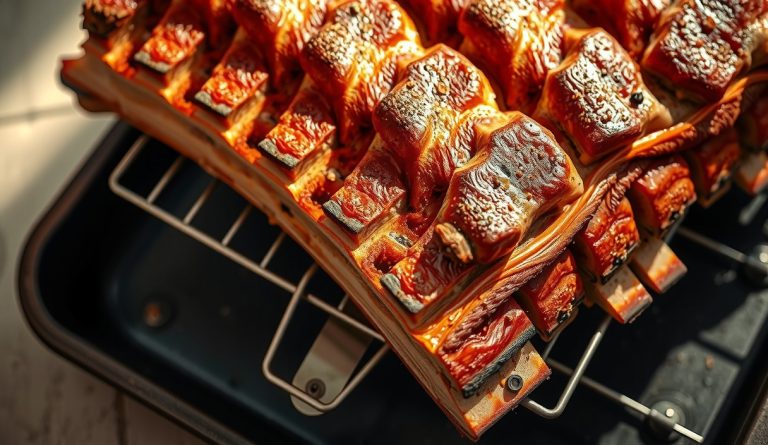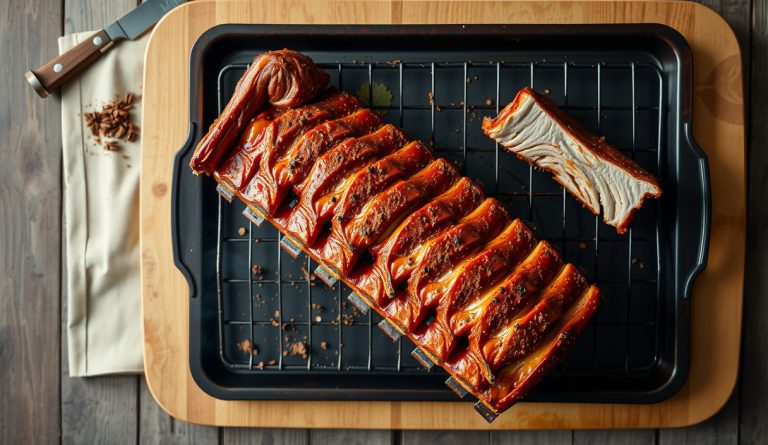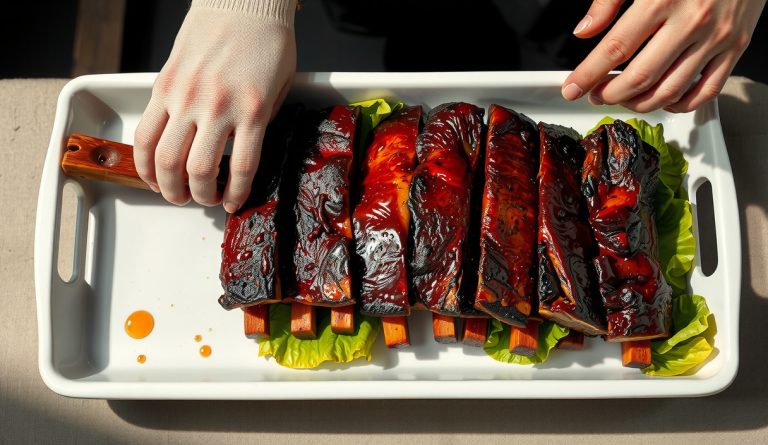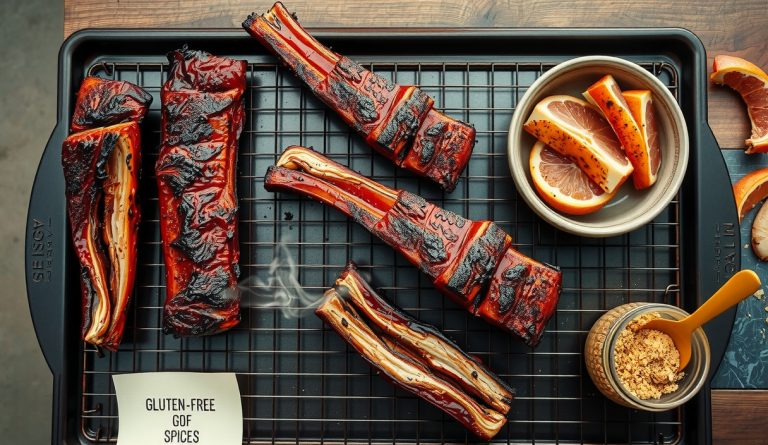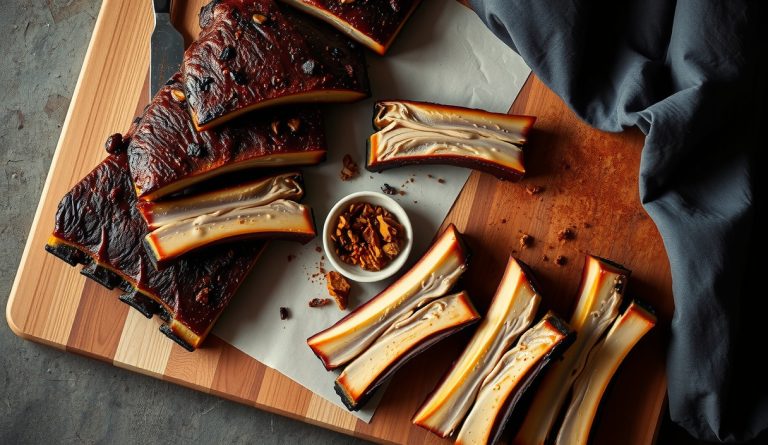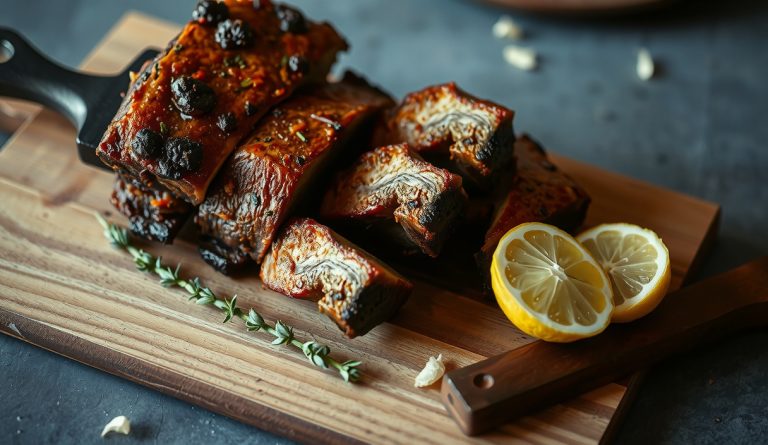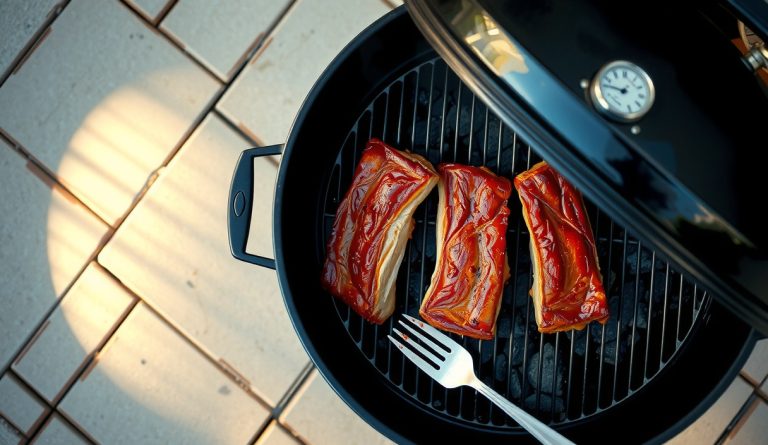
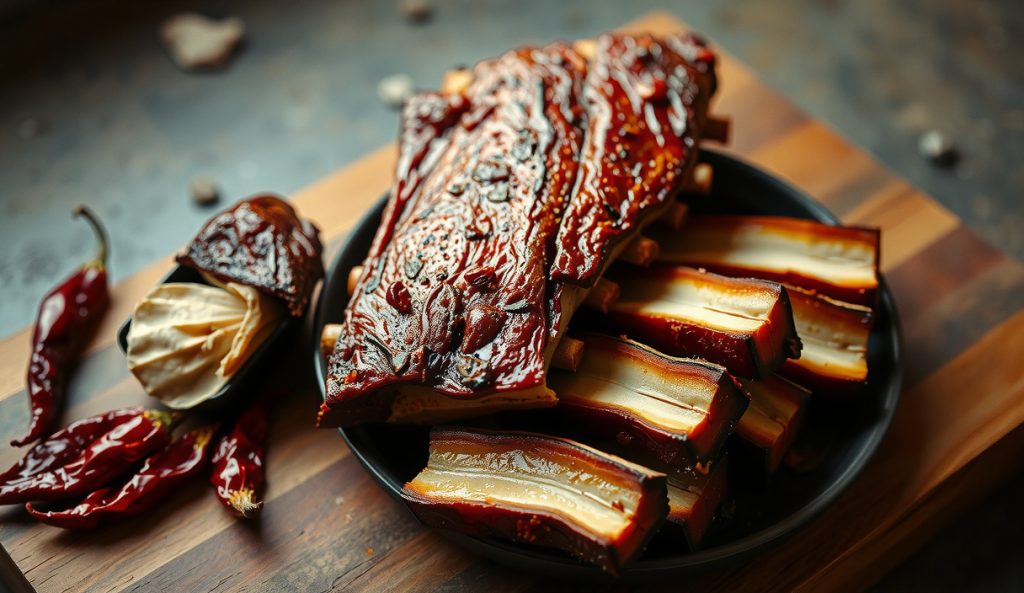
Memphis barbecue has always carried a spicy undercurrent beneath its sweeter rub tradition. This hot variant pushes heat to the foreground by reallocating part of the smoked paprika budget into cayenne and hot pimentón, then grounding the blend with ancho chile powder for fruit-forward low notes that apple wood smoke amplifies rather than fights. The result is a rack where heat arrives in waves — immediate from cayenne, slower from pimentón, and lingering and slightly smoky from ancho — without any single element dominating the crust.
What changes in the hot Memphis variant?
In the rub, replace one tablespoon of smoked paprika with one teaspoon of cayenne and one teaspoon of hot pimentón (Spanish smoked hot paprika), then add one-quarter teaspoon of ancho chile powder. The remaining smoked paprika stays in place to preserve the foundational color and smokiness of the Memphis dry-rub spare ribs.
Critically, reduce the brown sugar by half. Brown sugar begins caramelizing at approximately 320°F at the rub surface; at elevated capsaicin levels, that caramelization onset compounds the perception of heat and can push the bark into bitterness. Cutting the sugar slows this Maillard-adjacent reaction and keeps the savory crust dominant rather than a scorched-sweet one.
Capsaicin and dihydrocapsaicin — the primary heat compounds in cayenne — are fat-soluble and bind to the intramuscular fat that renders during the cook. The heat therefore deepens as the rack rests. Pull the ribs and tent them for a full 15 minutes before slicing; guests who cut immediately often find the rack noticeably milder than those who waited out the rest period.
What stays the same as the base recipe?
The 3-2-1 time structure, all non-chile rub quantities (cumin, garlic, black pepper, and salt), apple wood smoke selection, and the bend-test doneness standard remain completely unchanged in this hot variant. Only the chile profile and the brown sugar level shift from the original formula.
When is the hot Memphis variant the better choice?
This hot variant is the right call for guests who reach for hot sauce by default, or for cooks pairing the rack with a cooling side — creamy coleslaw, white bread, or a vinegar-spiked cucumber salad — that can absorb and balance the heat. The chile-forward rub rewards those pairings in ways the standard rub does not.
The variant also suits apple or cherry wood cooks specifically: both woods carry a natural sweetness that tempers capsaicin perception and makes the ancho chile’s fruit notes more legible than they would be over hickory or mesquite. Over those stronger woods, the ancho tends to disappear into the smoke rather than complement it.
Use the full method, equipment, and base rub measurements from the original Memphis Dry-Rub Spare Ribs.