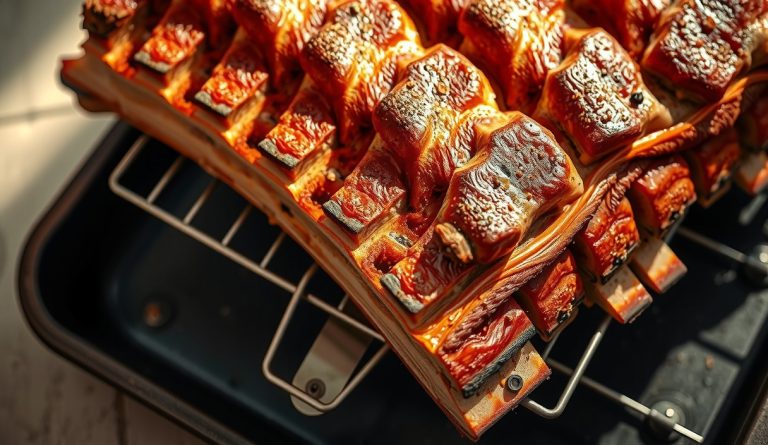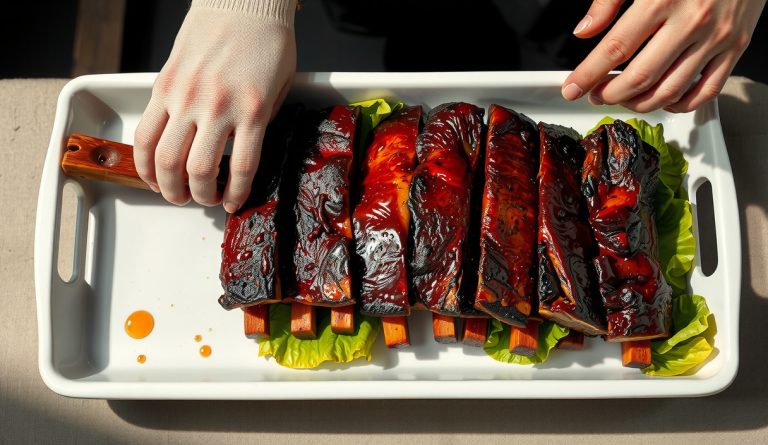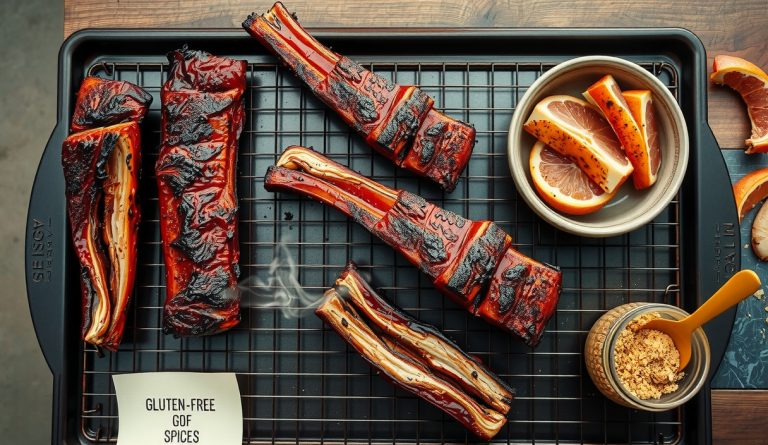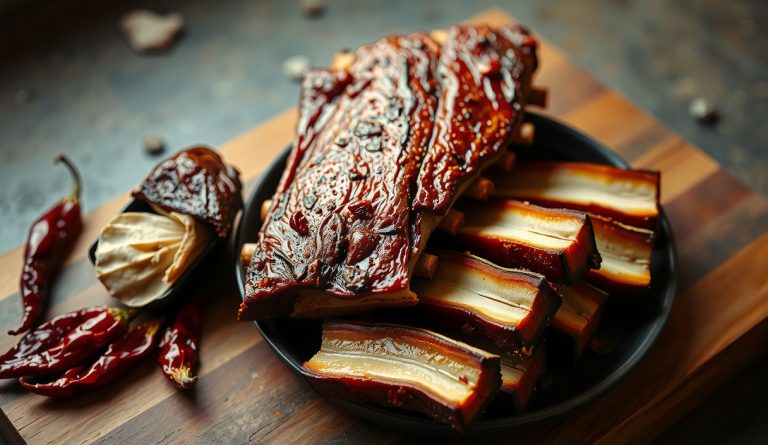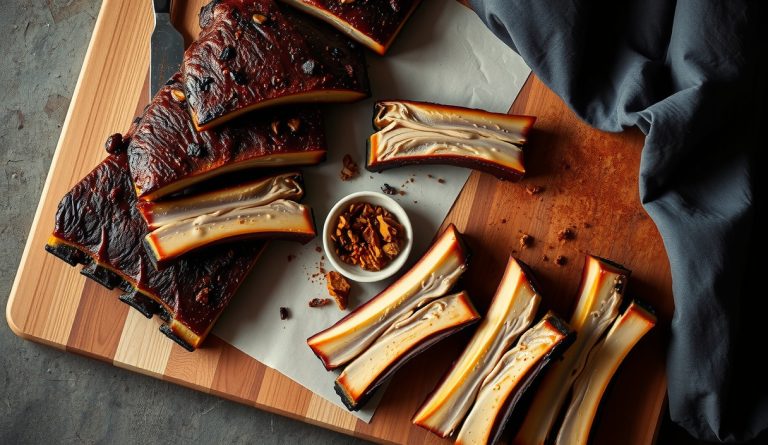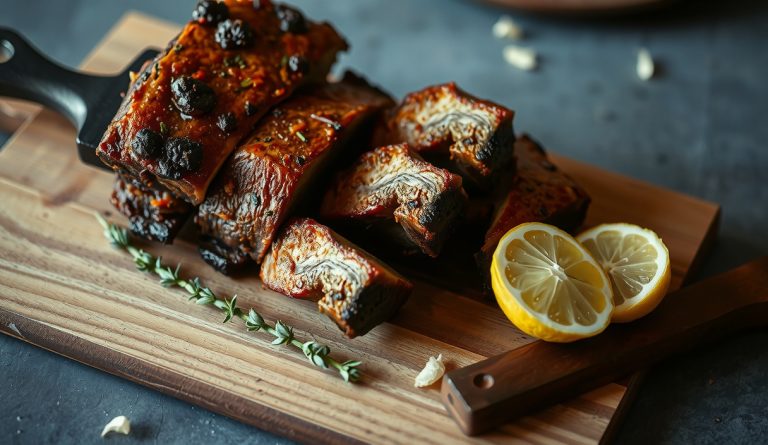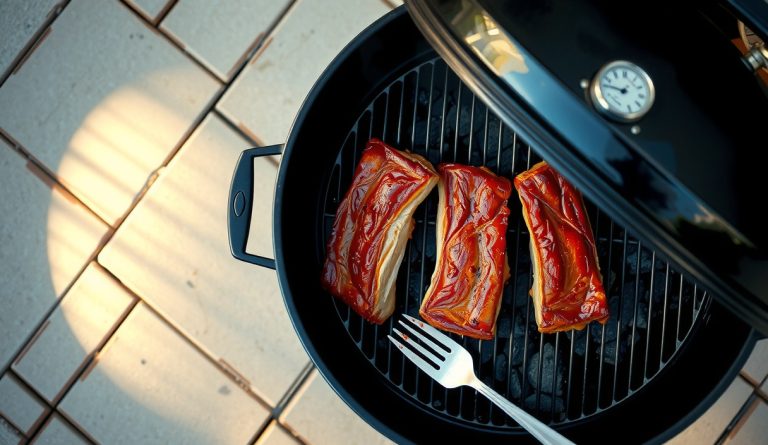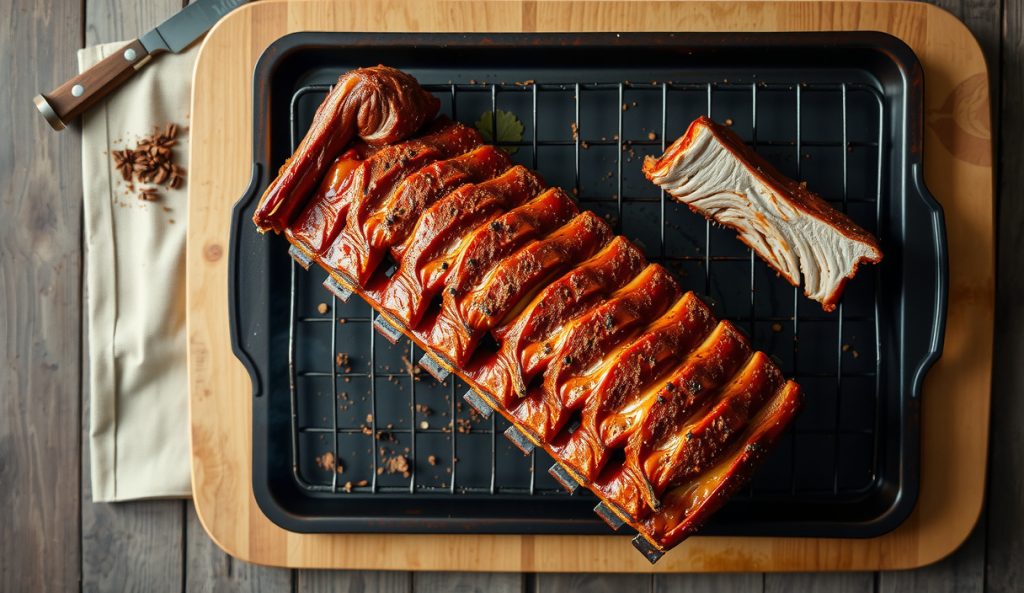
Baby back ribs are a leaner, smaller cut than St. Louis-trimmed spare ribs. The same dry rub and smoke tradition applies perfectly, but the classic 3-2-1 timing structure is calibrated for the higher collagen load and fat content of spare ribs. Running baby backs through the full six-hour method produces ribs that have gone past tender into mushy, with bark that has had too long to toughen. The fix is a proportional scaling of each phase — not a different recipe.
What changes when you scale the 3-2-1 method for baby backs?
Scale the three-phase structure to 2-2-1 as a starting point, or tighter at 2-1.5-0.5 for racks under 2 pounds. The unwrapped smoke phase drops from three hours to two because baby backs carry significantly less intramuscular collagen than spare ribs. Collagen-to-gelatin conversion — the hydrolysis reaction that produces tenderness — proceeds at roughly the same rate per unit of connective tissue, but there is simply less of it to convert. Overcooking the unwrapped phase desiccates the thin meat layer over the bone before the wrapped phase even begins.
The wrapped phase also shrinks because the shorter braising window is sufficient to complete gelatin conversion without steaming the bark entirely off. The final unwrapped phase runs 30 to 60 minutes and is primarily for bark recovery; it can be shortened if the surface firms up early. These reductions are proportional responses to the cut’s anatomy — not shortcuts.
All rub quantities in the canonical recipe apply without adjustment. Baby backs absorb the rub faster due to their thinner meat layer, which means the same gram-for-gram application produces equivalent flavor penetration in less time. Do not reduce rub quantities — the bark is what carries the Memphis character on this leaner cut.
What stays the same between spare ribs and baby backs?
The bend test is the authoritative doneness signal regardless of cut. A properly done rack — spare or baby back — bends 45 degrees or more when lifted from one end and shows a clean crack in the bark surface. Pit temperature, smoke wood selection, and rub composition are all unchanged from the original spare rib method.
When is the baby back scaling the better choice?
Use this scaling when baby backs are what the market has, when you need a shorter overall cook window, or when you are feeding guests who prefer leaner ribs with less chew. Baby backs also present more uniformly on the plate — a practical advantage for plated service over a buffet where spare ribs’ irregular ends can be awkward to portion.
Use the full method, rub formula, and doneness guidance from the original Memphis Dry-Rub Spare Ribs.