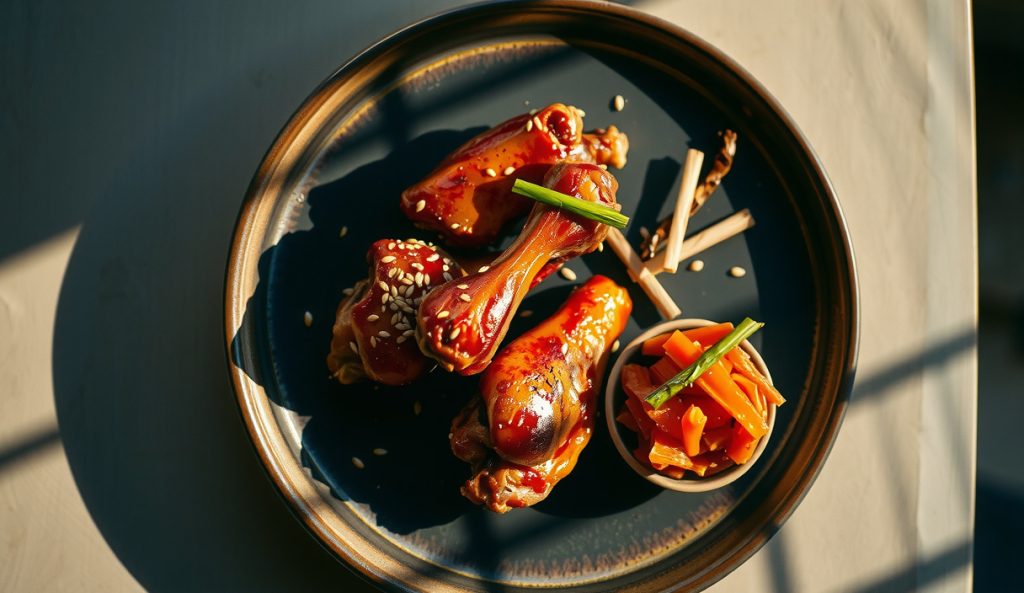
Gochujang is a fermented red chili paste built on glutinous rice, salt, and long anaerobic fermentation — it delivers heat, depth, and a natural sweetness that holds up against the assertive smoke of a dry-brined wing. Thinned with honey and a splash of rice wine vinegar, the glaze coats each wing with enough body to lacquer without weighing the skin down. This Korean gochujang variation is for anyone who wants bold flavor contrast without sacrificing the crackling crunch the dry-brine method delivers.
What changes for the Korean gochujang variation?
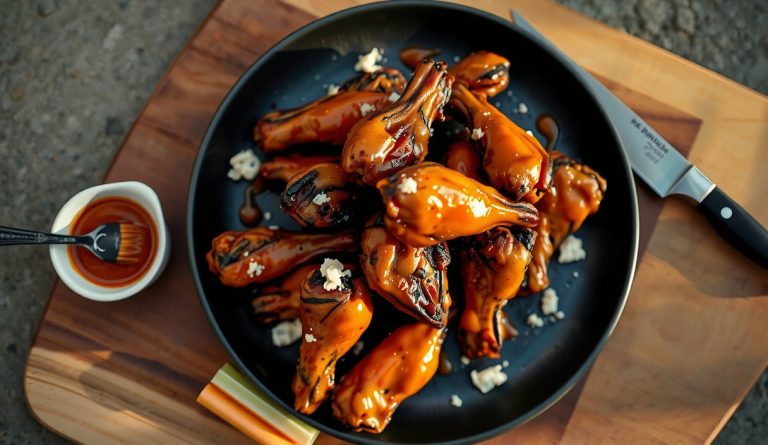
After the sear, transfer the wings immediately to a mixing bowl rather than a resting rack. Combine 3 tablespoons of gochujang with 3 tablespoons of honey and 1 tablespoon of rice wine vinegar — this 1:1 gochujang-to-honey ratio by volume brings the paste to a pourable, coating consistency. Toss the wings while they are still fully hot off the grill.
The residual surface temperature of the wing — typically above 375°F at the skin level immediately post-sear — initiates Maillard browning and sucrose caramelization in the honey fraction within seconds, producing a tight, lacquered shell that sets without a second trip to the grill. The acidity from the rice wine vinegar offsets the fermented paste’s density and lifts the overall flavor profile. Finish with sliced scallion greens and a scatter of toasted sesame seeds, both added after tossing so they sit on top of the glaze rather than buried beneath it.
The alkaline baking-powder dry brine raises skin pH to approximately 8, and that elevated pH pairs directly with fermented paste flavor chemistry — higher-pH surfaces amplify savory Maillard compounds during searing, which deepens the backdrop against which the gochujang’s bright fermented character reads. Do not apply the glaze before the sear; the honey’s fructose component burns aggressively at grill temperatures above 425°F and will char rather than caramelize.
What stays the same from the base recipe?
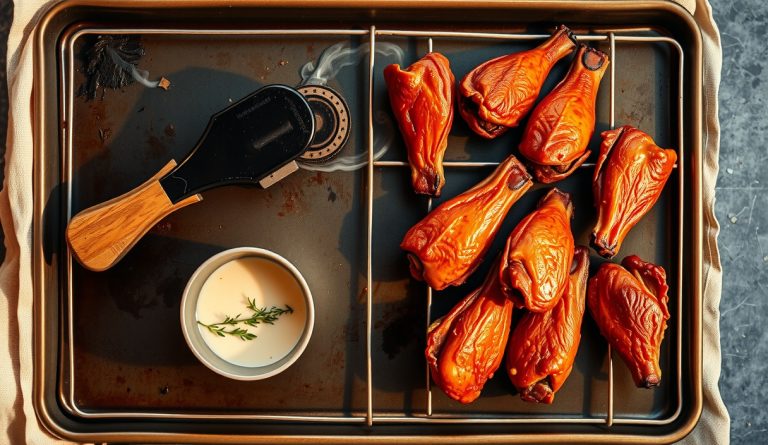
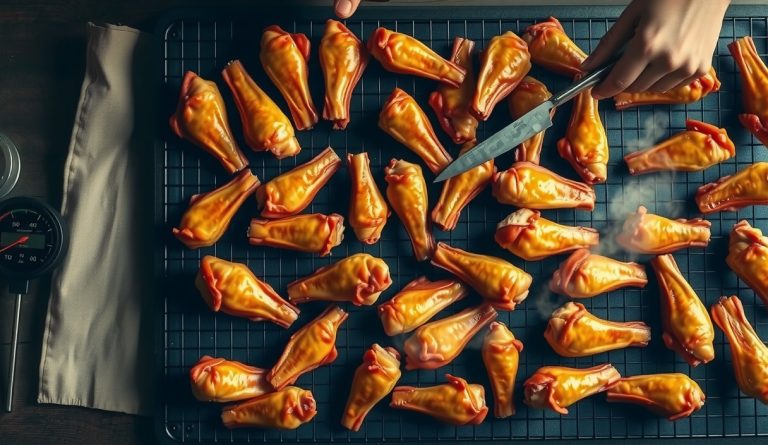
The overnight alkaline dry brine, the low-and-slow smoke phase at 250°F, and the finishing sear over direct high heat all remain exactly as written in the canonical recipe. The crackling crispness of the skin — which is the structural feature this Korean gochujang variation sits on top of — depends entirely on that three-stage process. No modifications to time, temperature, or equipment are required.
When is the Korean gochujang glaze the better choice?
Choose this variation when you want a centerpiece wing with defined flavor complexity — something that reads distinctly at a gathering alongside milder food. The gochujang-glazed wing suits a Korean-inflected cookout spread, pairs well with cold lager or makgeolli, and is the right call when you have guests who want heat with depth rather than pure acidity.
The gochujang glaze is at its best in the first five minutes after tossing, making this variation a strong option when the wings will be served immediately rather than held. Use the full brine, smoke, and sear method from the original Smoked Chicken Wings With Crackling-Crisp Skin.