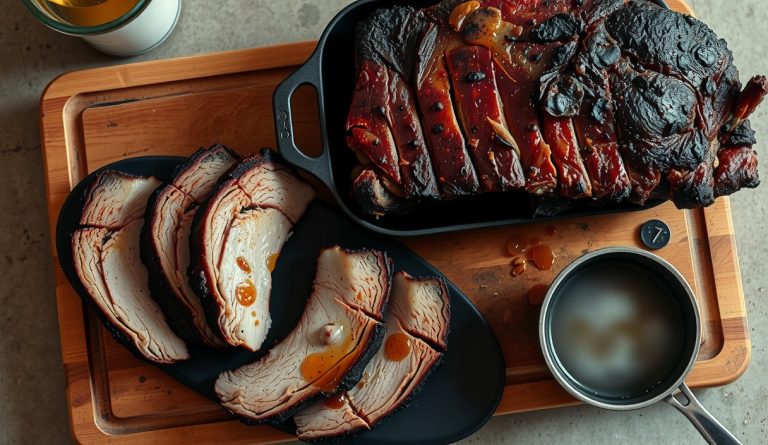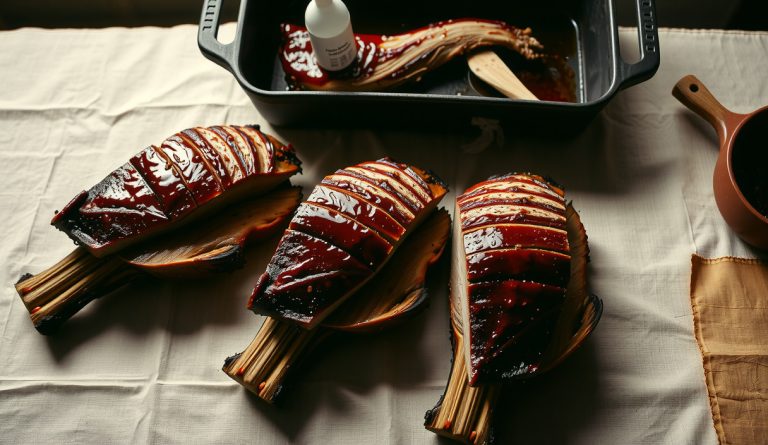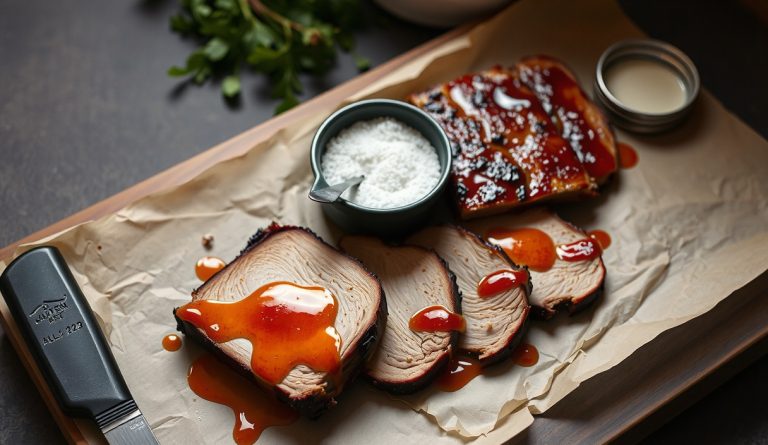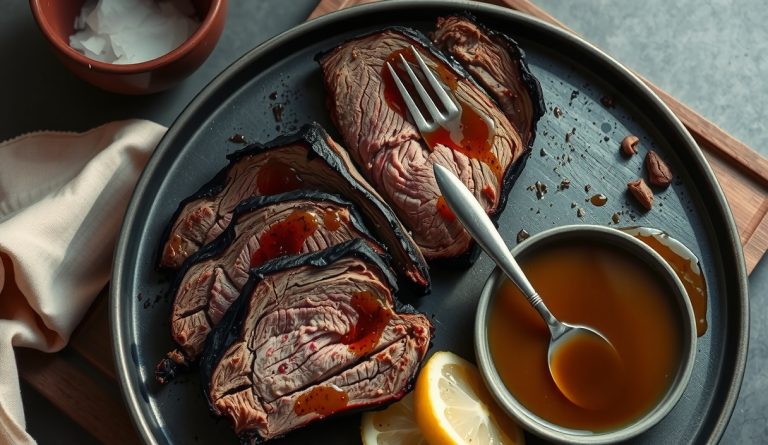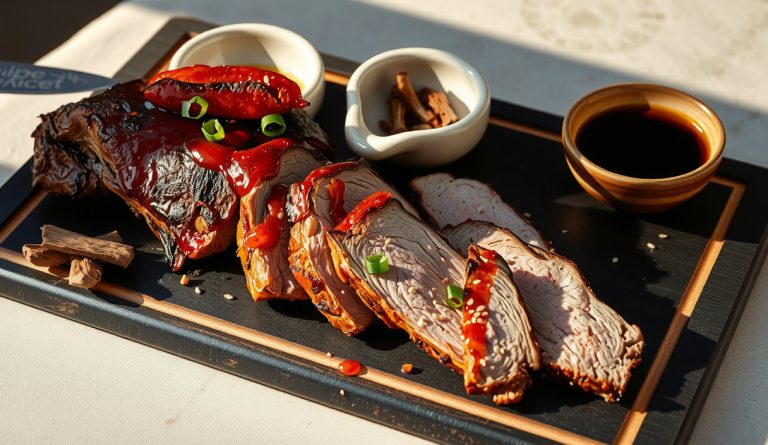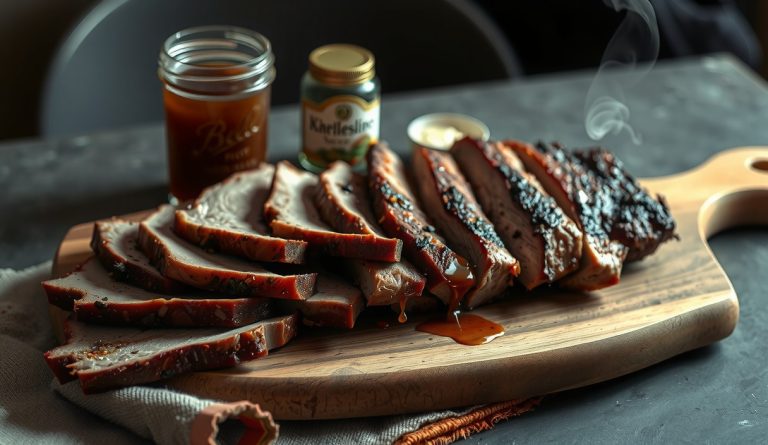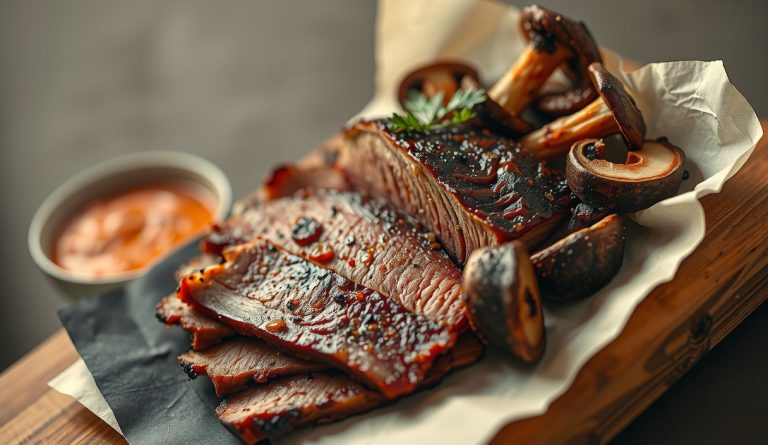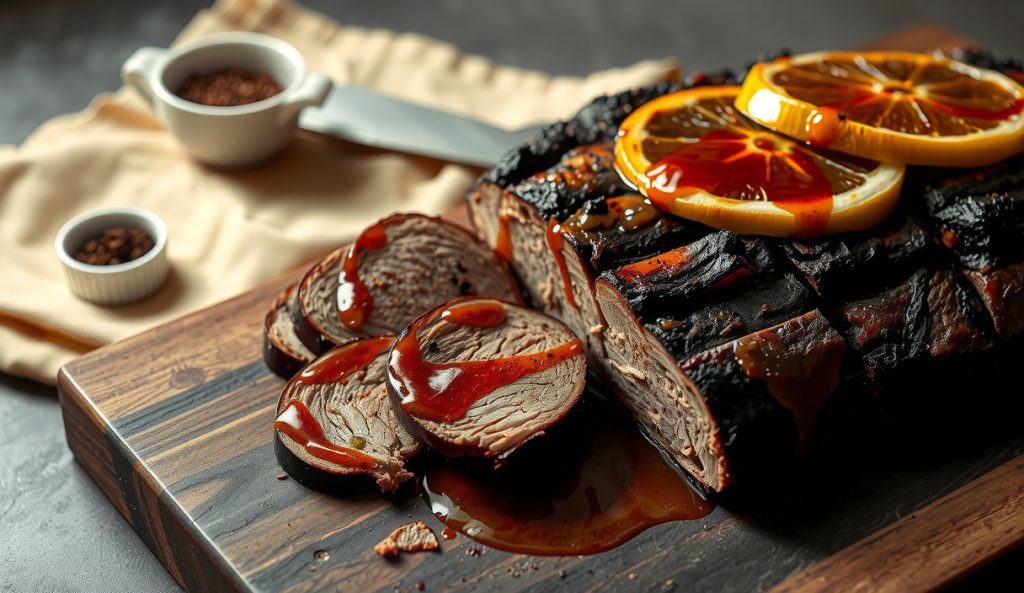
The bark on a smoked brisket is already a product of prolonged Maillard chemistry — amino acids and reducing sugars reacting across hours at surface temperatures well above 250°F. Adding finely ground dark-roast espresso to the rub introduces a concentrated supply of Maillard-active precursors — melanoidins and chlorogenic acid derivatives — that have already undergone one round of dry-heat browning during the roasting of the coffee bean itself. The result is a darker, more complex bark that reads as bittersweet and smoky rather than overtly coffee-flavored.
This variation is for the cook who wants a deeper, almost lacquer-dark exterior and a flavor profile that bridges the gap between the char of a Texas-style bark and the nuanced sweetness of a competition build. The espresso bark method works with any wood, but the contrast between espresso bitterness and the mild sweetness of oak or cherry is particularly well-suited to the bone-broth glaze in the canonical recipe.
What changes with the espresso bark method?
Add exactly 2 tablespoons of finely ground dark-roast espresso to the rub blend alongside the black pepper. Grind should be espresso-fine or turkish-fine — coarser grounds do not integrate into the bark matrix with the same density and can leave visible grit. The melanoidins in the coffee are water-soluble and will migrate slightly into the first millimeter of the brisket’s surface during the initial hours of smoking, establishing a flavor gradient rather than a surface-only coating.
The 2-tablespoon ceiling matters. Below that threshold, coffee operates as a background modifier — augmenting existing browning reactions and contributing depth. Above it, the chlorogenic acids become perceptibly bitter and the coffee flavor dominates the smoke signature rather than amplifying it. The espresso bark method is not a coffee rub; it is a bark-enhancement technique that uses coffee as a Maillard accelerant.
What stays the same when using the espresso bark method?
Every other element of the cook remains unchanged — pit temperature, wood selection, fat-side orientation, rest protocol, bone-broth glaze composition, and application timing. The espresso modifies only the rub layer and its browning behavior; the espresso bark method does not alter collagen hydrolysis kinetics, internal target temperatures, or glaze viscosity.
When is the espresso bark method the better choice?
Choose the espresso bark method when serving guests who appreciate assertive, complex bark flavors, or when the brisket will be sliced and presented where crust color is a visual priority. The espresso bark method is also the right call when smoking with a milder wood like pecan or apple, where the espresso compensates for the reduced aromatic intensity of those fuels.
Use the full method, equipment, and rub measurements from the original Smoked Brisket with Bone-Broth Glaze, adding only the 2 tablespoons of finely ground espresso to the existing rub formula.