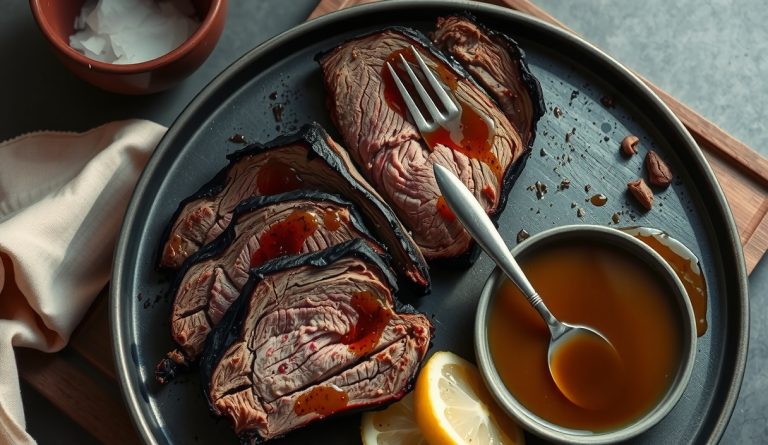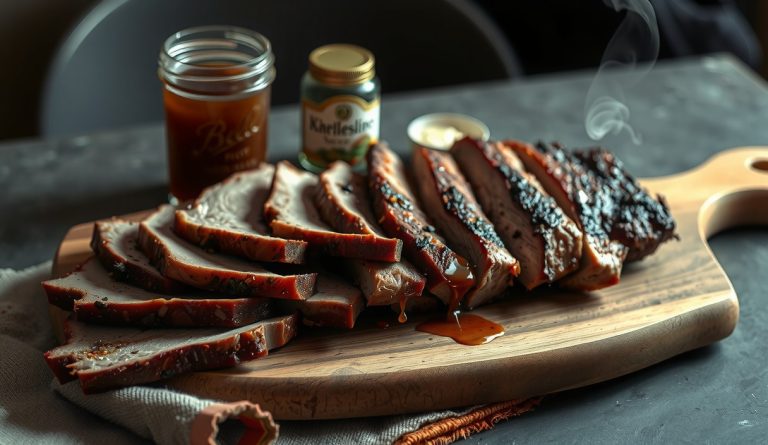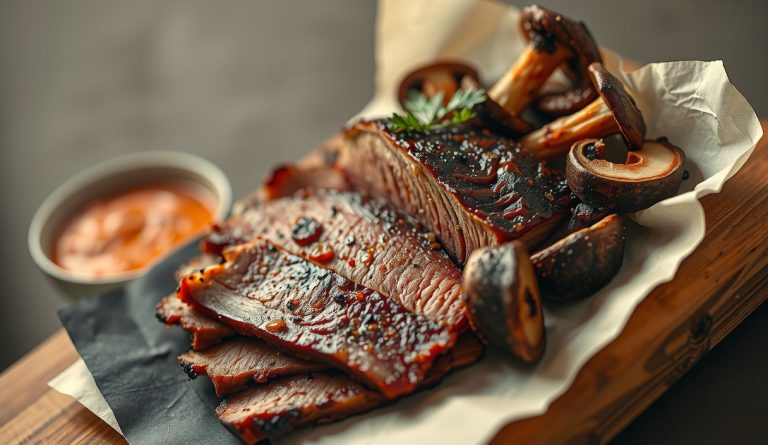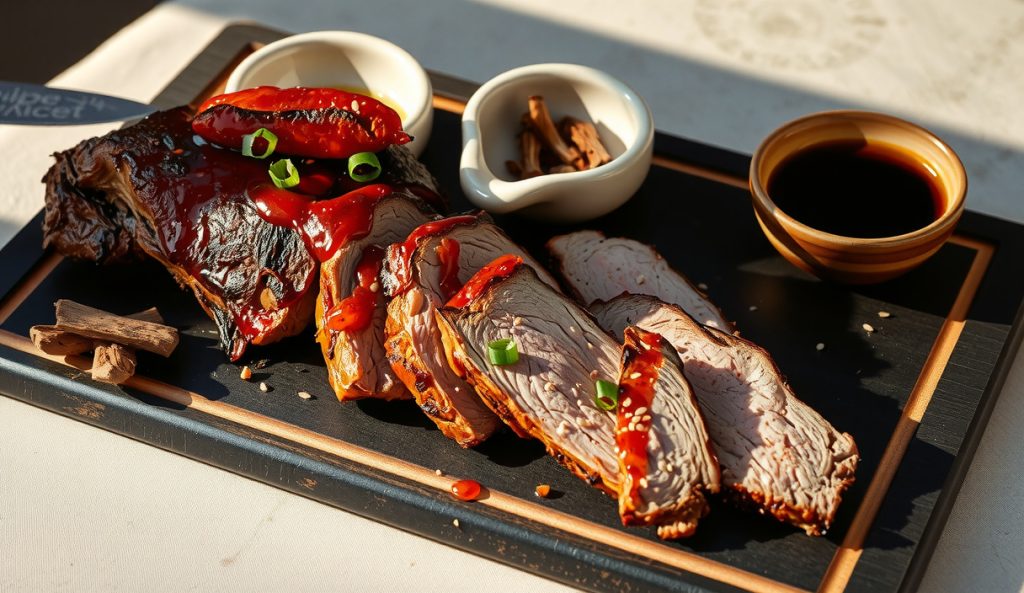
Korean culinary tradition builds umami through ingredient stacking — layering glutamate-rich bases with nucleotide-rich additions to achieve a synergistic effect that neither ingredient could produce alone. That same logic drives this variation. The bone-broth glaze in the canonical recipe is already glutamate-dense from collagen reduction. Replacing 25% of that broth volume with dried-shiitake soaking liquid introduces 5′-guanosine monophosphate (5′-GMP), a guanylate nucleotide that binds to the same umami taste receptors as glutamate and amplifies glutamate’s perceived intensity by a factor of 4–8×, a well-documented synergy in flavor chemistry.
The result is a glaze that tastes profoundly more savory than the sum of its parts — earthy, deep, and rounded. Adding gochugaru in the final reduction stage brings a low-heat floral warmth that pairs with smoke in a way that standard cayenne does not, completing a flavor architecture that is distinctly Korean-inflected without obscuring the brisket itself.
What changes in the Korean-inflected glaze?
Soak 30–40 grams of dried shiitake mushrooms in 2 cups of cold water for a minimum of 4 hours, or overnight in the refrigerator. Strain the soaking liquid through a fine-mesh sieve lined with cheesecloth to remove grit. Substitute this liquid for 25% of the beef bone broth called for in the canonical glaze recipe. The remaining 75% stays as beef bone broth — this ratio preserves the collagen concentration and gelatin-set behavior of the reduction without diluting the glaze below functional viscosity.
Add 1 tablespoon of gochugaru (Korean red pepper flakes) to the reduction during the final 30 minutes of simmering. Gochugaru is significantly milder than cayenne and carries distinct fruity, floral notes from the specific pepper cultivars used; gochugaru is not a 1:1 substitute for standard red pepper flakes. The heat dissipates slightly during reduction, leaving warmth rather than sharp heat in the finished glaze.
What stays the same as the canonical recipe?
The smoke protocol, rub composition, cook temperature, brisket rest, and glaze application timing remain identical to the canonical method. The structural goal of the glaze — a concentrated, gelatin-set lacquer applied in the final hour of the cook — does not change. Only the flavor architecture of the glaze shifts; every other variable in the smoked brisket process is untouched.
When is the Korean-inflected glaze the better choice?
This variation performs best when serving guests who favor intensely savory, complex flavor profiles, or when you want to bridge the canonical recipe toward an Asian-influenced table. The Korean-inflected glaze also excels when the brisket is being sliced thin for rice bowls or ssam wraps, where the concentrated glaze acts as both condiment and sauce, delivering maximum umami impact in each portion.
Use the full method, equipment, and rub measurements from the original Smoked Brisket with Bone-Broth Glaze, substituting only the glaze liquid composition and adding gochugaru as described above.