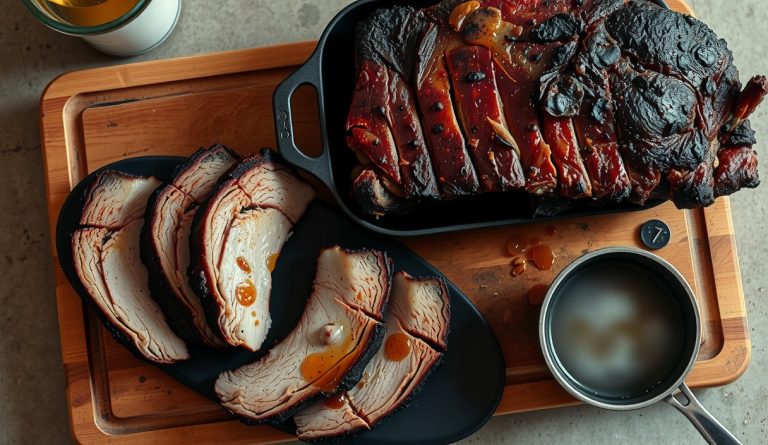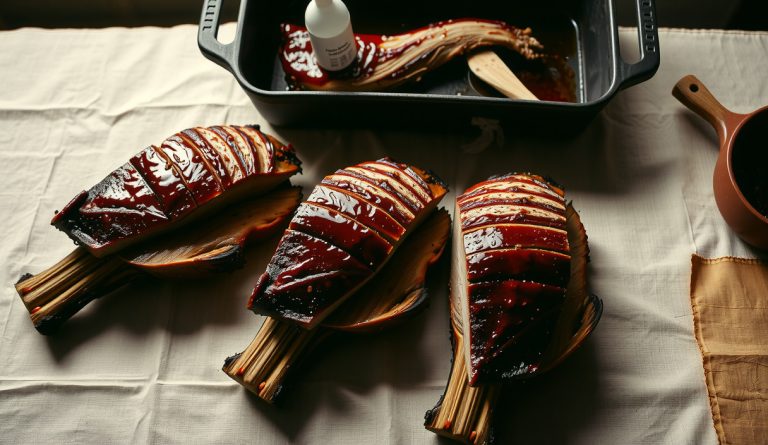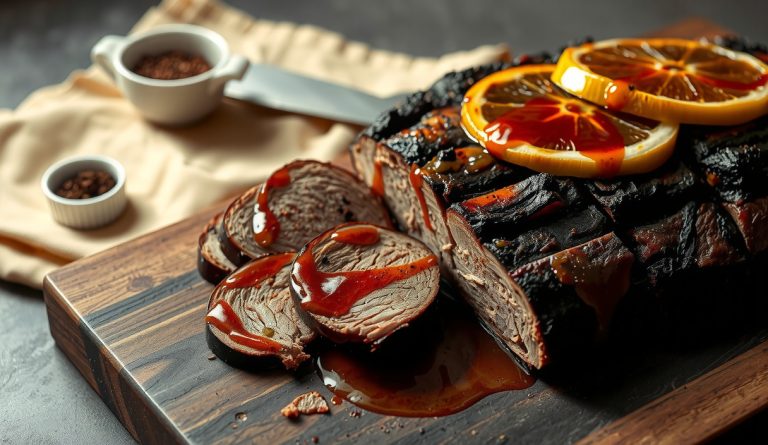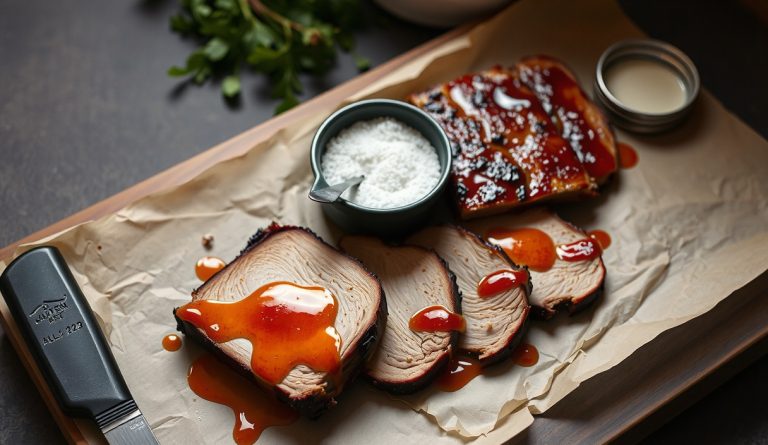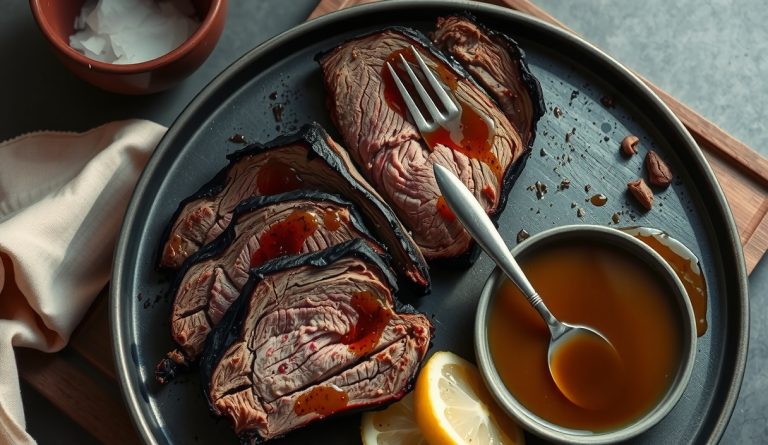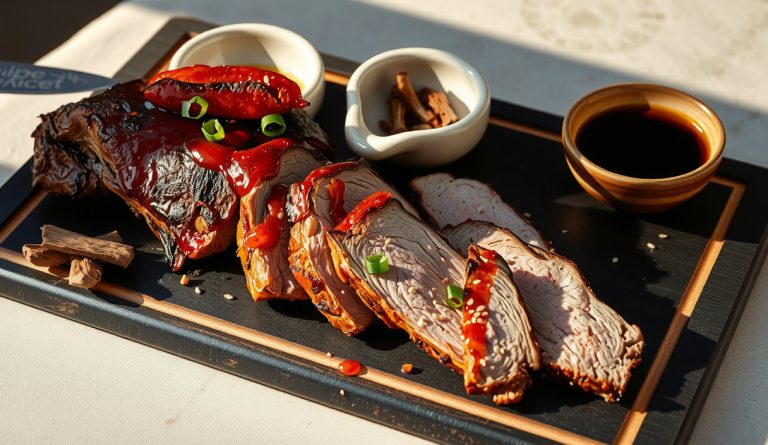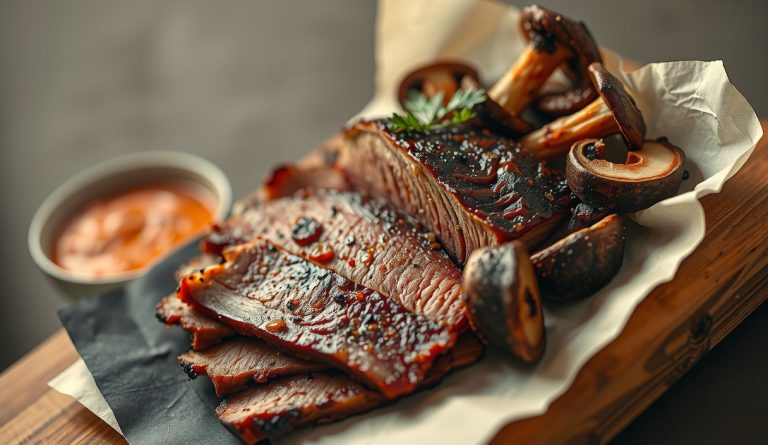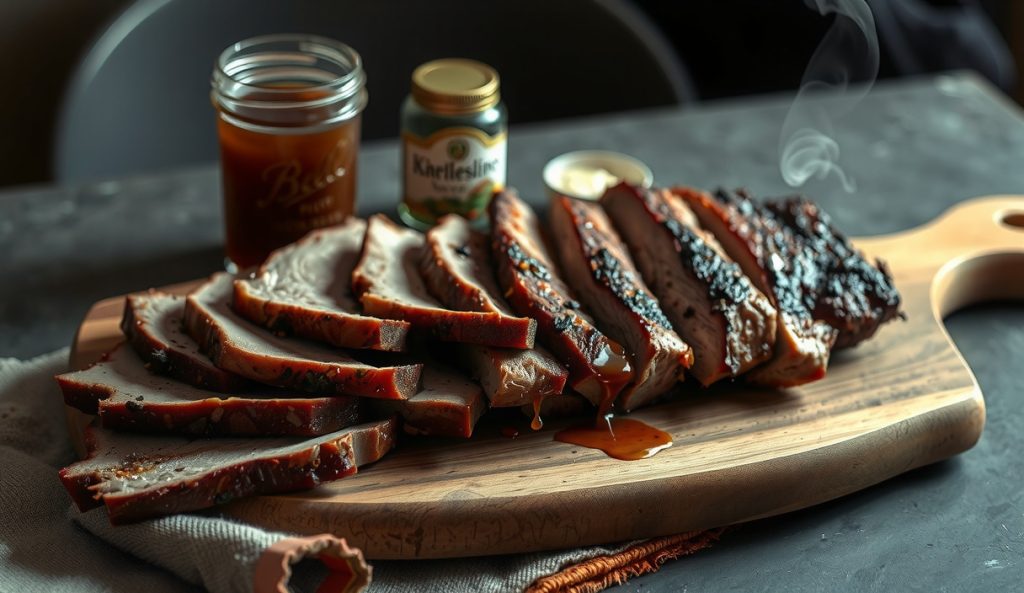
Commercial bone broth is a significant and often invisible sodium source in the bone-broth glaze recipe. A single cup of commercial bone broth can carry 500–900 mg of sodium before any reduction takes place. The canonical glaze reduces broth by roughly 8:1 in volume, which means the sodium concentration in the finished glaze is commensurately elevated — a real concern for guests managing hypertension, heart failure, or sodium-restricted diets, and a flavor-balance problem when the glaze is applied liberally during the final hour of the cook.
This adaptation eliminates that hidden sodium load without compromising the gelatin viscosity, Maillard complexity, or structural behavior of the glaze.
What changes in the low-sodium adaptation?
Replace all commercial bone broth with an unsalted homemade broth made from roasted knuckle and femur bones. Roast the bones at 400°F for 45–60 minutes until deeply browned before simmering — this caramelizes surface proteins and develops the color and Maillard compounds that commercial broth often provides through added flavoring. Simmer the roasted bones for a minimum of 12 hours with no added salt, using aromatics only: onion, carrot, celery, bay leaf, and black peppercorn. The resulting broth will be functionally identical in collagen content, gelatin yield, and reduction behavior to a quality commercial broth — it will set to a firm gel when chilled — but will carry near-zero sodium.
Confine all seasoning salt to the external rub applied to the brisket surface. Salt in the rub serves two purposes that are unrelated to the glaze: it draws surface moisture to dissolve the rub into a wet paste that adheres to the meat, and it participates in the osmotic and denaturing processes that contribute to bark formation and a modest cure effect in the outer few millimeters of the flat. These functions occur entirely at the surface and do not migrate into the glaze during the cook. The glaze reduction proceeds without any added salt — its flavor intensity comes entirely from concentrated collagen, rendered fat solids, and the natural savory compounds released from the roasted bones.
What stays the same as the original recipe?
Glaze reduction time, target viscosity, application window, and all smoke protocol parameters remain identical to the canonical recipe. The gelatin concentration of a properly made unsalted homemade broth is equivalent to or greater than that of commercial broth, so the glaze will set, adhere, and lacquer the bark surface in exactly the same way.
When is the low-sodium adaptation the better choice?
This adaptation is the correct approach when cooking for guests with medically prescribed sodium restrictions, or when precise control over total sodium content is required for nutritional tracking. It is also the better choice when using a high-sodium rub blend — eliminating broth sodium creates headroom to season the rub aggressively without pushing the finished brisket into an unpleasant salt-forward profile.
Use the full method, equipment, and rub measurements from the original Smoked Brisket with Bone-Broth Glaze, substituting the unsalted homemade broth described above for all commercial broth in the glaze reduction.