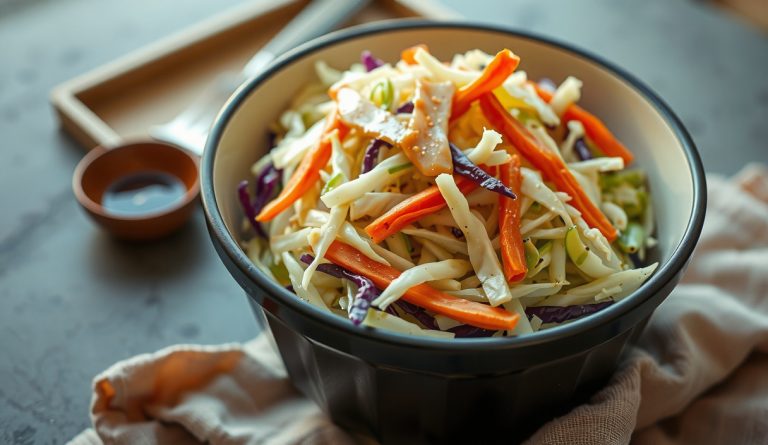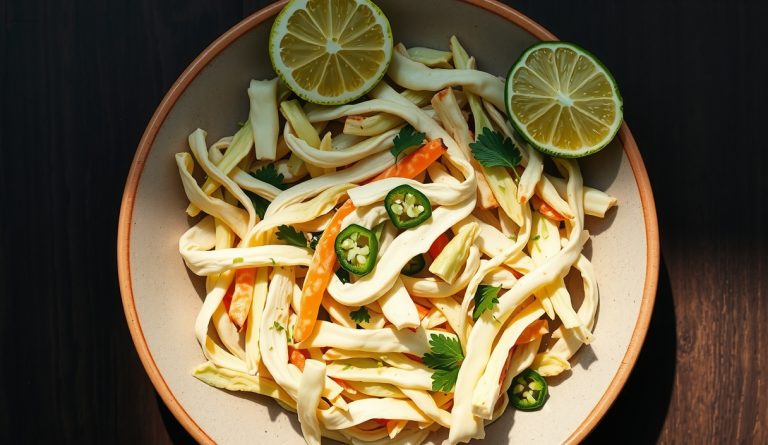
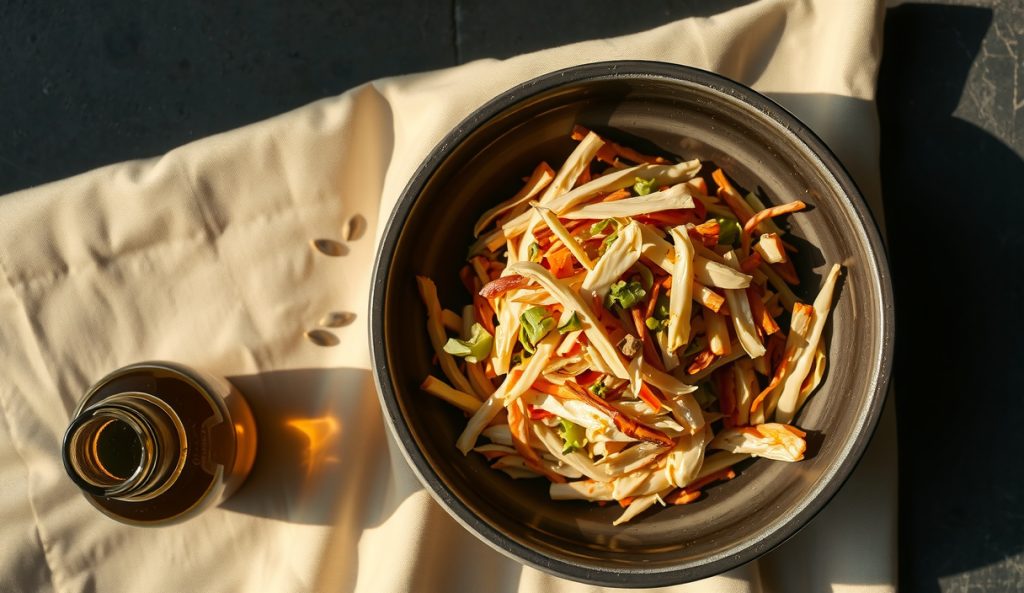
Mayonnaise performs two distinct functions in a vinegar slaw dressing: it adds richness and it emulsifies the oil-and-acid mixture into a cohesive coating that clings to shredded cabbage. Removing mayonnaise means addressing both functions separately. This dairy-free, no-mayo variant solves the richness side with an extra tablespoon of neutral oil and the emulsification side with aquafaba — the liquid drained from a can of chickpeas, now the most accessible plant-based emulsifier in the home kitchen. The result is a dressing that is lighter and slightly less viscous than the canonical mayo-built version, but one that coats cabbage evenly and holds together through the full one-hour rest period.
What changes when you remove the mayo?
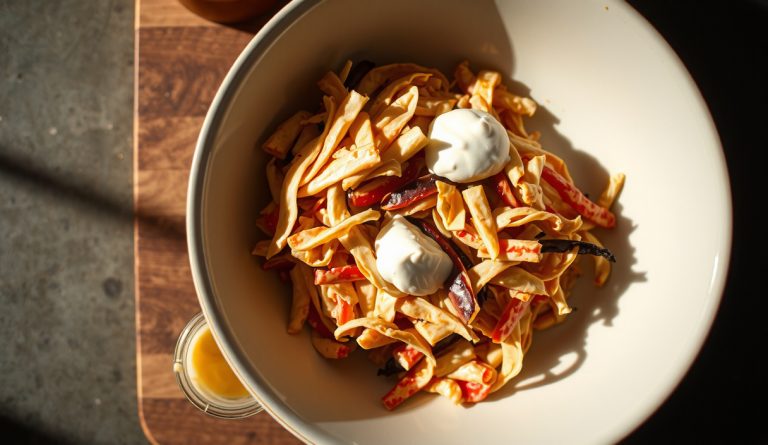
Mayonnaise is removed entirely from the dressing. In its place, add 1 extra tablespoon of a neutral oil and 1 teaspoon of aquafaba. Avocado oil is the preferred neutral oil for its clean flavor and high oleic-acid content; refined sunflower oil is a sound alternative. These two substitutions address the two functions mayonnaise previously handled — richness from the oil, emulsification from the aquafaba.
Aquafaba derives its emulsifying capacity from two mechanisms: saponins, which reduce interfacial tension between oil and water, and soluble plant proteins that adsorb to the oil-water interface and provide steric stabilization. This differs from the lecithin-phospholipid emulsification in egg-yolk mayonnaise, and the dressing reflects that difference. The no-mayo dressing will be measurably thinner and less rich than the canonical. It is fully functional — oil and acid will not separate during the rest period if whisked thoroughly — but the no-mayo dressing will not approximate the body of a mayo-based dressing, nor should it try to. Accept the lighter texture as the inherent character of this version.
All other ingredients remain unchanged: apple cider vinegar, sugar, celery seed, and the salt-draw process are identical to the canonical recipe.
What stays the same — and why the salt draw matters even more here?
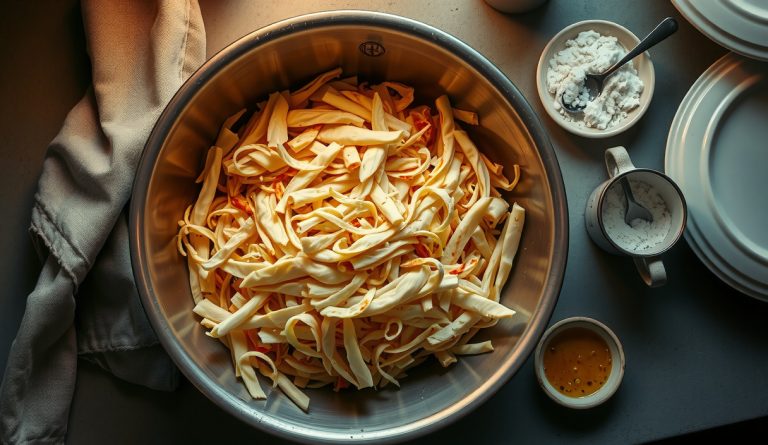
The one-hour salt draw is unchanged and, if anything, more critical in this no-mayo version. Because the aquafaba-oil dressing is thinner, excess moisture released by undrained cabbage will dilute the dressing more noticeably than it would in a mayo-built version. Squeeze the cabbage as dry as practical before adding the dressing. The acid profile from apple cider vinegar, the sweetness level, and the aromatic structure contributed by celery seed are all identical to the canonical build.
When is the no-mayo version the better choice?
This is the build for vegan or egg-allergic guests, or any event where dietary inclusion is a priority and running two separate batches of slaw is not practical. The no-mayo coleslaw also works well as a lighter summer side when the rest of the plate is already rich — a heavy brisket flat or fatty pork belly benefits from a leaner, acid-forward counterpoint rather than another rich element.
Use the full salt-draw method, rest timing, and acid measurements from the original Pit-Master Coleslaw — Vinegar-Forward.