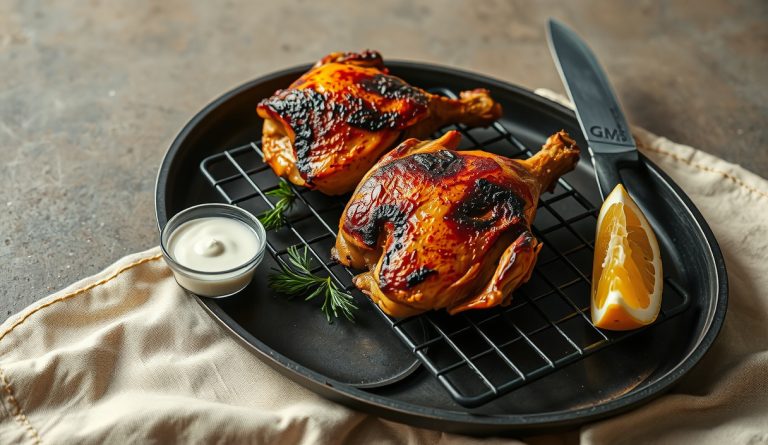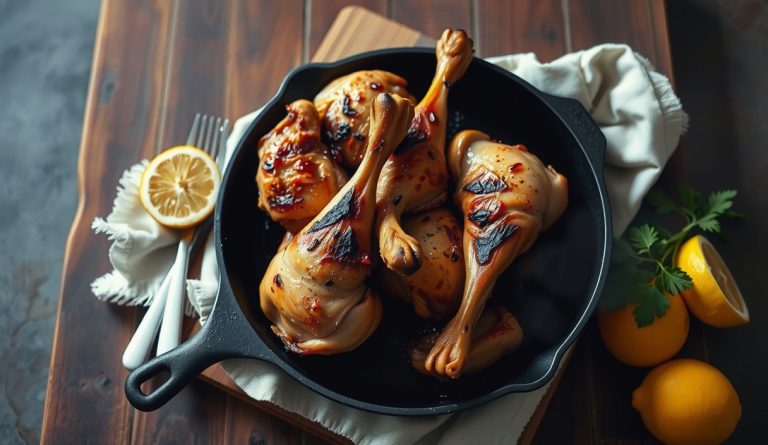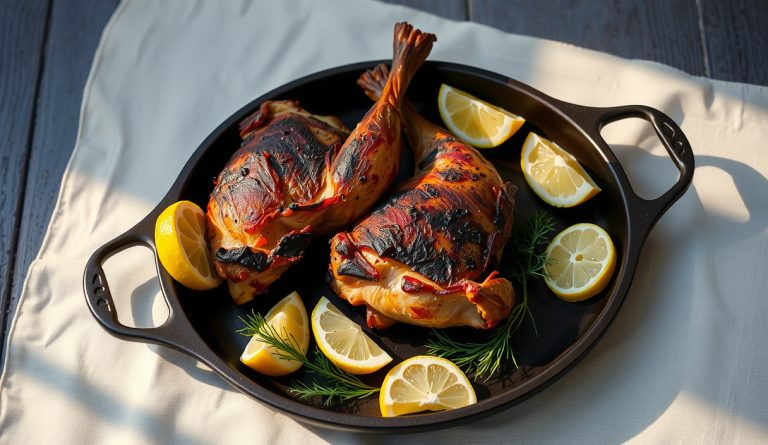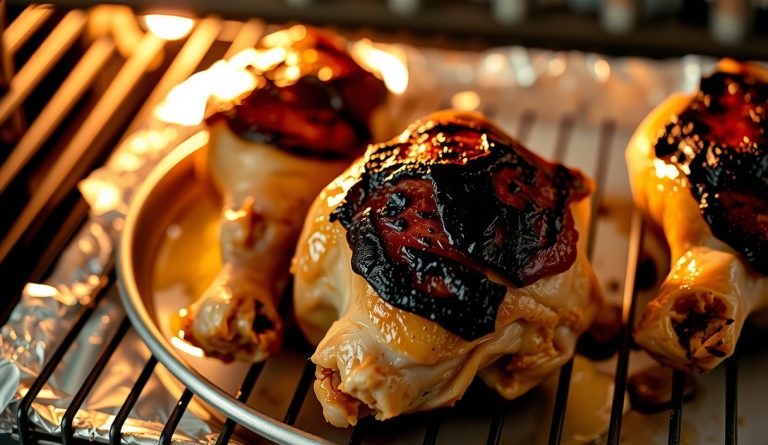
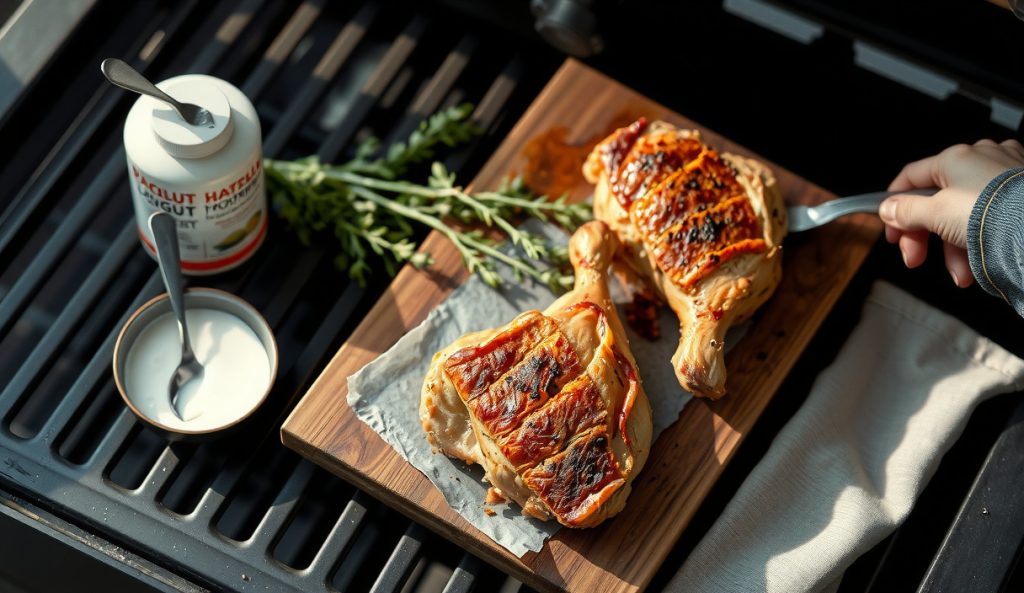
The canonical smoked Greek yogurt marinade chicken depends on dairy yogurt for two distinct functions: its acidity (roughly pH 4.0 to 4.4) denatures surface proteins before heat arrives, and its casein micelles act as fat-soluble delivery vehicles for lipophilic spice aromatics. A dairy-free adaptation must preserve both functions simultaneously. Full-fat coconut yogurt handles the first job reliably; a brief spice-blooming step in neutral oil compensates for losing the second.
This variant is designed for anyone avoiding dairy for dietary, ethical, or allergy reasons without sacrificing the marinade’s structural performance. Coconut yogurt also produces a subtly different flavor profile — its faint sweetness and lauric-acid richness read as complementary rather than distracting against the spice stack.
What changes when you switch to coconut yogurt?
Substitute full-fat coconut yogurt for the Greek yogurt at a 1:1 ratio by weight. Brands such as Coyo or Culina maintain a pH in the 4.1 to 4.5 range — close enough to dairy Greek yogurt that the acid-denaturation mechanism (lactic acid partially unwinding surface myofibrillar proteins to lower the Maillard activation threshold) is preserved with no adjustment to marinating time.
What is lost is the casein protein matrix. In dairy yogurt, casein micelles encapsulate lipophilic aromatic compounds — terpenes, fat-soluble phenolics — and carry them into direct contact with the meat surface. Coconut yogurt contains no casein. To compensate, bloom all dry spices in 1 tablespoon of neutral oil (avocado or refined coconut) over low heat for 60 to 90 seconds before adding them to the yogurt. This pre-dissolves the lipophilic aromatics directly into the oil’s fat phase, replicating the delivery function the casein matrix would otherwise provide and producing more even spice distribution across the finished crust.
What stays the same as the original recipe?
All other marinade proportions, minimum contact time (4 hours, preferably overnight), smoker temperature (275°F), target internal temperature (168°F), and resting protocol are identical to the canonical method. Bark formation — yogurt solids dehydrating onto the surface and browning via Maillard chemistry — functions the same way with coconut yogurt solids as it does with dairy solids, so the textural payoff is equivalent.
When is the coconut yogurt version the better choice?
This is the correct build for dairy-allergic guests, lactose-intolerant cooks, and anyone following a strictly plant-based or paleo protocol. It is also a reliable option when Greek yogurt is simply unavailable and only coconut-based alternatives are on hand — the technique holds without compromise, provided the spice-blooming step is not skipped.
Use the full marinade ratios, thigh-prep steps, and smoke-session guidance from the original High-Protein Smoked Greek Yogurt Marinade Chicken.