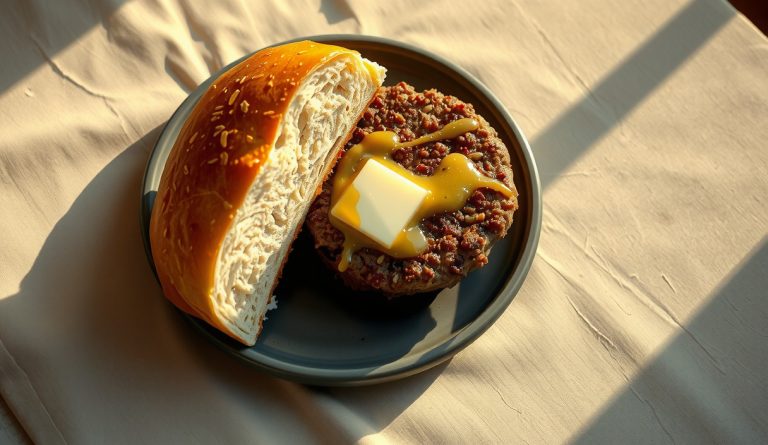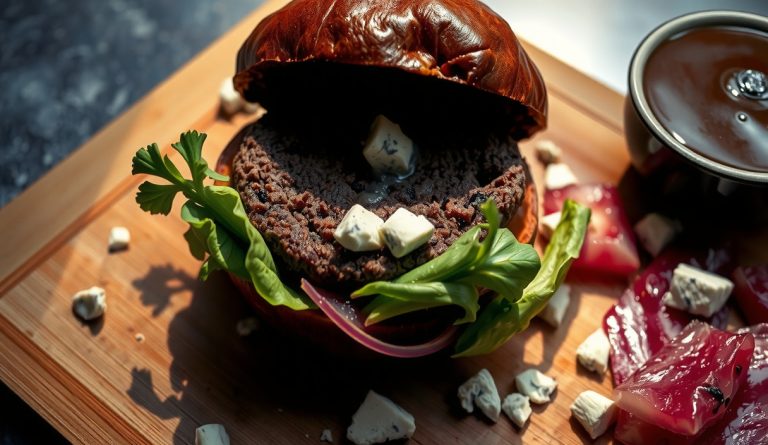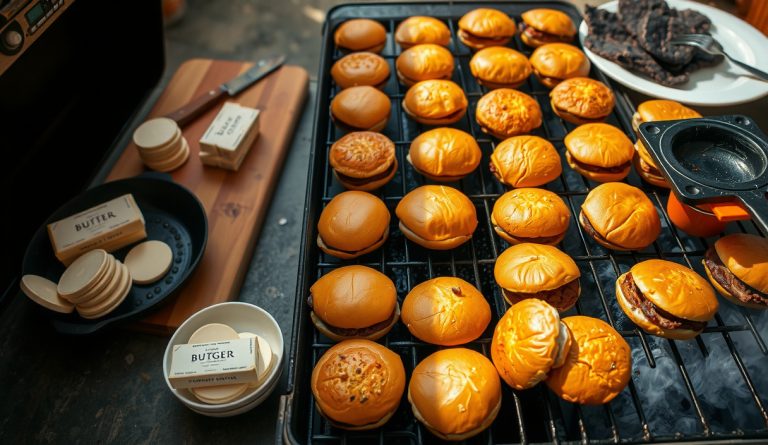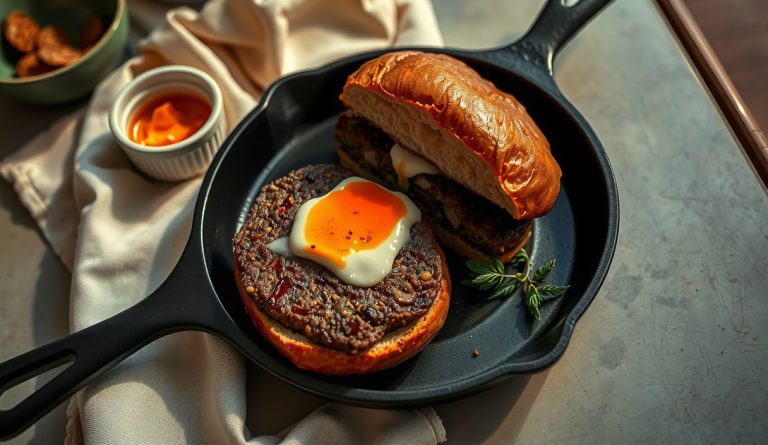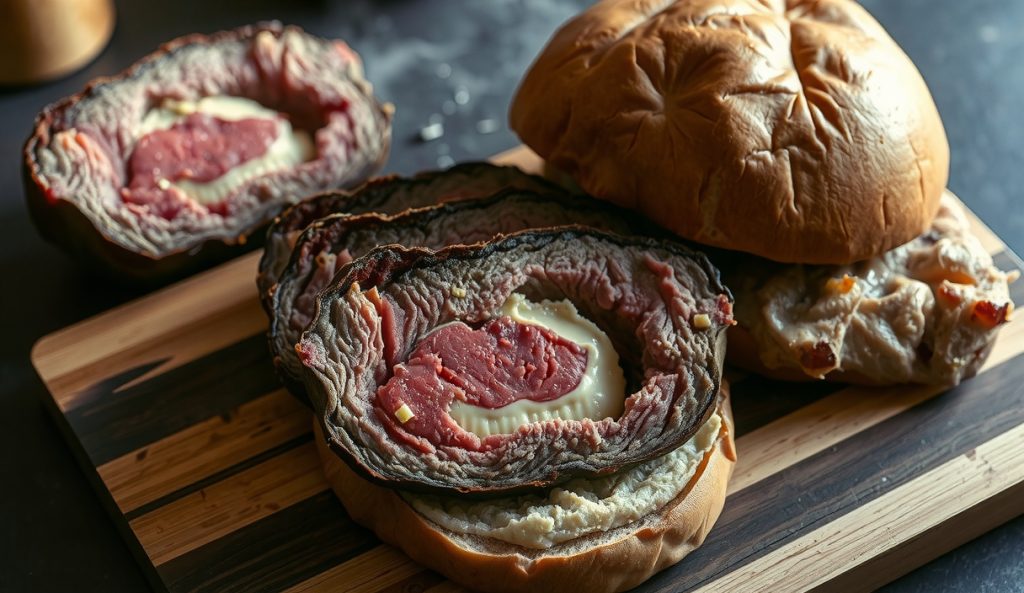
Standard 80/20 chuck is the reliable baseline for smoked burgers — enough fat to stay moist through the smoke phase, enough protein structure to hold its shape. Grinding brisket point into the blend introduces a variable that chuck alone cannot supply: meaningful collagen. That collagen converts to gelatin during the low-and-slow smoke phase, producing a patty with a distinctly richer, almost braise-like interior texture that the compound butter center amplifies rather than masks.
What changes when you add brisket point to the blend?
Replace straight 80/20 chuck with a blend of 70 percent chuck and 30 percent brisket point, ground together through a medium die. Brisket point carries more intramuscular fat and a higher collagen fraction than chuck — collagen content in the point runs roughly double that of chuck shoulder. During the 225–250 °F smoke phase, that collagen begins hydrolyzing into gelatin, which coats the protein matrix and contributes a mouthfeel that registers as richer and more unctuous than fat content alone would predict.
Expect slightly more shrinkage during the sear. The higher total fat fraction in the brisket blend renders more aggressively on hot cast iron, so the patty diameter will contract a bit more than it does with straight chuck. Account for this by forming patties approximately 5 percent wider than your target finished size, and do not press them during the sear — compressing the patty accelerates fat expulsion and will compromise the compound-butter pocket seal.
What stays the same from the original recipe?
Forming, seasoning, pocket construction, smoke temperature, and target pull temperature all remain unchanged from the canonical recipe. The compound butter disc goes in the center exactly as specified. The only modifications are the grind composition — 70 percent chuck, 30 percent brisket point — and the slightly wider patty form to compensate for increased shrinkage during the sear.
When is the brisket-blend variation the better choice?
This variation is the right call when cooking for an audience that will notice and appreciate textural depth — people familiar with well-executed brisket who expect that same richness translated into burger form. The brisket-blend patty is also the productive choice when brisket point trim is already on hand from a previous cook, turning what would be discarded scraps into the defining ingredient of a more complex burger.
Use the full method, equipment, and compound-butter specifications from the original Smoked Burger with Compound-Butter Center.