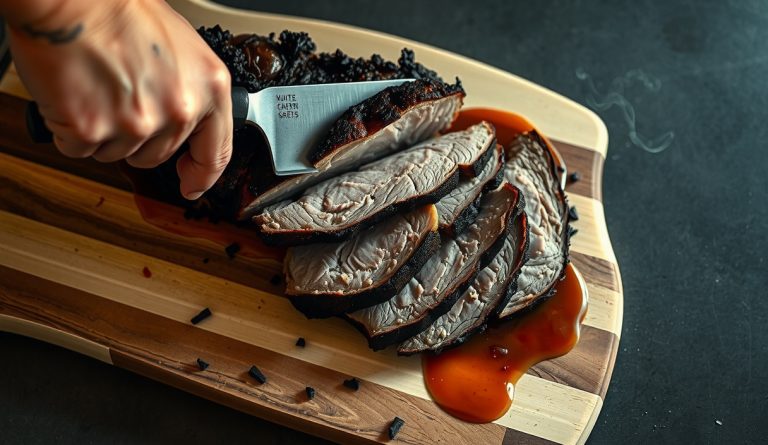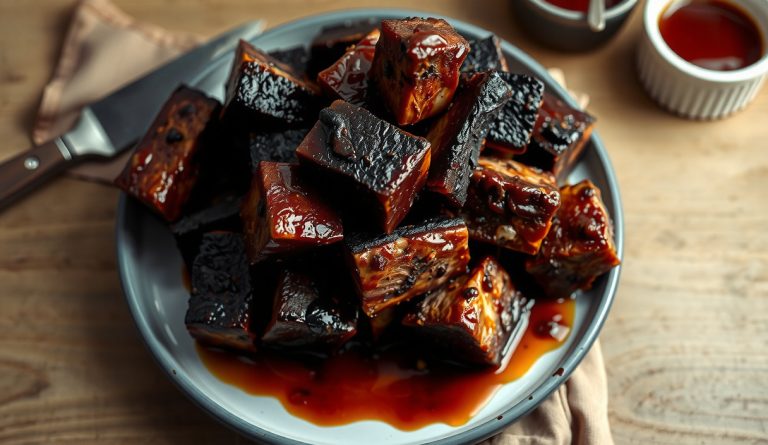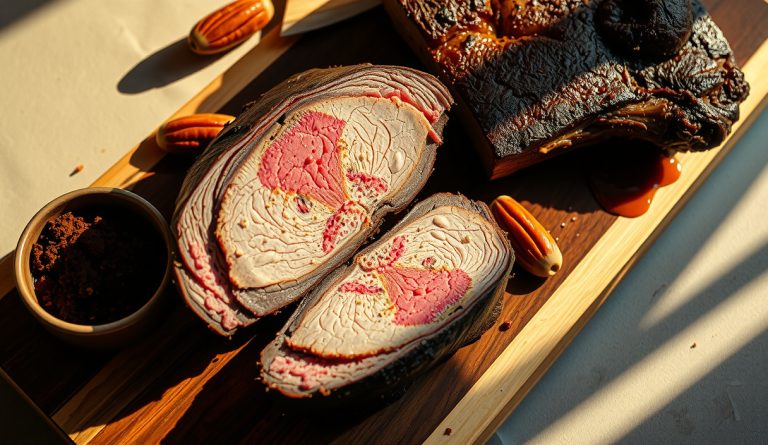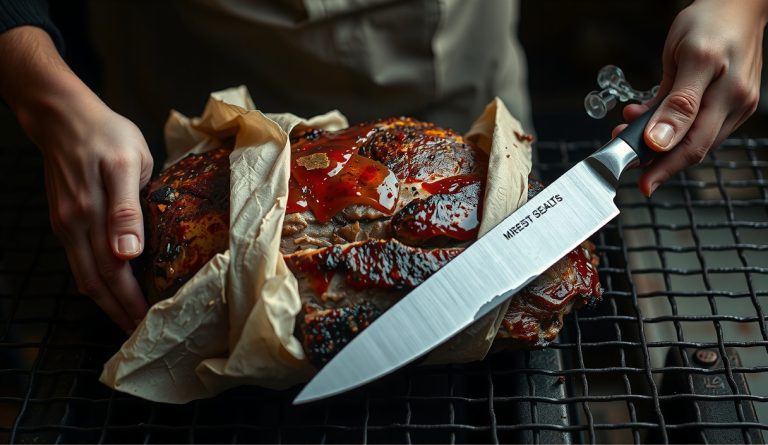
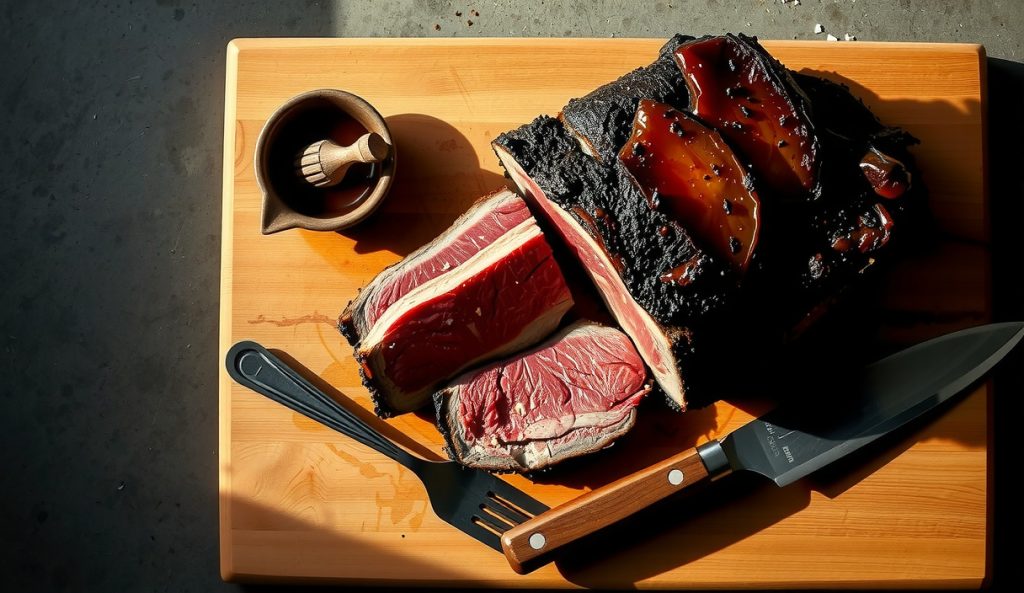
The Central Texas tradition holds that great beef needs nothing more than coarse salt and coarse-ground black pepper. Applied to chuck roast, that minimalist philosophy produces a bark that is deeply savory, aggressively beefy, and completely free of the sweetness a fuller spice rub introduces. When the smoke source is post oak — the wood most closely associated with the Franklin Barbecue canon — a salt-and-pepper rub steps aside and lets the combustion speak.
This variation is for cooks who want to taste the animal and the smoke, not the pantry. It demands high-quality beef and disciplined fire management, because there is nowhere to hide.
What changes on the Texas minimal rub?
Replace the full spice rub with a single blend: coarse kosher salt and coarse-ground black pepper at a 1:1 ratio by volume. Apply at the same coverage rate as the canonical rub — roughly 1 tablespoon of each per pound of meat is a practical starting point.
The elimination of sugar is the single most consequential change. Sugars accelerate Maillard browning and supply additional volatile compounds that contribute to bark color and complexity. Without them, surface browning on the chuck roast proceeds more slowly, relying entirely on protein and fat oxidation reactions. To compensate, extend the unwrapped smoke phase by 20 to 30 minutes beyond the point at which you would normally wrap in the canonical method.
You are looking for the same visual cues — a firm, dark mahogany crust — before initiating the butcher paper wrap. Do not rush the bark-set phase; an underdeveloped bark on a salt-and-pepper rub will smear rather than hold when wrapped.
What stays the same as the canonical method?
Pit temperature (225°F), wrap trigger (internal temperature in the 165–170°F range), pull temperature (203–207°F), and the full rest protocol remain unchanged from the canonical smoked chuck roast method. The collagen-to-gelatin conversion that defines a properly cooked chuck roast is governed by time and internal temperature — rub composition has no effect on that process.
When is the Texas minimal rub the better choice?
Choose this variation when you are using a premium, well-marbled chuck roast and want the beef itself to be the primary statement. It is also the correct choice when the smoke source is post oak, pecan, or another assertive hardwood — a complex rub would compete directly with those smoke characteristics rather than complement them.
This approach is less forgiving of lower-quality beef than the canonical rub, which uses spice depth to add flavor the meat itself may not fully provide. If the chuck is Choice grade or below with modest marbling, the full rub is the more reliable path to a satisfying result.
Use the full method, equipment, and timing benchmarks from the original Smoked Chuck Roast — Poor-Man’s Brisket.