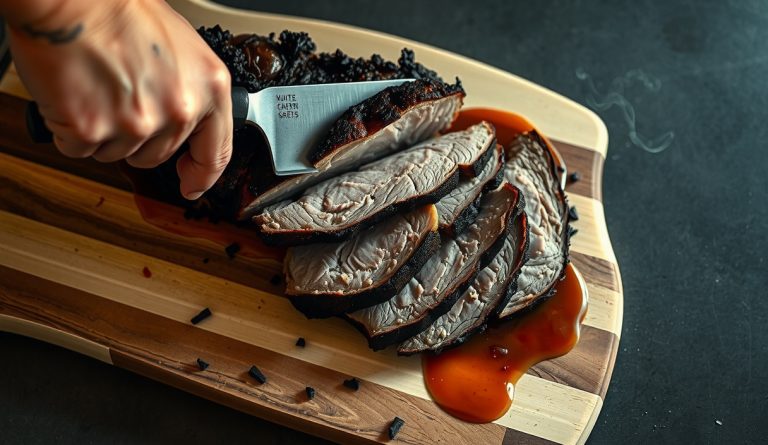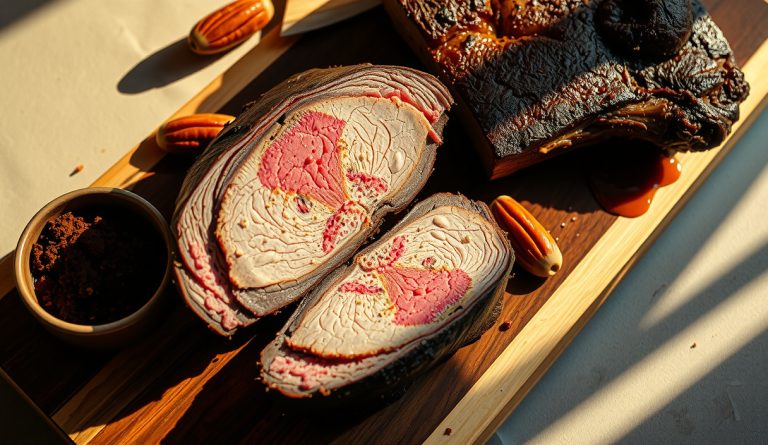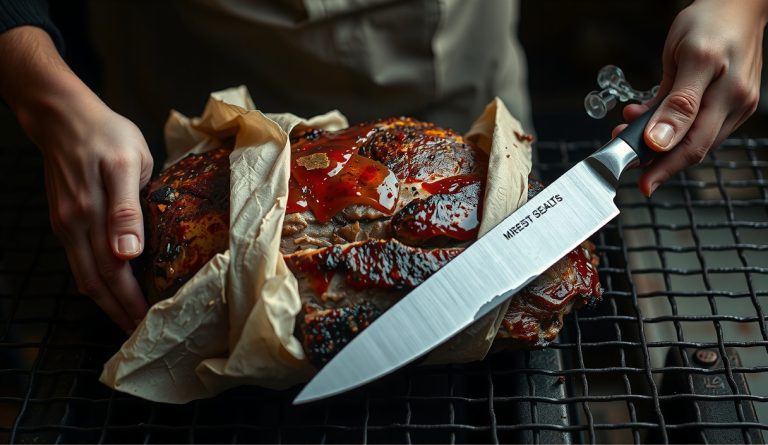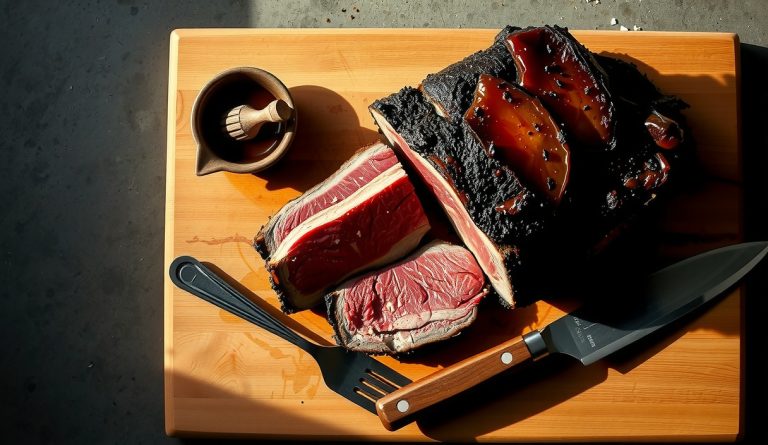
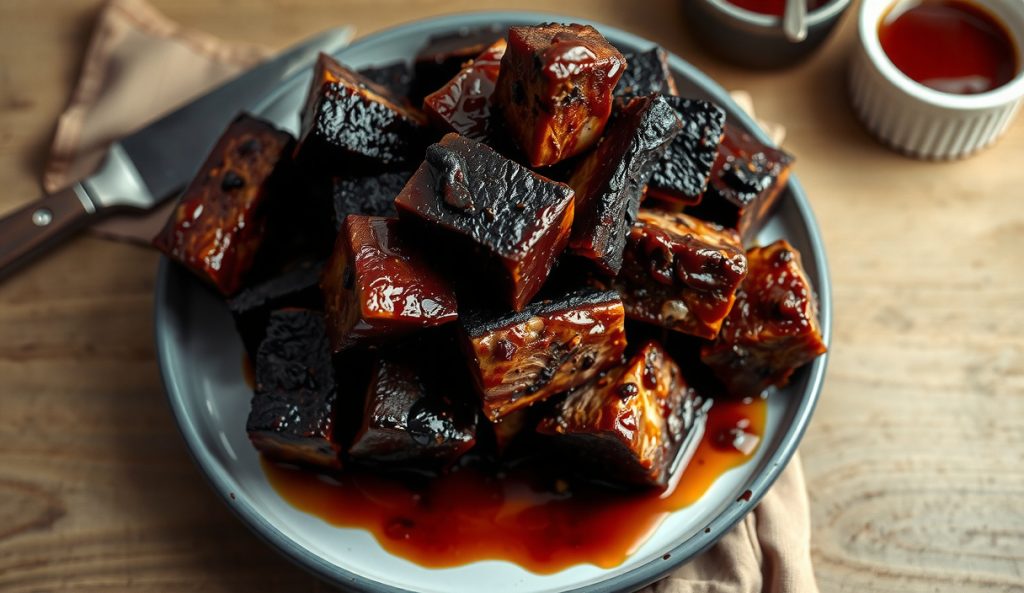
Burnt ends originated as the trimmed, twice-smoked point muscle scraps from Kansas City brisket cooks — the pieces that absorbed the most smoke and bark surface area relative to their mass. Chuck roast burnt ends borrow that concept and apply it to a cut that is already built for it: high collagen content, significant intramuscular fat, and a gelatin matrix after a full low-and-slow cook that keeps the cubed interior from drying out through a second heat pass.
This is a deliberate cook extension, not a leftover rescue strategy. Plan the full cook with burnt ends as the intended final step.
What changes for the burnt ends step?
After the canonical rest period is complete, cube the chuck roast into uniform 1-inch pieces. Toss the cubes in a light, even coating of your preferred BBQ sauce combined with a small amount of brown sugar — roughly 1 teaspoon of brown sugar per 2 tablespoons of sauce is a workable ratio that adds caramelization potential without making the cubes cloyingly sweet.
Arrange the cubes in a single layer on a wire rack or directly on the smoker grate, uncovered, and return to the smoker at 250°F for 45 to 60 minutes. The elevated temperature relative to the primary cook is deliberate: sucrose begins to caramelize at approximately 160°C (320°F) at the surface, while the fructose component of brown sugar initiates browning somewhat earlier. At 250°F ambient, the high-surface-area cubes reach surface temperatures sufficient to drive rapid sauce reduction and Maillard development on the coating.
The already-converted gelatin matrix inside — collagen that completed its hydrolysis during the primary cook — acts as a moisture reservoir that prevents the interior from tightening or drying. Pull the cubes when the coating is visibly tacky, set, and deeply colored. If the coating has not firmed by 60 minutes, extend in 10-minute increments.
What stays the same from the primary cook?
The entire primary cook — rub, smoke, wrap protocol, pull temperature, and rest — is executed exactly as in the canonical recipe. The burnt ends step begins only after the rest is fully complete. The smoke source can remain the same wood used for the primary cook.
When is the burnt ends format the better choice?
Chuck roast burnt ends are the better choice any time you are cooking for a group that skews toward bold bark and sauce-forward flavors, or when you want a party-ready finger-food format from a single chuck roast cook. The cubed, twice-smoked format delivers maximum bark surface area per bite and eliminates the need for slicing or plating.
The burnt ends format is also the most practical application for a larger chuck roast (4 to 5 pounds) where yield exceeds what the table will consume as sliced roast — the second smoke pass converts the surplus into a distinct second dish rather than straight leftovers.
Use the full primary method, rub, and wrap protocol from the original Smoked Chuck Roast — Poor-Man’s Brisket before beginning the burnt ends step.