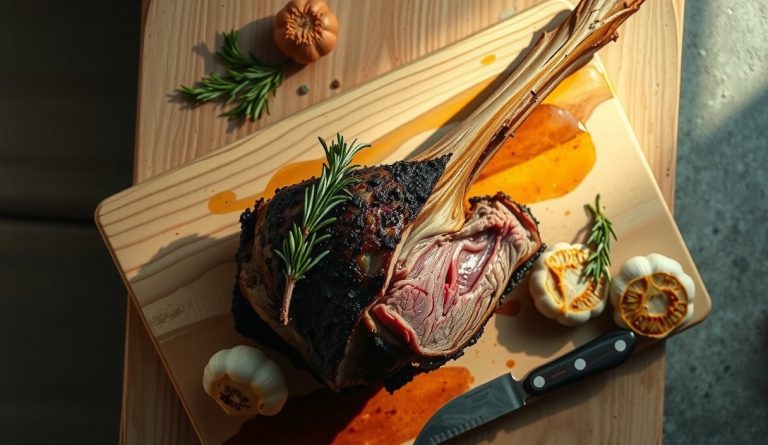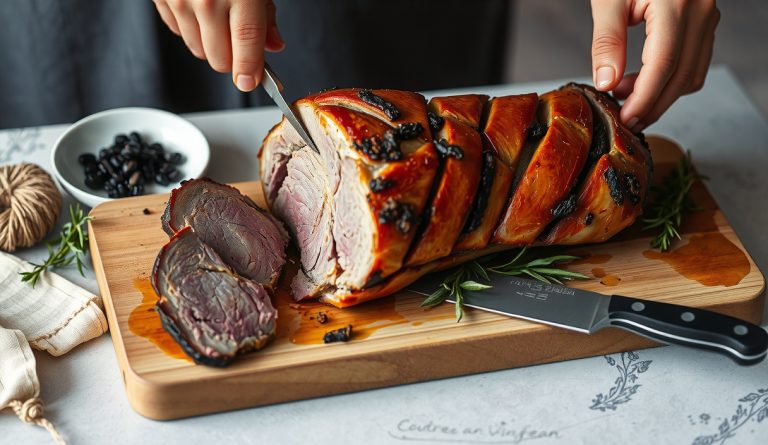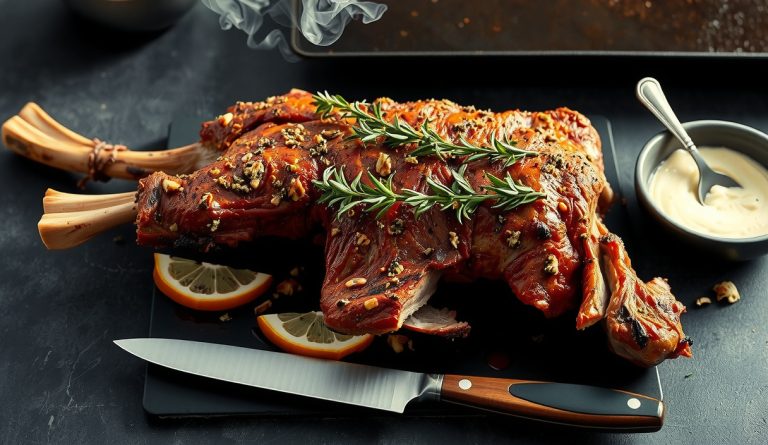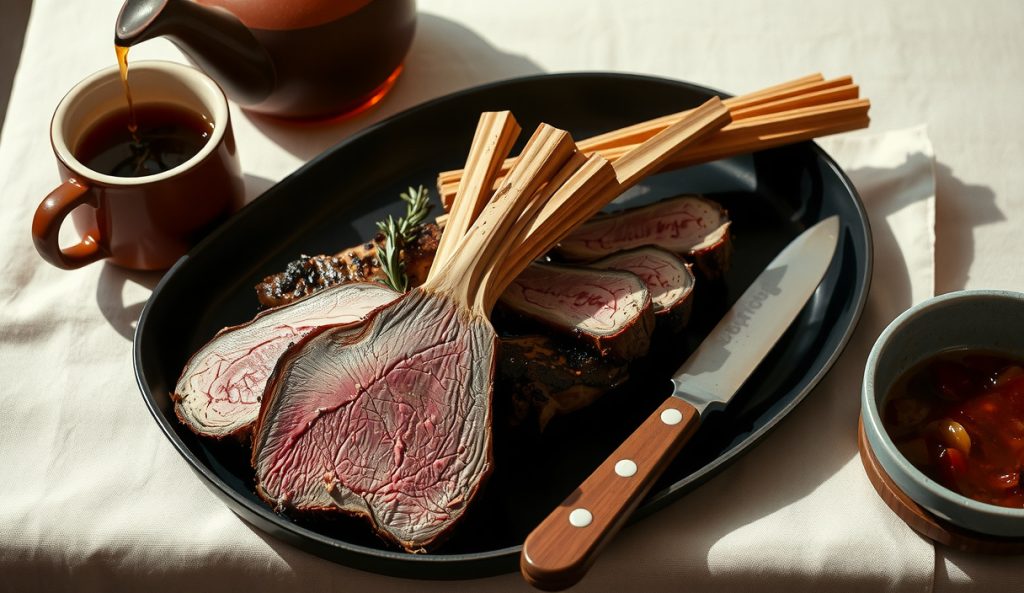
The canonical smoked leg of lamb targets 135°F internal — a medium finish with a rosy, pink center that most lamb enthusiasts consider ideal. Not every table agrees. When your guest list includes people who are genuinely uncomfortable with pink meat, pulling the leg to 150°F is a reasonable accommodation, provided you understand what the protein chemistry is doing and compensate accordingly.
What changes at 150°F — and why does it matter?
Pulling the leg of lamb to 150°F instead of 135°F pushes the roast into medium-well territory, and the difference is measurable at the molecular level. Above approximately 150°F, a significant fraction of actin — the second major structural protein in muscle fiber — begins to denature in earnest. Once actin denatures, the muscle matrix contracts further, expelling free moisture and producing meat that is paler in cross-section, noticeably firmer in texture, and drier to the bite than the canonical pull.
This is the thermodynamic reality of the higher pull temperature, and no single technique fully reverses it. What you can do is mitigate the moisture loss through two compensating moves. First, extend the resting period to a full 30 minutes, tented loosely with foil; this duration allows the thermal gradient within the roast to equalize and some expelled juices to reabsorb into the muscle matrix. Second, serve the leg of lamb immediately after resting with a generous drizzle of pan drippings or any accumulated juices from the cook — this restores perceived juiciness on the plate even where fiber-bound moisture has been lost permanently.
What stays the same at the medium-well pull?
The smoker temperature of 275°F, the garlic-rosemary paste, the dry-brine protocol, and the trussing or bone-in format all remain unchanged from the base recipe. The added cook time required to reach 150°F versus 135°F is typically 20–35 minutes, depending on roast size. Monitor by probe rather than clock — roast geometry and starting temperature vary too much for a fixed time estimate to be reliable.
When is the medium-well finish the better choice?
Choose this 150°F variation for mixed-preference tables where overriding guest comfort is not the goal. It is also the appropriate pull temperature for younger children, for guests with immunocompromise for whom medium-rare lamb presents a genuine food-safety concern, or for any context where the social friction of serving visibly pink lamb outweighs the textural argument for the canonical 135°F pull. The flavor of the garlic-rosemary crust and the smoke penetration are unaffected by the higher target; only the interior texture and moisture level change.
Use the full method, equipment, and rub measurements from the original Smoked Leg of Lamb — Garlic-Rosemary Crust.