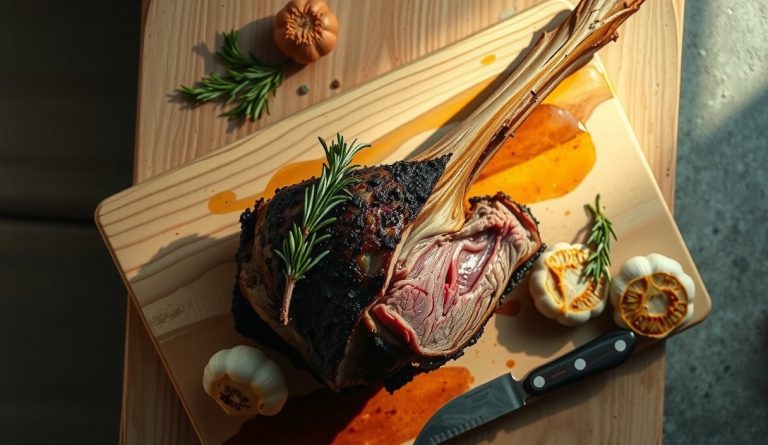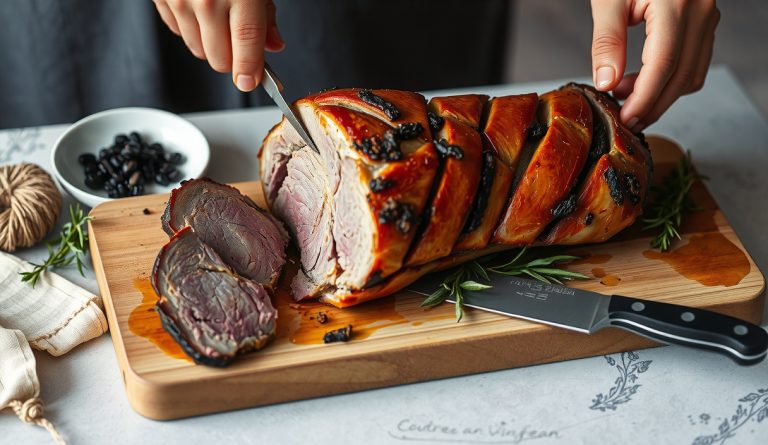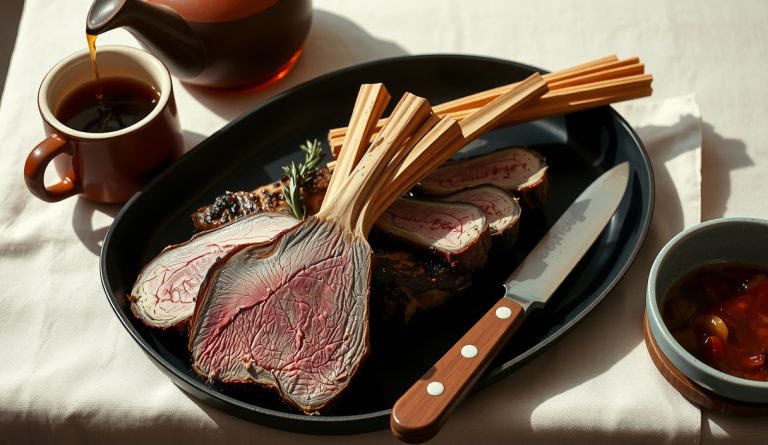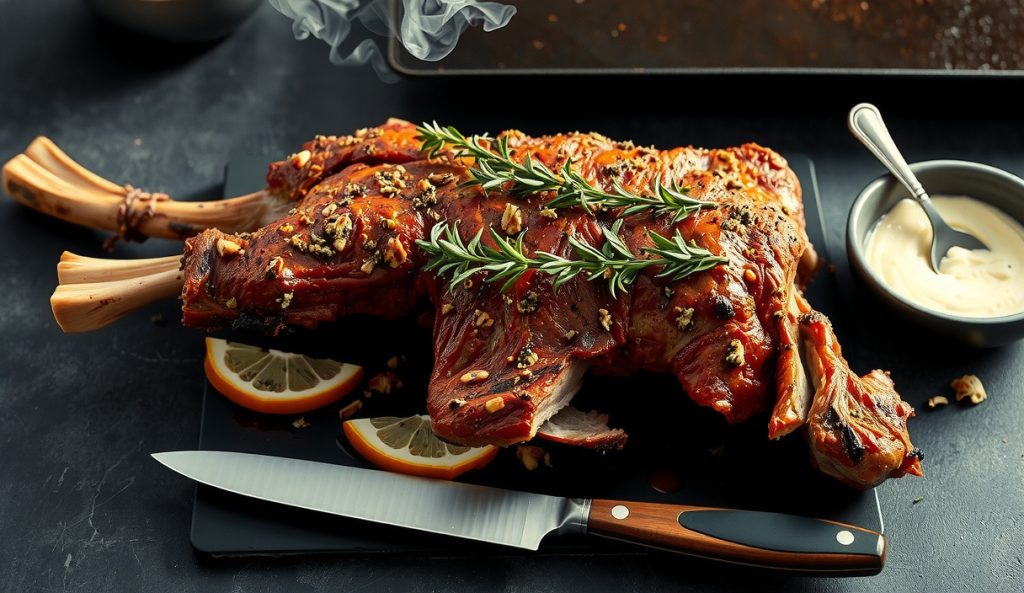
The canonical smoked leg of lamb recipe is built around a bone-in leg in the 5-to-6-pound range, a size that serves six to eight comfortably. When the table grows, stepping up to a full bone-in leg in the 7-to-8-pound range is the right move. The method scales cleanly, but two variables — cook time and salt quantity — require explicit attention to avoid an overcooked or aggressively salty result.
What changes when you scale up to a 7-to-8-pound leg?
At 275°F, a 7-to-8-pound bone-in leg will require approximately 45 to 60 additional minutes of cook time compared to the canonical 5-to-6-pound range. The added mass increases the thermal gradient between surface and center, and the bone’s insulating effect is proportionally larger in a heavier leg.
Pull temperature and carryover behavior remain the same — probe to 135°F and expect 3–5°F of carryover — but never use elapsed time as your primary cue on a larger roast. Use a leave-in probe thermometer. Elapsed time is a planning guide only; internal temperature is the only reliable doneness signal on a roast this size.
Double the garlic-rosemary paste batch for a leg over 7 pounds. Full surface coverage is not optional if you want the bark to form correctly. The paste scales linearly and there is no flavor penalty for doubling.
Salt, however, does not scale with the same freedom. Cap the total dry-brine application at 1 teaspoon of kosher salt per pound of meat. Beyond this ratio, the bark will be aggressively salty: moisture driven to the surface during the cook causes salt concentration to intensify in the outer crust. Extend the resting window to 35 minutes to allow the thermal gradient in the larger roast to fully equalize before slicing.
What stays the same when scaling the smoked leg of lamb?
Smoker temperature, smoke wood, pull temperature, dry-brine timing, and paste application technique are all unchanged when moving to the larger leg. The 7-to-8-pound roast is not a fundamentally different cook — it is the same cook with calibrated patience on time and discipline on salt.
When is the larger leg the better choice?
Choose this scaling approach for holiday tables of ten or more, for large outdoor gatherings where a single showpiece roast is more practical than multiple smaller ones, or any time you want the visual drama of a full leg presented whole before carving. A larger leg also produces more drippings, making it the preferred format if pan sauce or jus is part of the service plan.
Use the full method, equipment, and rub technique from the original Smoked Leg of Lamb — Garlic-Rosemary Crust.