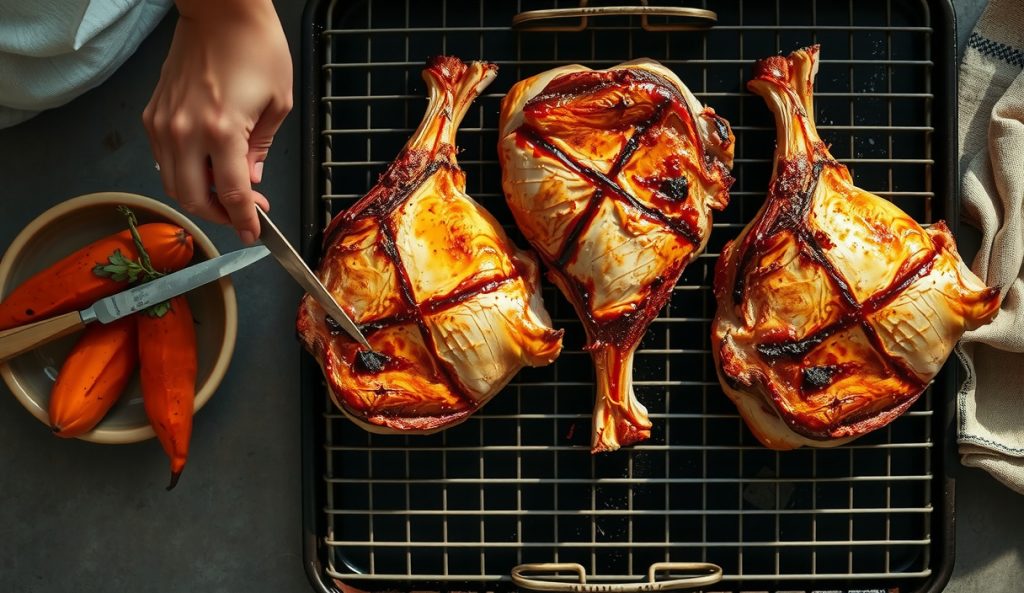
The smoked duck breast technique scales linearly to batch cooking — four breasts can match the quality of one — but only when the physics of moisture evaporation and airflow are respected at each stage. Crowding the render pan and packing the smoker grate both degrade the result in distinct, predictable ways that are entirely avoidable.
What changes when you scale smoked duck breast?
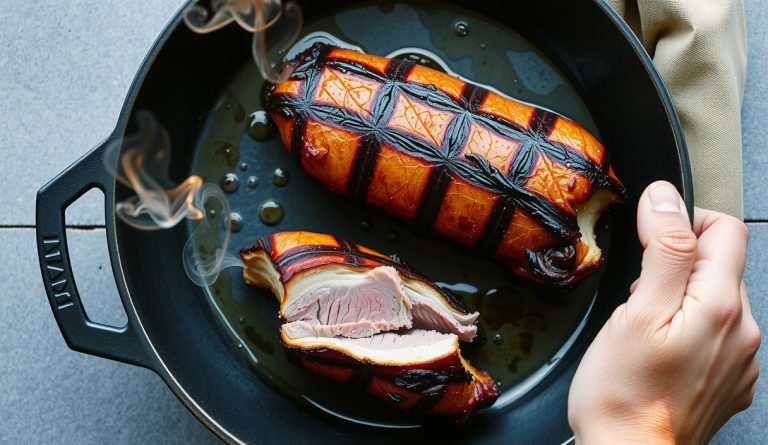
For the cold-start render, work in stages rather than crowding a single pan. A standard 12-inch skillet accommodates two duck breasts comfortably; four breasts require two pans run simultaneously or two sequential render rounds. The thermodynamic reason is direct: as fat renders from multiple proteins in a confined space, evaporating moisture raises local humidity at the skin surface. Once the pan environment shifts from dry radiant heat to moist convective heat, skin surface temperature drops below the 140–150°C threshold required to sustain the Maillard reaction, and the skin steams instead of crisps. Two pans or two rounds eliminates this failure mode entirely.
On the smoker, the limiting factor is airflow and temperature stability, not grate capacity. Place duck breasts fat-side up with at least 2 inches of clearance between each breast. This separation ensures even smoke circulation around all surfaces and prevents the cooler boundary layer of one breast from interfering with its neighbor’s cook. If your smoker has multiple grate levels, use them — vertical separation affects smoke density less than lateral crowding does.
What stays the same at any batch size?
The dry brine ratio, rest time, score depth, render start temperature, smoke temperature, target internal temperature, and rest protocol are all unchanged per breast. Scaling multiplies the inputs; it does not alter the method applied to each individual breast. Every duck breast in the batch is still treated as a single unit through the entire process.
When is batch smoked duck breast the better choice?
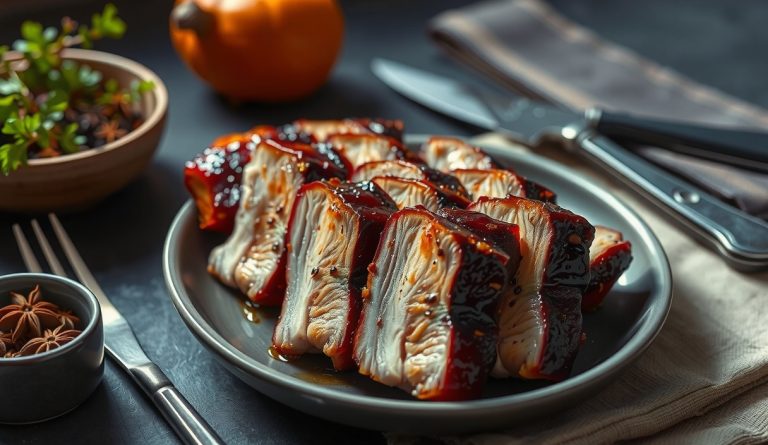
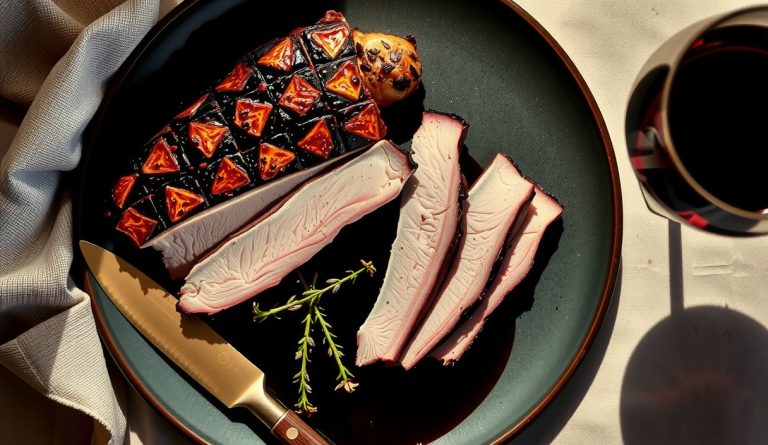
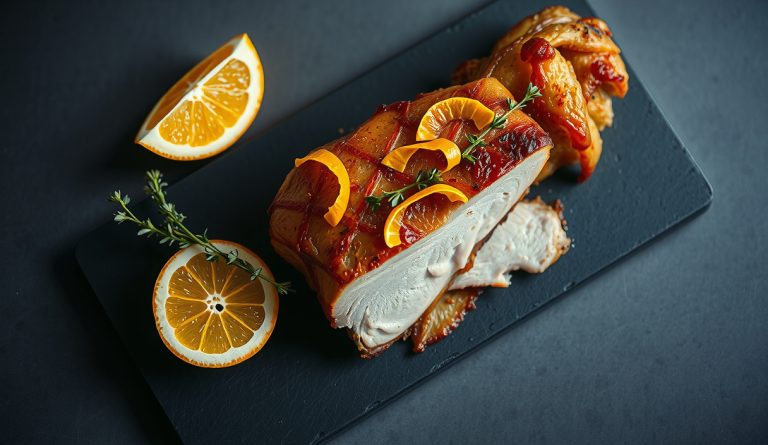
Use this batch approach for dinner parties of four to eight guests, tasting menus requiring a plated duck course, or any event where consistent quality across multiple portions is non-negotiable. Because duck breast holds its internal temperature well during a 10-minute rest, the plating window for multiple portions simultaneously is forgiving. Batch-rendered duck fat is also a valuable byproduct — strain and refrigerate it for roasting potatoes or sautéing vegetables in subsequent meals.
Use the full method, equipment, and per-breast measurements from the original Smoked Duck Breast with Crispy Skin.