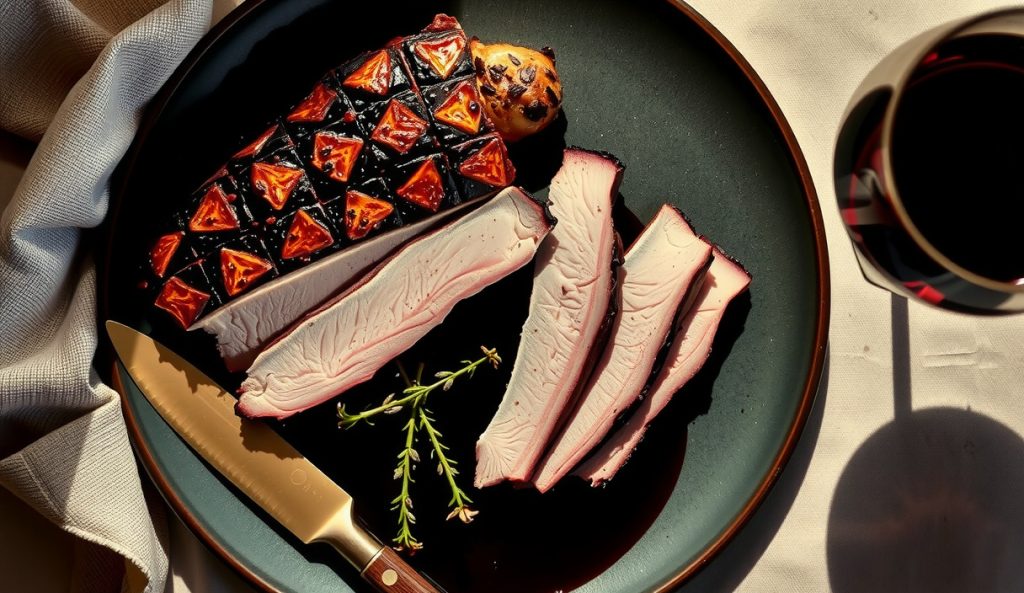
Smoked duck breast is one of the most naturally keto-aligned proteins in the cook’s repertoire. Duck breast is high in fat, moderate in protein, and carries zero carbohydrates in its base form. The only intentional modification required is to omit any glaze applications and redirect the finishing effort toward a pan sauce built entirely from rendered duck fat and low-carb aromatics — sacrificing nothing in richness or sophistication while remaining fully compliant with strict low-carbohydrate protocols.
What changes for the keto adaptation?
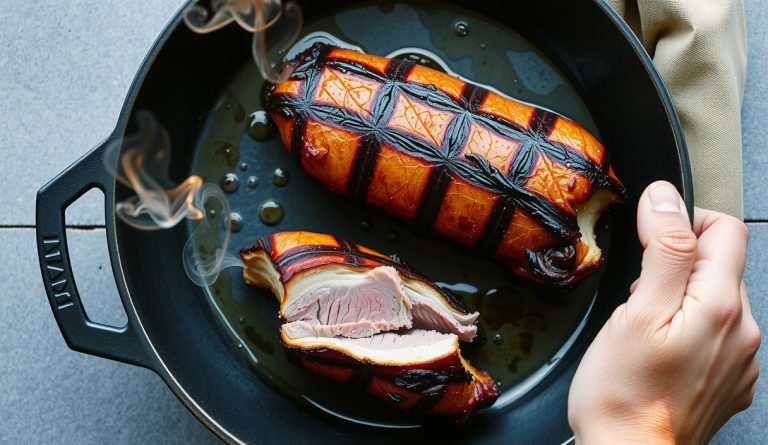
After the cold-start render, reserve the rendered duck fat in the skillet rather than discarding it. Once the breast has finished smoking and is resting, return the skillet to medium heat. Add approximately 60 ml of dry red wine and reduce it fully until the pan is nearly dry. The alcohol and residual grape sugars cook off completely during full reduction, leaving behind only tartaric and malic acid compounds that contribute brightness without meaningful carbohydrate content.
Add 2–3 sprigs of fresh thyme and allow them to bloom in the hot fat for 30 seconds. Remove the skillet from heat and mount with a knob of cold unsalted butter, swirling continuously until the sauce emulsifies into a glossy, cohesive consistency. No cornstarch, arrowroot, or flour is needed or appropriate here.
For additional body without starch, add 60–80 ml of duck or chicken stock to the pan before the wine reduction and reduce by two-thirds before proceeding. Collagen peptides dissolved in the stock act as a natural hydrocolloid at concentrations above roughly 1.5% w/w, building viscosity and mouthfeel that closely mimics a starch-thickened sauce.
What stays exactly the same as the original recipe?
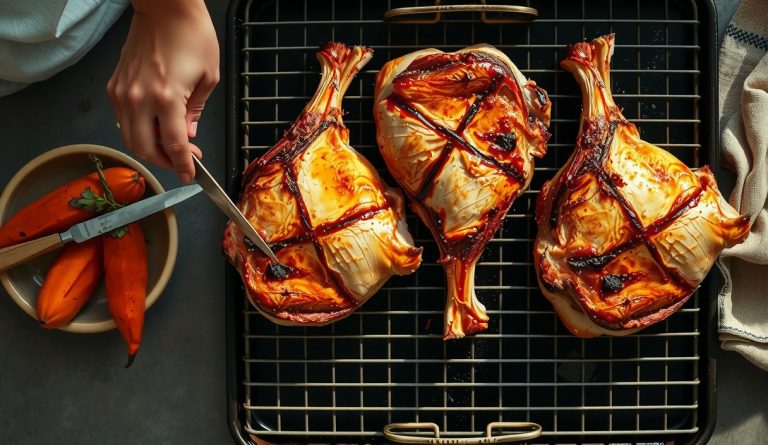
The dry brine, the skin-scoring technique, the cold-start render, the smoke protocol, and the target internal temperature are completely unchanged in this keto adaptation. This variation modifies only the finishing stage — everything that builds the crispy skin and smoke-infused interior remains identical to the canonical smoked duck breast method.
When is the keto adaptation the better choice?
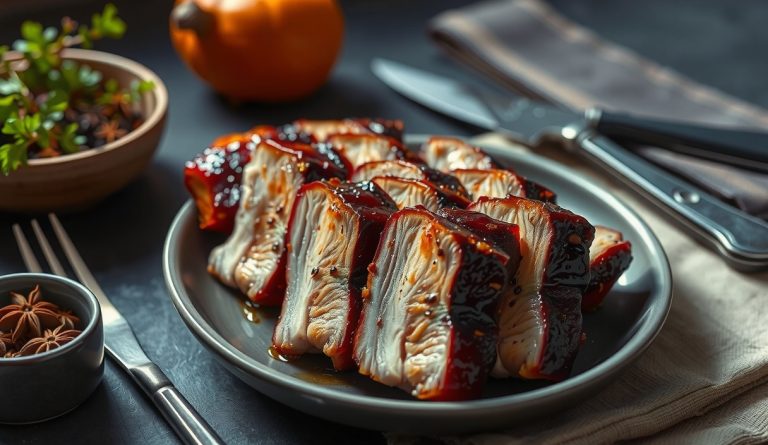
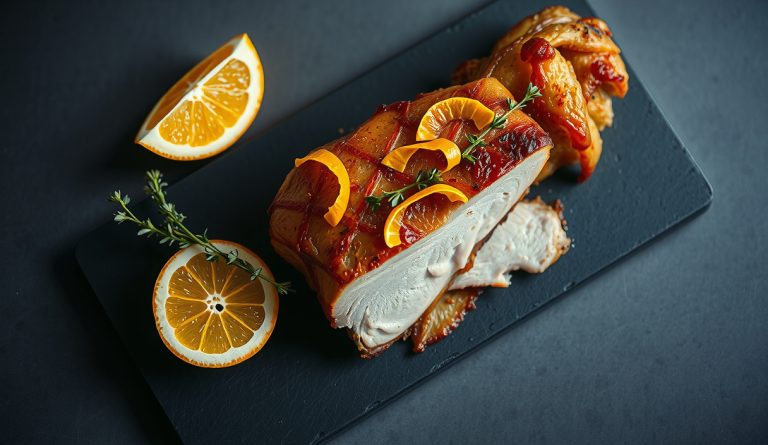
The keto adaptation is the correct path for anyone following a strict ketogenic or low-carbohydrate diet, or for cooks who prefer savory, wine-forward profiles over sweet-glazed finishes. The pan sauce pairs naturally with steak-adjacent sides — roasted asparagus, cauliflower gratin, wilted spinach — making it versatile across a wider range of plated presentations.
Because the sauce is built directly in the render pan, cleanup is minimal and the fat-to-flavor ratio is exceptionally efficient. The rendered duck fat does double duty: it crisps the skin during the cold-start render, then forms the aromatic base of the finished pan sauce.
Use the full method, equipment, and rub measurements from the original Smoked Duck Breast with Crispy Skin.