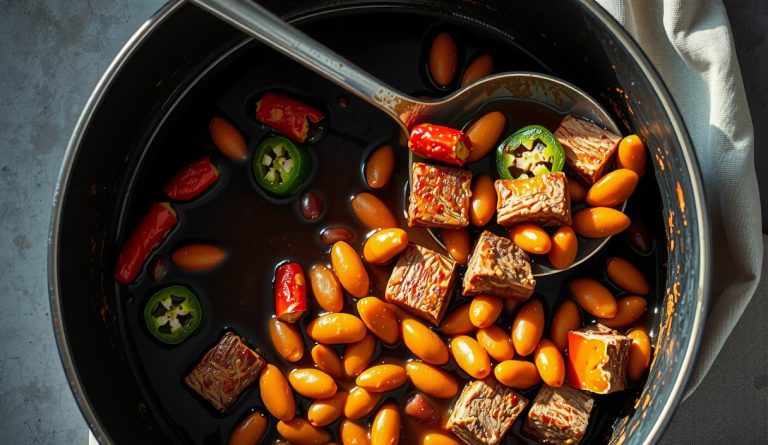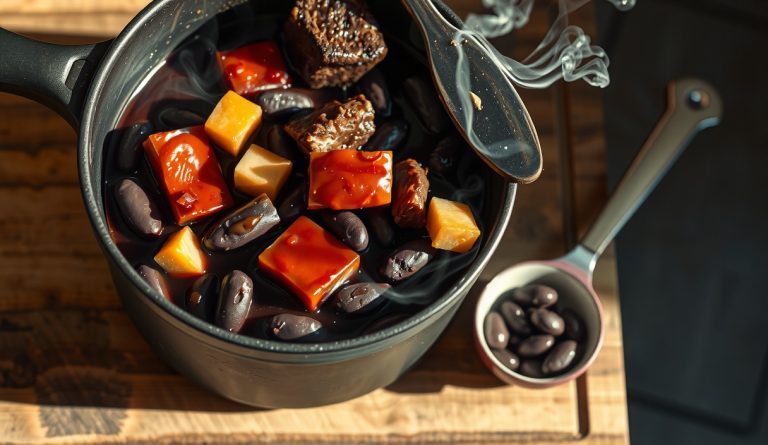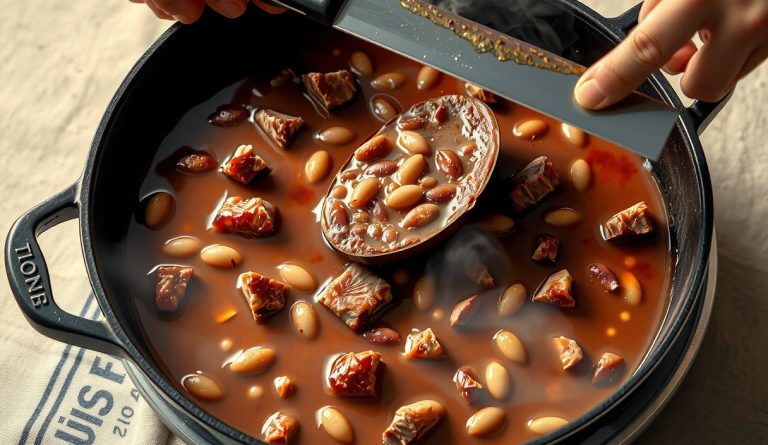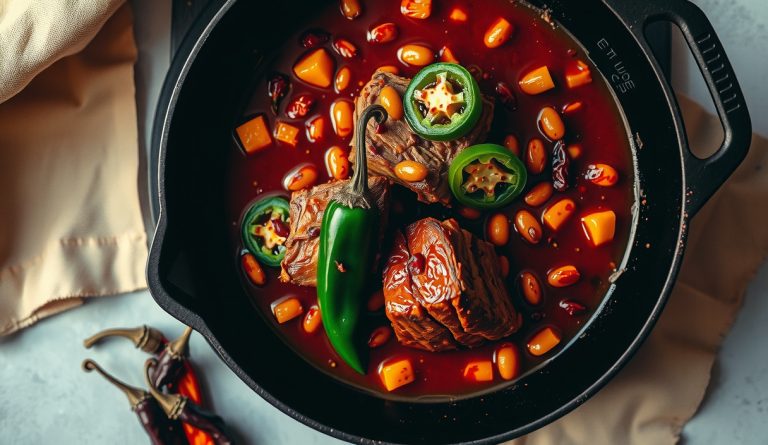
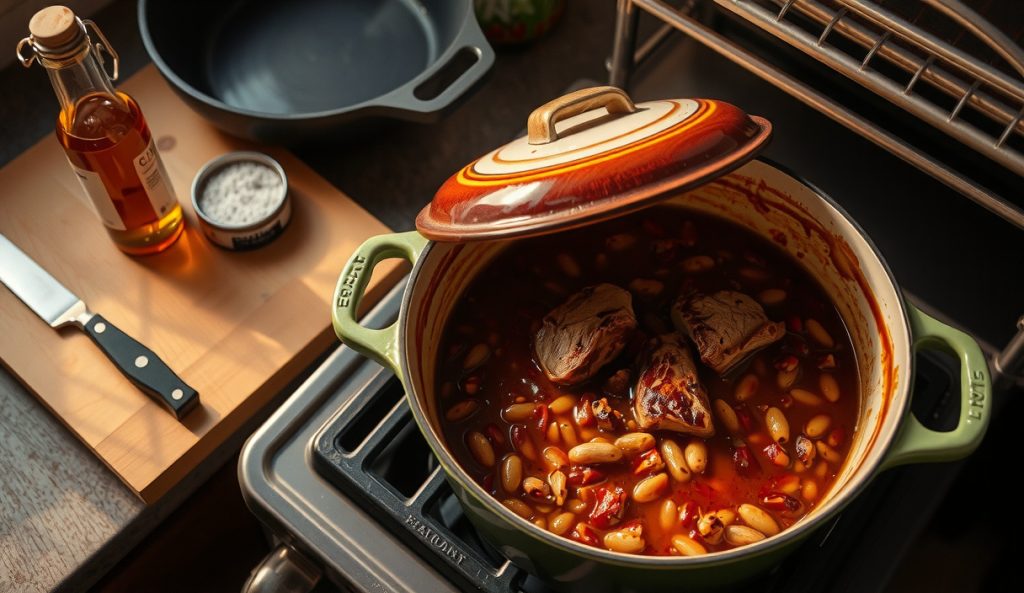
Not every cook has a smoker fired up when a pot of beans is on the agenda. This variation trades live fire for an oven held at 250°F and two pantry-shelf smoke proxies — smoked salt and liquid smoke — to capture the core character of pit beans without the equipment overhead. The result is less layered than beans that spent an hour absorbing wood smoke directly, but the texture, body, and overall depth still outperform anything from a conventional stovetop braise.
What changes when you move pit beans from smoker to oven?
Stir in one to two teaspoons of alder- or hickory-smoked salt when you would normally move the pot to the smoker, and add a scant quarter teaspoon of liquid smoke to the braising liquid. Liquid smoke is an aqueous condensate of wood pyrolysis: its active compound, guaiacol, is the same phenolic molecule responsible for smoky flavor in wood-fired cooking, but it arrives at roughly 100× the concentration you would absorb passively in a smoker — so use it sparingly.
Smoked salt delivers a second, slower phenolic release as it dissolves into the braising liquid, giving a more rounded effect than liquid smoke alone. Critically, the pot stays covered for the entire cook at 250°F oven temperature; there is no uncovered smoke-absorption phase because the oven variation is not managing smoke penetration from an external source.
The collagen-to-gelatin conversion from any brisket trimmings in the pot, and the pectin softening in the bean cell walls, are purely time-and-temperature functions and are unaffected by the change in heat source. Both processes proceed identically at a maintained 250°F whether the energy comes from wood combustion or a calibrated oven element.
What stays the same in the oven and stovetop method?
Every other element of the canonical recipe is unchanged: the aromatics, the brisket trimmings, the rub ratios, the braising liquid volume, and the total covered braise time. The structural goal — deeply tender beans suspended in a glossy, gelatin-enriched sauce — remains identical whether the heat source is a live fire smoker or a calibrated oven.
When is the oven and stovetop method the better choice?
This variation is the right call for weeknight cooks, apartment kitchens, cold-weather situations where firing the smoker is impractical, or any time you want pit beans as a standalone dish rather than a same-day side to an active smoke session. The oven method also works well as a make-ahead batch because the flavors integrate further overnight in the refrigerator.
Use the full ingredient list, brisket trimming guidance, and braising liquid measurements from the original Pit Beans — Texas-Style Smoked Pinto Beans with Brisket Trimmings.