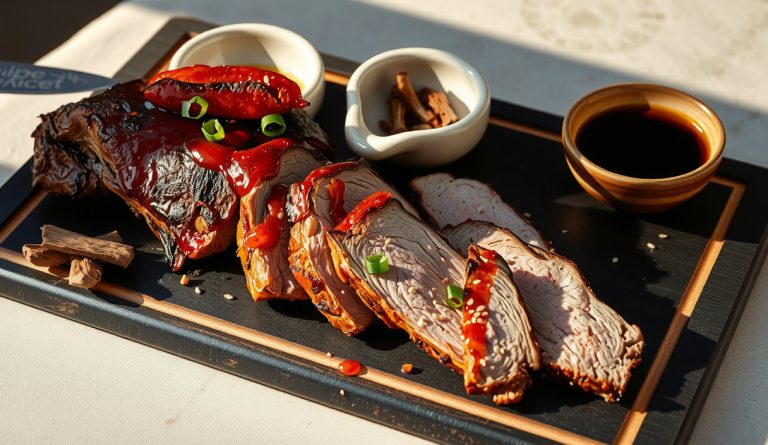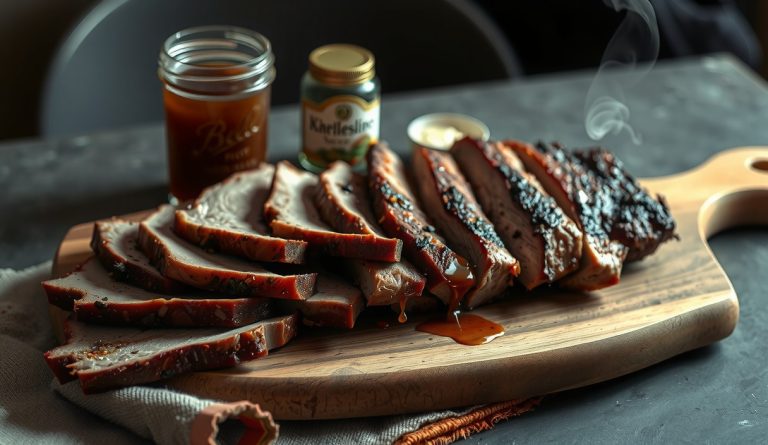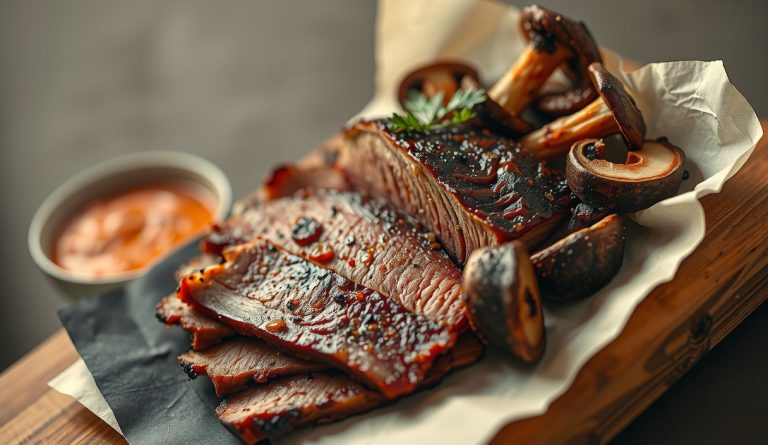
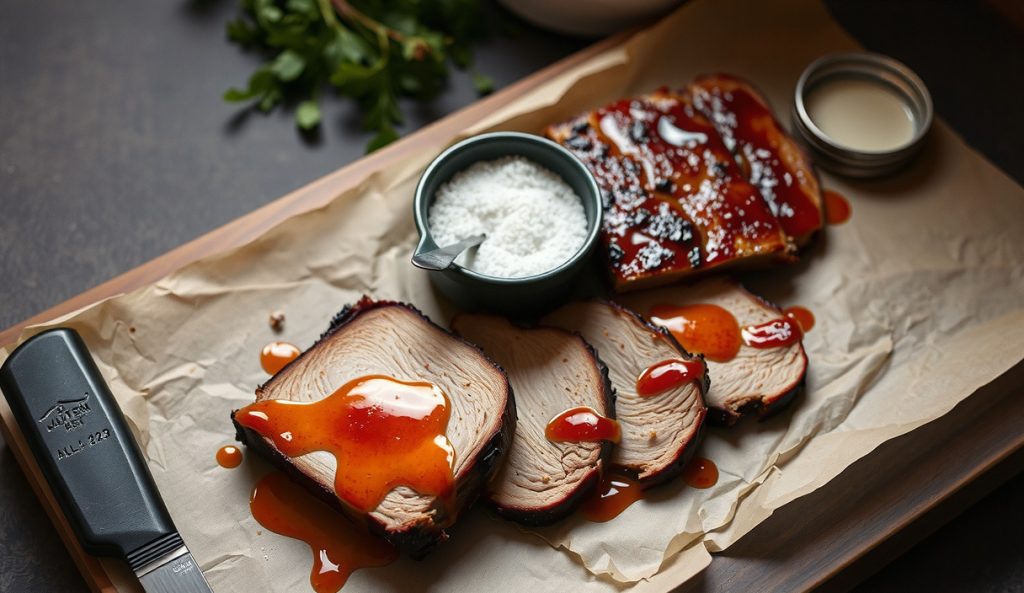
Smoked Brisket with Bone-Broth Glaze is structurally a gluten-free recipe at its core: beef, kosher salt, black pepper, oak smoke, and reduced bone broth contain no wheat. The risk lives entirely in the details — commercial rub blends, store-bought bone broth, shared cutting surfaces, and cross-contaminated spice grinders. This guide audits every one of those details so coeliacs and gluten-sensitive cooks can run the full twelve-plus-hour cook without compromise.
What actually changes for the gluten-free version?
The Texas rub. A classic Central Texas rub — coarse kosher salt and 16-mesh black pepper — is inherently gluten-free, but the moment you reach for a commercial blended rub you introduce real risk. Many pre-mixed rubs include wheat-based anti-caking agents (modified wheat starch or wheat flour) that manufacturers are not always required to call out prominently. Granulated garlic and onion powder, common rub additions, are frequently processed on shared equipment with wheat. Build your own rub for this recipe, source each component individually, and verify that the label carries a certified GF mark. Diamond Crystal kosher salt, Spicewalla coarse black pepper, and certified GF garlic granules are reliable starting points.
The bone-broth glaze. The canonical recipe reduces four quarts of beef bone broth to roughly one cup — a concentration ratio of approximately 4:1 that drives gelatin above 10% w/w. Commercial bone broths vary widely: some contain yeast extract (a common hidden-gluten vector), hydrolyzed wheat protein for body, or are produced in facilities that co-pack wheat-containing soups. Read every label. Kettle & Fire, Epic, and Bare Bones all carry certified GF designations as of current production runs — but verify at purchase, since co-manufacturing agreements change. Bone broth made from scratch (knuckles, feet, marrow bones, 24-hour extraction at 185°F) is inherently gluten-free and gives you full control of the chain. The reduction process itself does not introduce any gluten risk; it simply amplifies whatever was already in the liquid.
Worcestershire and soy-adjacent ingredients. The canonical recipe does not call for Worcestershire or soy sauce, which is a meaningful structural advantage: standard Worcestershire contains barley malt vinegar, and standard soy sauce contains wheat. Should you be tempted to add either as a rub binder or glaze enricher, swap to certified GF Worcestershire (the Lea & Perrins US formula is GF; the UK formula is not) or tamari (San-J GF tamari is widely available). Coconut aminos are a safe wheat-free alternative with slightly less sodium and a touch of sweetness.
Cross-contamination. Dedicate a spice grinder exclusively to GF rubs — residual wheat flour from a shared grinder can deposit meaningful gluten onto the bark. Use a clean basting brush, or run a silicone brush through a full dishwasher cycle away from wheat-containing marinades. Resting the brisket on a cutting board that has processed bread or wheat-brined meats creates a real surface-contamination exposure. A dedicated plastic cutting board reserved for GF proteins costs roughly three dollars and eliminates that vector entirely.
What stays exactly the same in this recipe?
The entire thermal protocol is unchanged: 250°F chamber temperature, dual-probe monitoring, an extended stall at 160–170°F internal, a target of 203°F internal held for 45–60 minutes, and full glaze application onto a set bark surface between 175–200°F. Oak smoke, collagen hydrolysis kinetics, Maillard progression, and the viscoelastic gelatin mechanics of the glaze all operate identically whether or not gluten is present in the kitchen. Gluten plays no functional role in bark formation, smoke adhesion, or connective-tissue breakdown — the science is fully intact.
When is the gluten-free version the better choice?
This version is the right call for any table that includes a guest with coeliac disease or non-coeliac gluten sensitivity — or for a host who wants one authoritative, pre-audited sourcing plan rather than improvising substitutions under time pressure. Because the canonical recipe’s flavor architecture does not rely on gluten-containing ingredients for any functional role, the GF version produces an identical result in bark texture, smoke ring depth, glaze adhesion, and slice quality.
Follow every timing, temperature, and technique detail at the original Smoked Brisket with Bone-Broth Glaze recipe — only the sourcing decisions described above need to change.