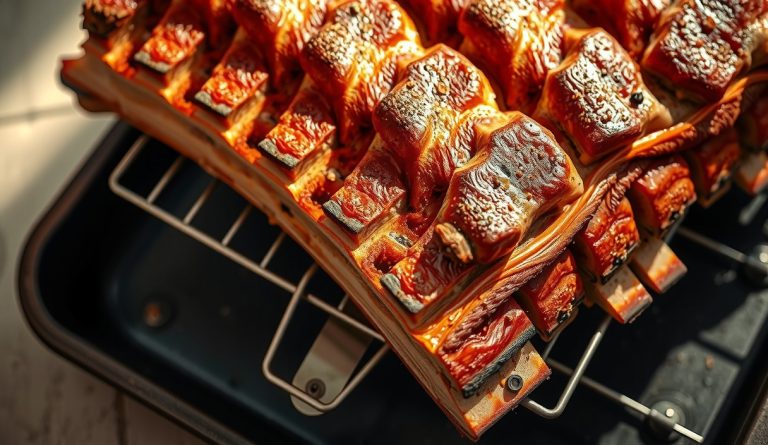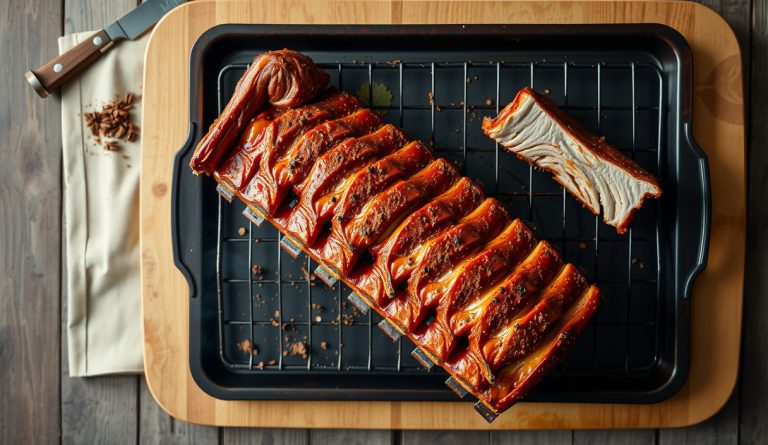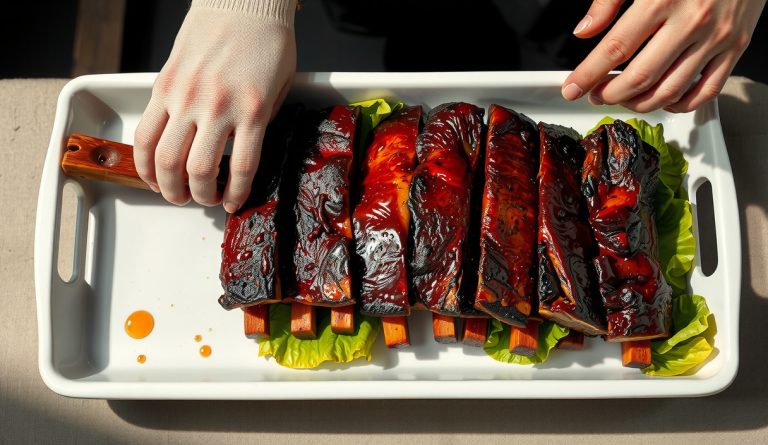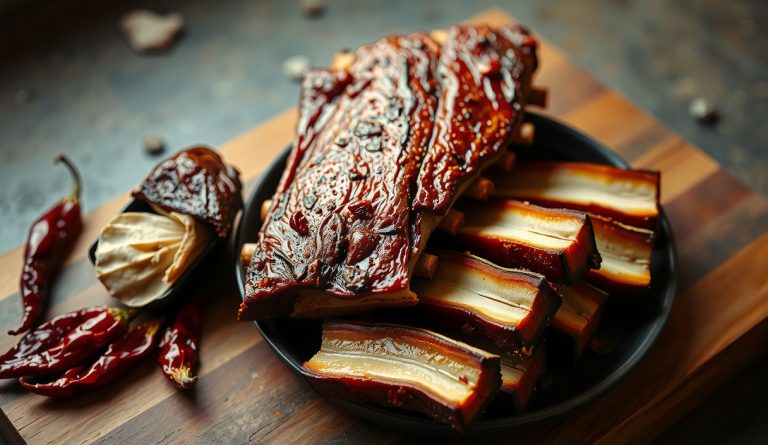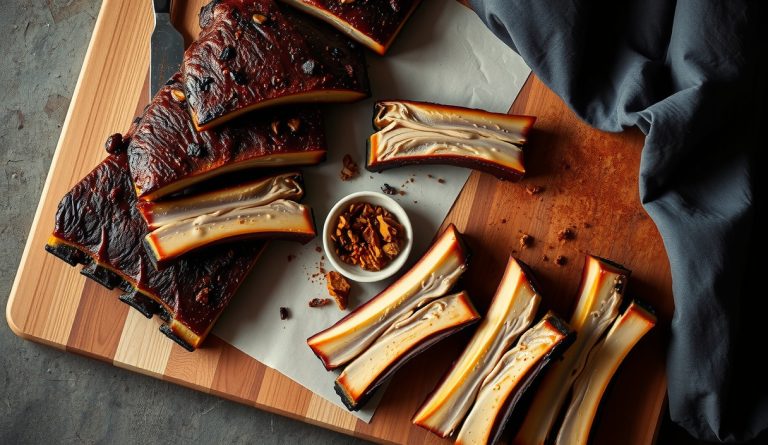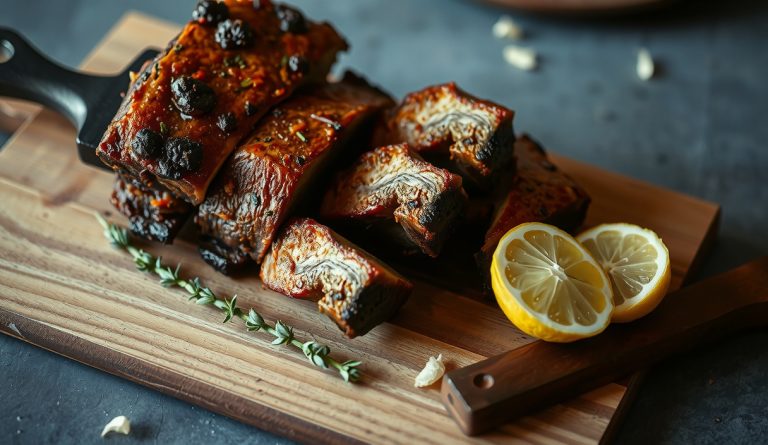
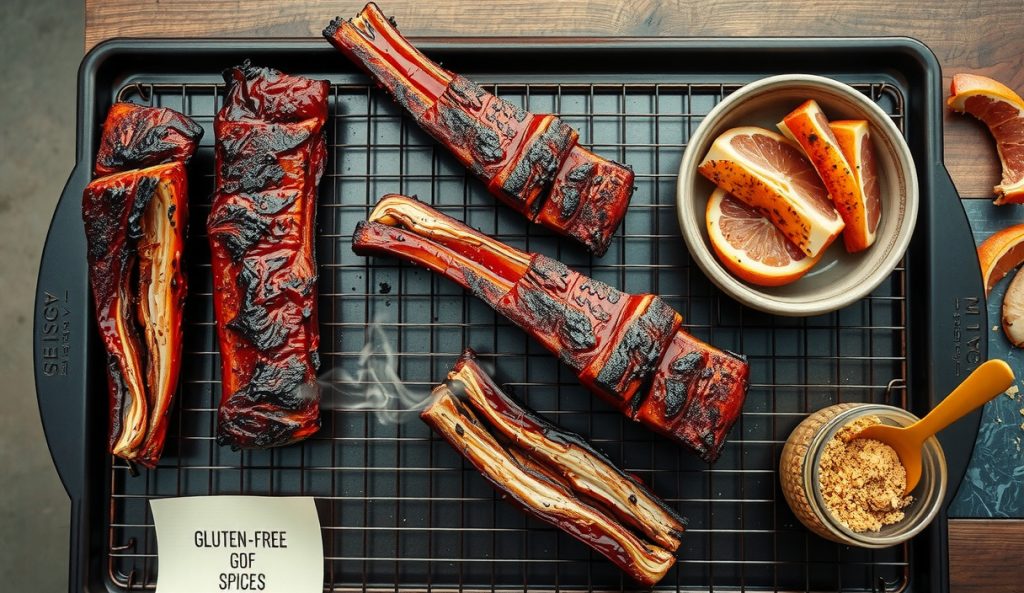
Memphis Dry-Rub Spare Ribs are closer to gluten-free than almost any other BBQ style, precisely because the format is dry-rub-forward: no bun, no flour-thickened sauce, no beer braise. But “closer” is not “there.” Three specific components in the canonical recipe deserve a hard audit before you hand this plate to anyone managing celiac disease or non-celiac gluten sensitivity.
What needs to change to make Memphis Dry-Rub Spare Ribs fully gluten-free?
Worcestershire sauce in the spritz: Most mainstream Worcestershire — Lea & Perrins included in some regional formulations — contains malt vinegar derived from barley, a direct gluten source. Swap it for a certified gluten-free Worcestershire (several craft brands exist) or replace it entirely with coconut aminos, which contributes the same umami-saline depth via glutamates without any grain derivation. The functional role of Worcestershire in the spritz is surface moisture and smoke-ring enhancement during Phase 1; either substitute performs identically in that role.
Commercial dry-rub blends and smoked paprika: If you are building the rub from individual spices, you are largely safe — paprika, cumin, brown sugar, salt, pepper, and cayenne carry no inherent gluten. The risk is in pre-blended rub products and even some mass-market ground spices that use wheat-derived starch or flour as an anti-caking agent. Read the label for “modified food starch” or “may contain wheat.” For the smoked paprika specifically, buy a single-origin tin (Spanish pimentón de la Vera is almost always safe) and verify it carries no shared-facility wheat warning. Build this rub from scratch and you control everything.
Apple cider vinegar in the spritz: Cider vinegar is naturally gluten-free. If the canonical recipe uses any malt vinegar variant — common in some regional spritz formulas — replace it with straight apple cider vinegar. The acetic acid performs the same surface-moisture and pH-brightening function, and the apple-ester note pairs cleanly with the hickory-apple wood blend already in play.
Cross-contamination protocol: A shared spice grinder, rub bowl, or basting brush that has previously contacted gluten-bearing rubs or sauces is a real risk for celiac-level sensitivity. Dedicate a brush to this cook, wipe the smoker grates with a fresh cloth, and use a clean bowl for the rub. The smoke itself — hickory and apple wood combustion — introduces zero gluten into the cook environment.
What stays exactly the same in the gluten-free version?
The entire 3-2-1 structure, the smoked paprika-cumin rub profile, the hickory-apple wood blend, all three collagen-hydrolysis and Maillard mechanisms, and the bend-test doneness standard are completely unchanged. St. Louis-cut pork ribs are inherently, unambiguously gluten-free; smoke chemistry is gluten-free; the foil-wrap braise phase needs no modification whatsoever. This is fundamentally the same plate.
When is the gluten-free version the better default choice?
Any table that includes a celiac or gluten-sensitive guest — or any cook who cannot verify every guest’s dietary status — benefits from building this version by default. The flavor delta between a scratch-built gluten-free rub and a mass-market blend is neutral to positive: fresher spice volatiles and full control over salt level come as a bonus at no cost to the final plate.
Follow the full technique, timing, and fire-management guidance at the original Memphis Dry-Rub Spare Ribs recipe.