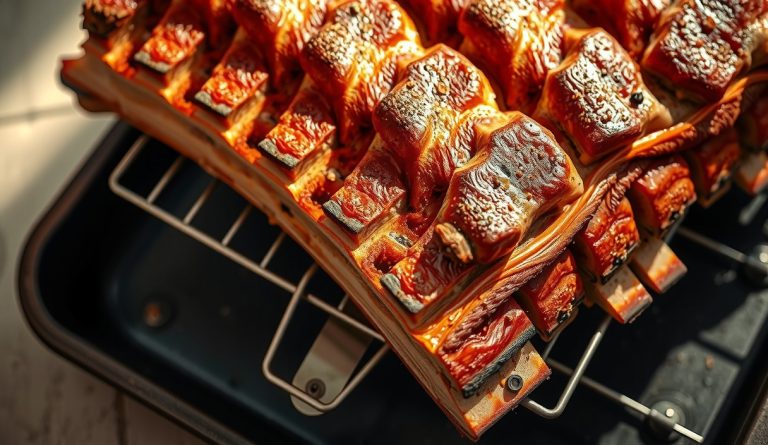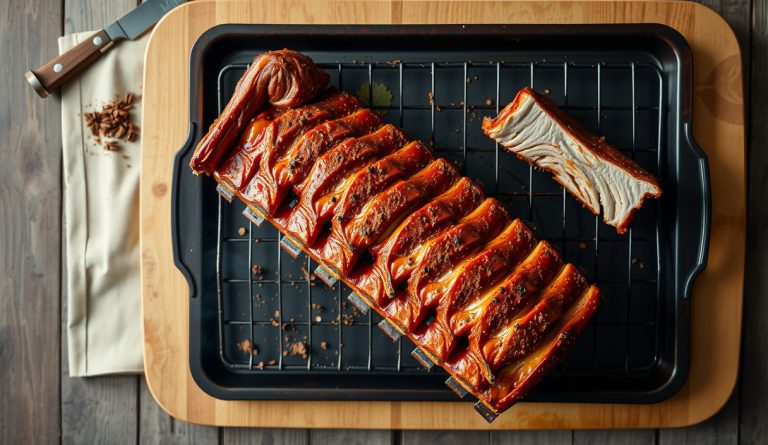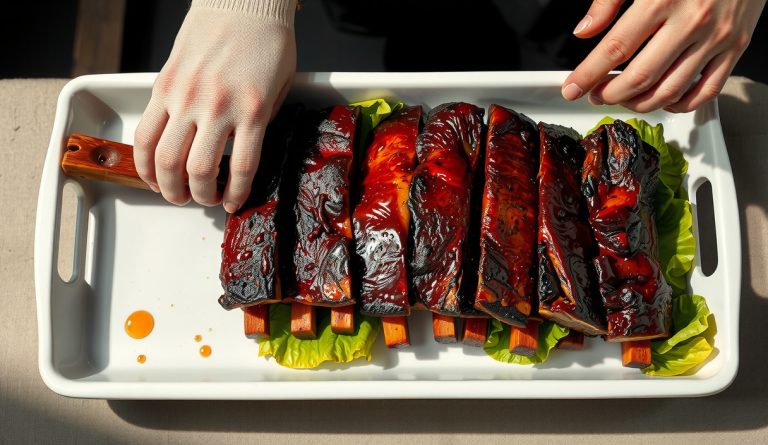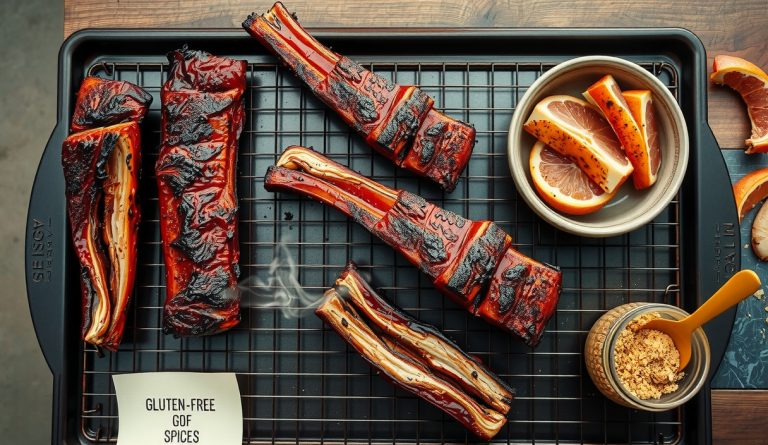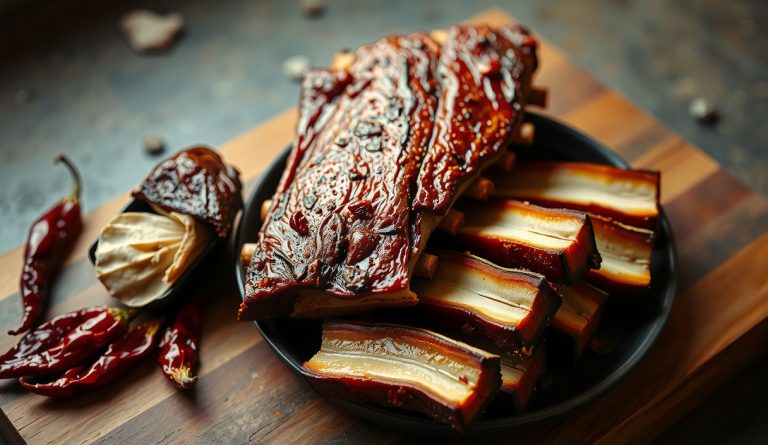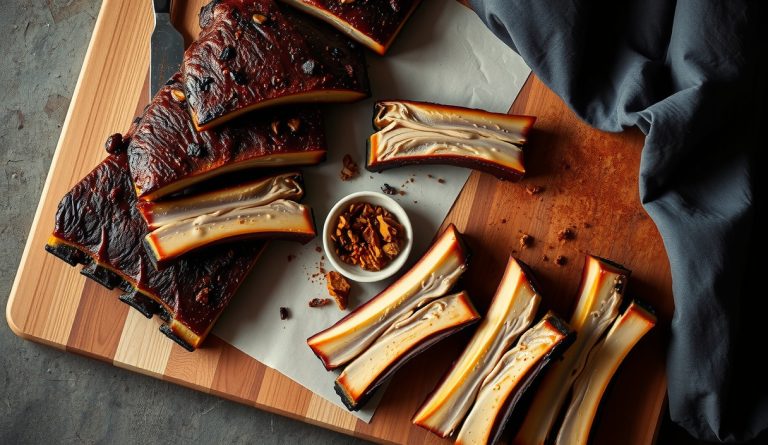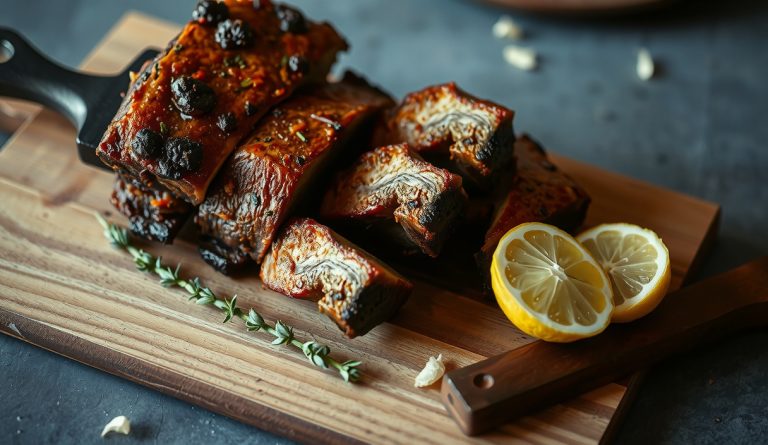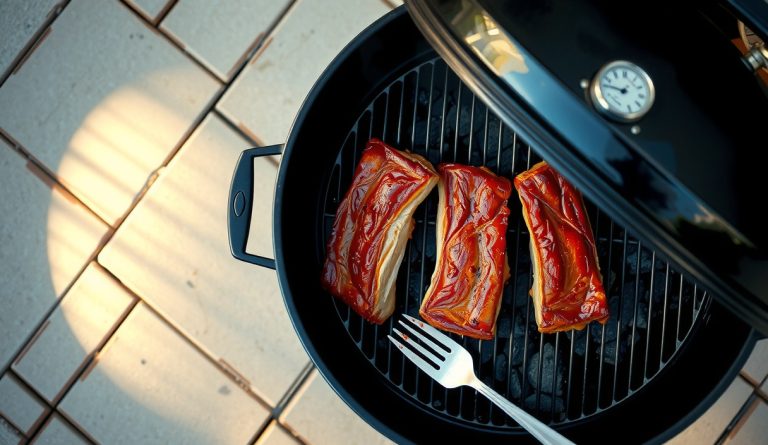
This companion dish makes no claim that anything replicates a St. Louis spare rib for a vegetarian guest. Longer tables, not higher fences. What this companion dish offers is a vegetable analog — king oyster mushrooms cut to rib-plank dimensions — that runs the same smoked paprika-cumin rub, the same hickory-apple smoke, and a modified version of the same three-phase structure, producing its own legitimate bark, chew, and phenolic complexity. The king oyster plank earns a seat at the Memphis table on its own terms.
What changes for the vegetarian version?
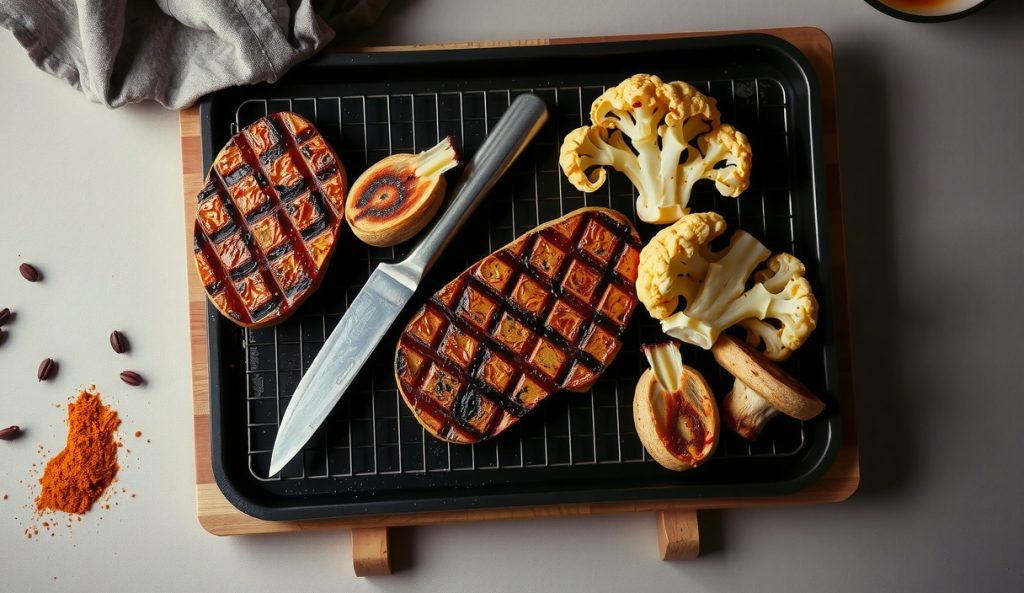
The analog — king oyster mushrooms: King oyster mushrooms (Pleurotus eryngii) are the correct choice for this application. Their dense, meaty stipe has a fibrous, low-moisture cell structure that resists collapse under prolonged heat far better than portobello or cremini. Cut the stipes lengthwise into planks roughly 3/4 inch thick and 4–5 inches long — visually evocative of rib sections and practically sized for the smoker grate. Score the cut faces with a shallow crosshatch: this increases surface area for rub adhesion and creates micro-channels for smoke compound absorption, compensating for the fact that mushroom cell walls do not have the open protein matrix that pork surfaces offer to Maillard reactions.
Rub application and Maillard mechanics: Apply the canonical Memphis rub — smoked paprika, cumin, brown sugar, salt, black pepper, cayenne — directly, pressing it firmly into the scored faces. Mushroom surfaces are rich in free amino acids (glutamic acid, alanine) and reducing sugars in their cell sap; combined with the rub’s brown sugar, these create a Maillard substrate that genuinely browns. Brush the planks with a thin layer of neutral oil (avocado or refined sunflower) before rubbing: mushroom cell walls contain no intramuscular fat to self-baste, and the oil provides the lipid medium that helps rub components adhere and conduct heat to the surface evenly.
Modified smoke structure — 1-0.5-0.5: King oyster planks cook in roughly two hours total, not six. Run Phase 1 (unwrapped smoke) for 60 minutes at 250–275°F (121–135°C) with the same hickory-apple blend. The guaiacol and syringol from hickory absorb into the mushroom’s porous cell structure with striking efficiency — smoke uptake per unit surface area is actually higher than in pork because there is no surface fat layer to impede absorption. Wrap loosely in foil for 30 minutes to allow internal moisture redistribution and soften the texture toward a satisfying chew rather than a tough bite. Unwrap for a final 30 minutes to reset bark. There is no collagen hydrolysis target here; the plank is done when it bends with resistance but does not snap or disintegrate — a textural analog to the pork bend test.
What the king oyster plank does not replicate: The rendered intramuscular fat, the deep collagen-gelatin gloss, the specific rib-bone pull, and the protein density of pork are not present in the mushroom version. Be honest with guests about this distinction. What the king oyster plank does deliver — phenolic smoke, spiced bark, umami depth, and a chewy-tender bite — is genuinely satisfying on its own register.
What stays exactly the same as the pork recipe?
The complete canonical rub formula, the hickory-apple wood combination, the two-zone indirect heat setup, and the three-phase unwrap-wrap-unwrap logic are identical between the pork ribs and the mushroom planks. The king oyster planks sit on the same smoker, absorb the same smoke compounds, and wear the same rub as the pork beside them — making this a true companion cook rather than a separate recipe.
When is the king oyster plank the better choice?
Any cookout that includes vegetarian guests who want to participate in the same smoke and flavor experience — not eat a salad while everyone else has ribs — benefits from this companion dish. The king oyster planks cook on the same smoker in the same session, finish faster than the pork at roughly two hours total, and hold well tented in foil at the end of the cook.
The pork technique, science, and timing that anchor this table are all at the original Memphis Dry-Rub Spare Ribs recipe.