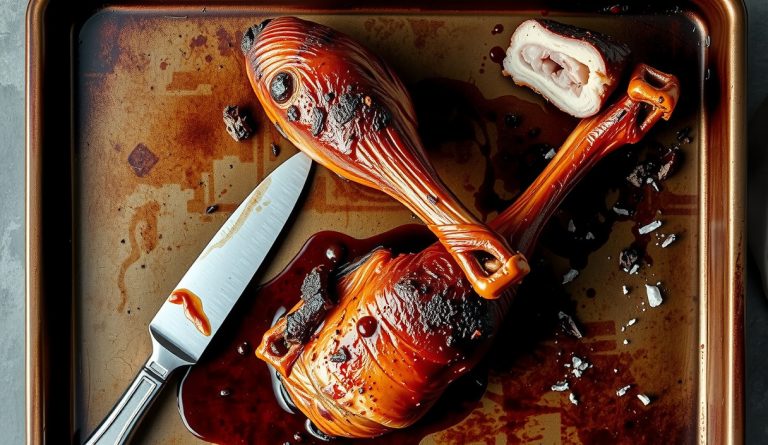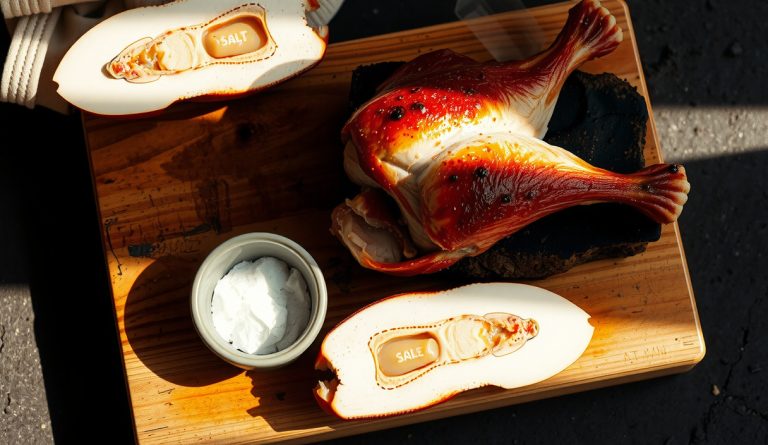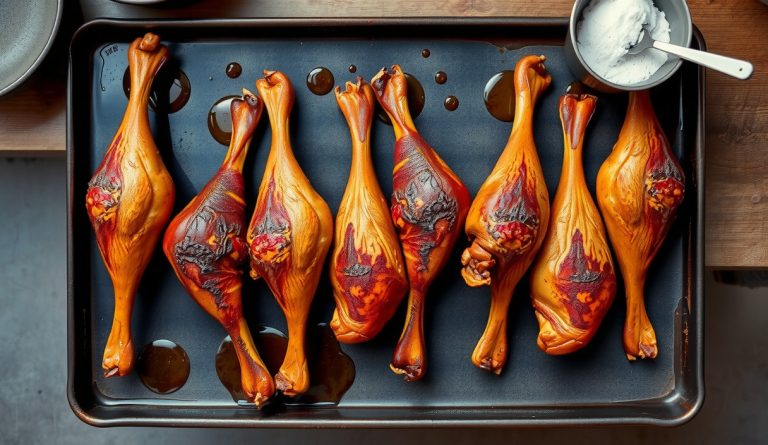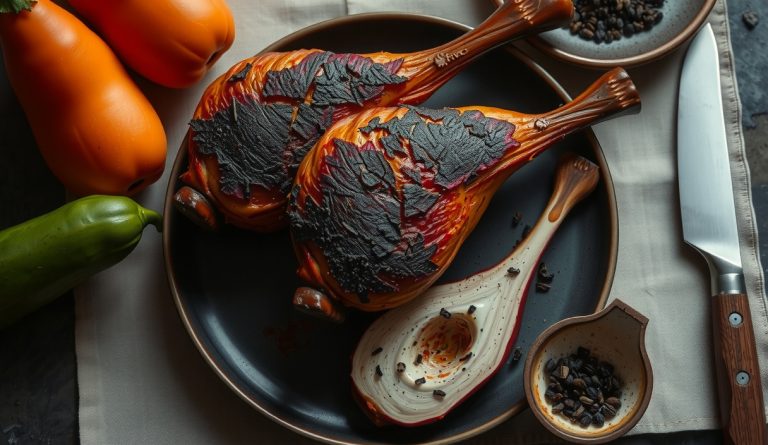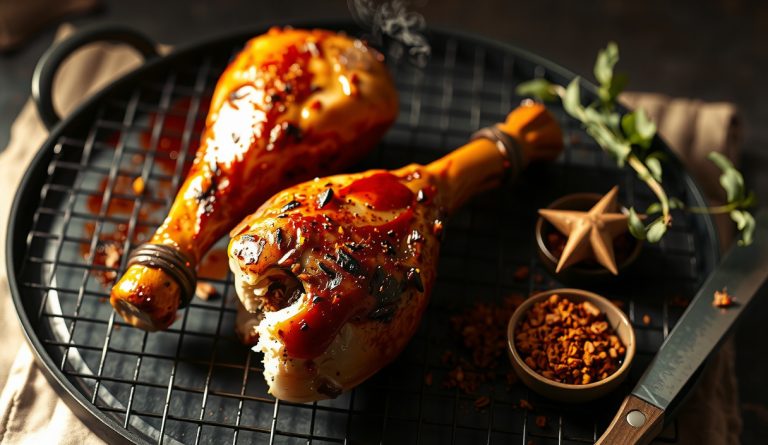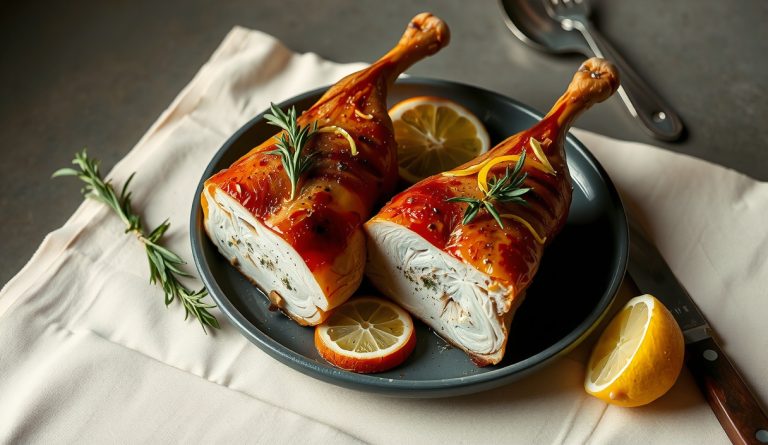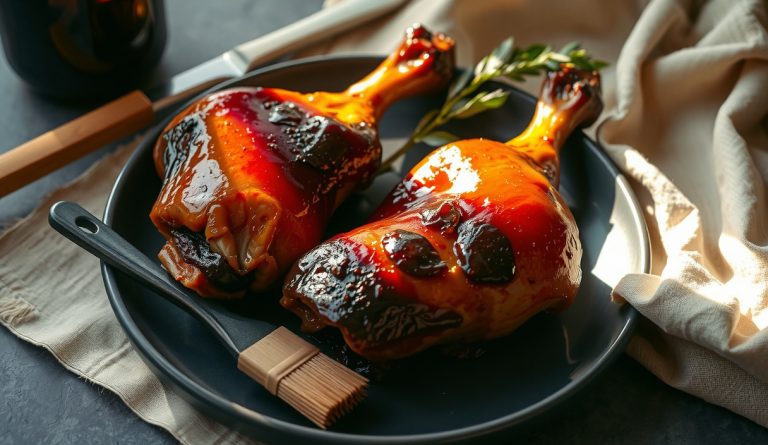
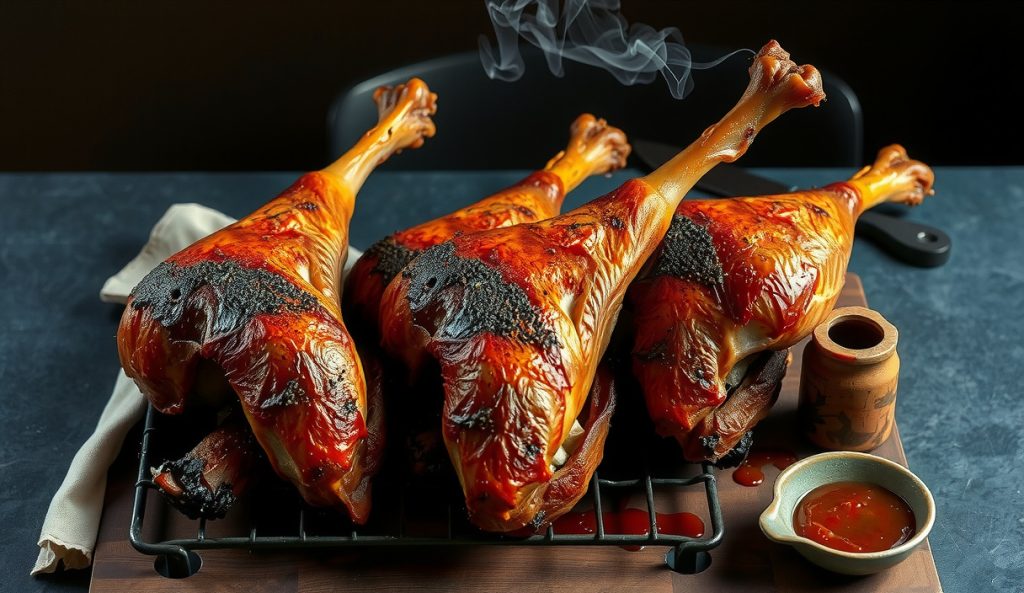
Turkey legs are one of the most naturally keto-compatible cuts at the pit: high fat, high protein, and zero net carbs in the meat itself. The canonical recipe’s carbohydrate load comes from exactly two sources — the brown sugar in the brine and the brown sugar in the dry rub. Eliminating those carbs requires understanding what sugar actually does in each context, because the keto replacements are not interchangeable between brine and rub.
What changes to make these turkey legs keto?
Brown sugar in the brine: In a wet cure, sugar’s primary function is flavor modulation and a very minor osmotic contribution — it does not meaningfully affect nitrite chemistry or moisture-uptake physics, which are driven by salt-concentration gradients. Swap it 1:1 with allulose. Allulose behaves like sucrose in aqueous solution: it dissolves cleanly, carries sweetness without bitterness, and does not crystallize as the brine chills. Allulose is the only keto sweetener that functions correctly in a brine context.
Why not erythritol or monk-fruit in the brine: Erythritol and monk-fruit blends recrystallize as the brine chills, producing uneven osmotic conditions and a grainy texture on the meat surface. Reserve those sweeteners for the dry rub stage — avoid them entirely in the liquid stage.
Brown sugar in the dry rub: This is where sugar does real structural work — it participates in Maillard browning at the bark surface and drives the mahogany color characteristic of state-fair legs. Use a 50/50 blend of allulose and erythritol/monk-fruit in the rub. Allulose browns and caramelizes nearly identically to sucrose: it undergoes Maillard reactions with amino acids on the meat surface beginning around 280°F, supplying both the visual bark and the deep flavor development. Erythritol contributes body and sweetness persistence, but keep it at no more than 50% of the total blend — at higher concentrations it deposits visibly as white crystals on cooled bark and produces a noticeable cooling sensation on the palate. Keep the allulose fraction dominant for clean, authentic bark.
Net-carb delta: The canonical recipe’s brown sugar contributes roughly 6–8g net carbs per turkey leg from combined brine absorption and rub coating. The allulose-based swap reduces that figure to approximately 1–2g net carbs per leg, because allulose is absorbed but not metabolized and is excluded from net-carb calculations in the United States. That is a meaningful reduction for anyone tracking macros tightly.
Keto serving context: Skip the soft roll or cornbread that sometimes accompanies fair-style legs. Pair the smoked turkey leg with butter-sautéed smoked cabbage, a wedge salad with bacon and blue cheese, or eat it standing up as nature and the fairground intended — no side required.
What stays exactly the same in the keto version?
The Prague Powder #1 cure, the full 24-hour brine, the pellicle step, the 275°F smoking temperature, the 2:1 cherry-to-hickory wood ratio, and the 175°F internal pull temperature are all unchanged. Salt concentration, nitrite chemistry, collagen hydrolysis kinetics, and smoke VOC deposition are entirely carbohydrate-independent. The cured pink interior, the gelatin-slick texture, and the mahogany bark all develop on exactly the same timeline as the original recipe.
Who is this keto version the better choice for?
This version is the correct choice for anyone running a strict ketogenic protocol or simply keeping daily sugar intake low without sacrificing the authentic cured-leg experience. Turkey drumsticks already carry a high fat content and a protein-to-fat ratio favorable for satiety, so the smoked turkey legs fit seamlessly into a keto meal plan with no further macro adjustments needed.
Apply these sweetener swaps at the brine and rub stages documented in the original Smoked Turkey Legs — State-Fair Style recipe and follow the remainder of the method without modification.