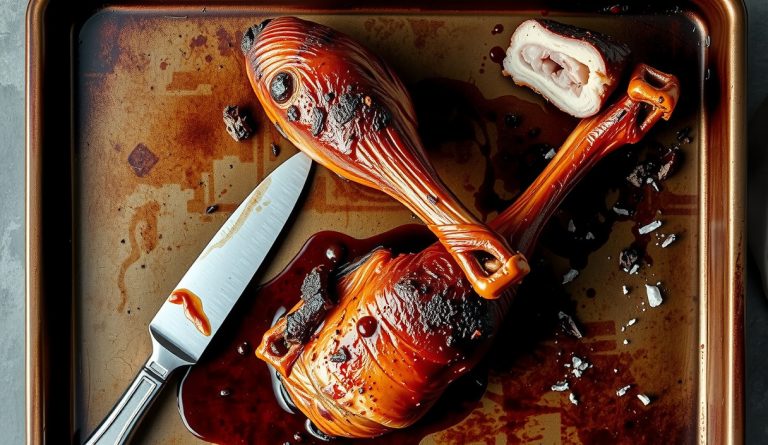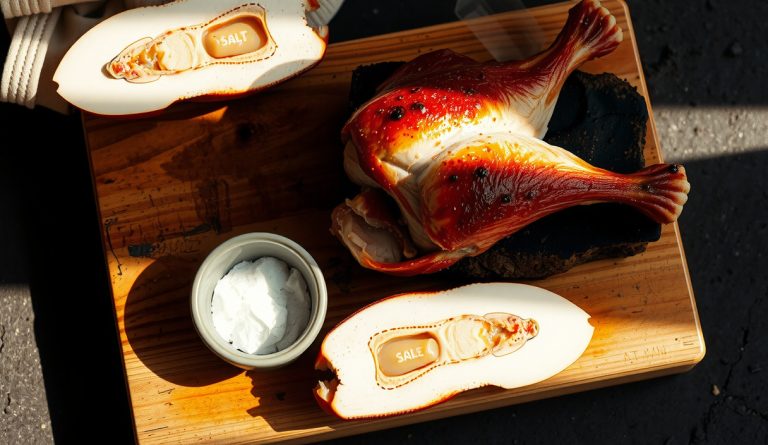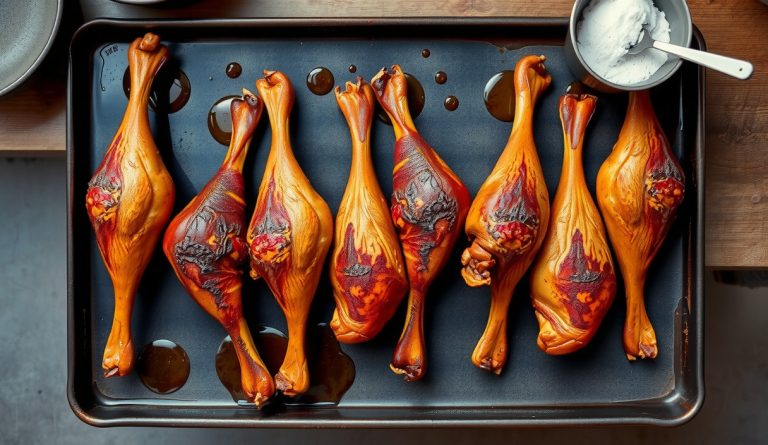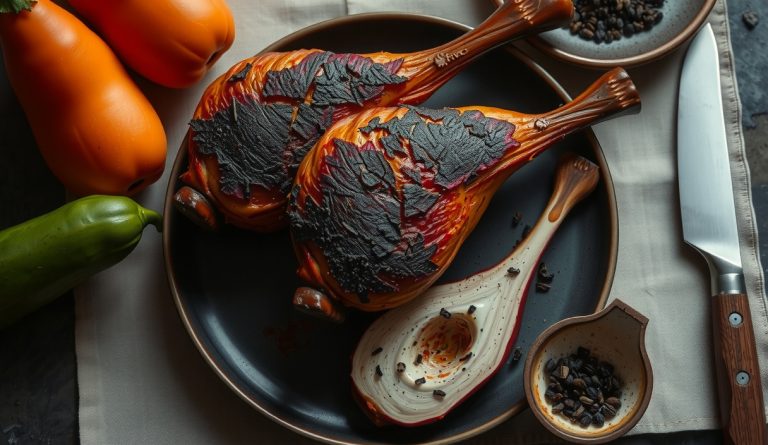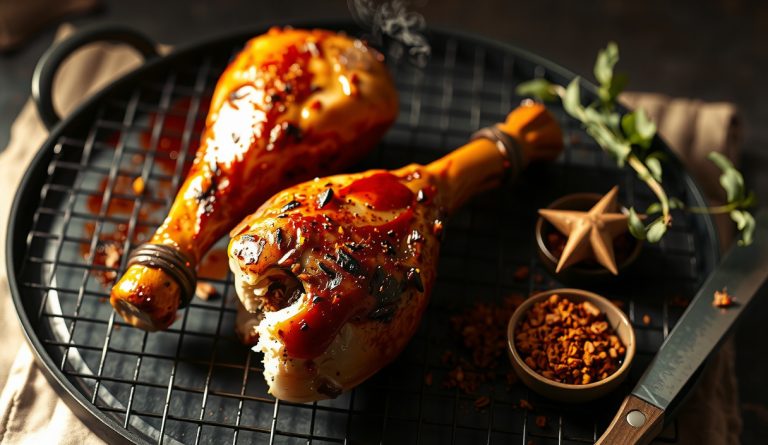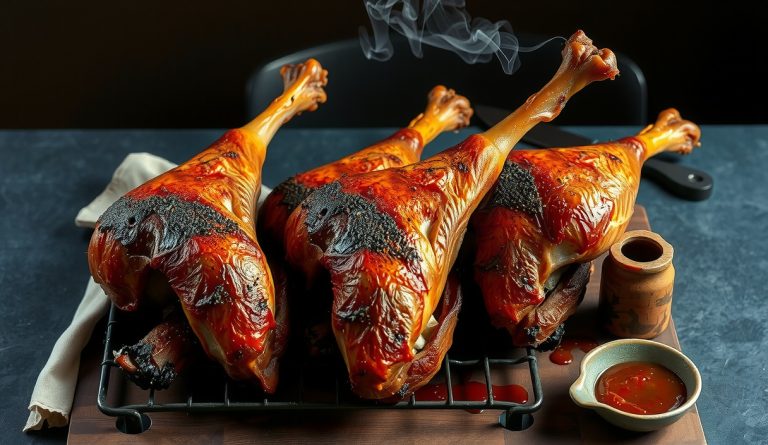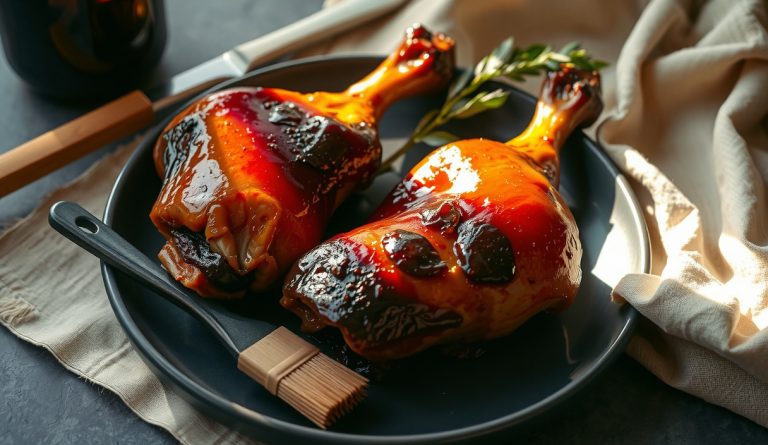
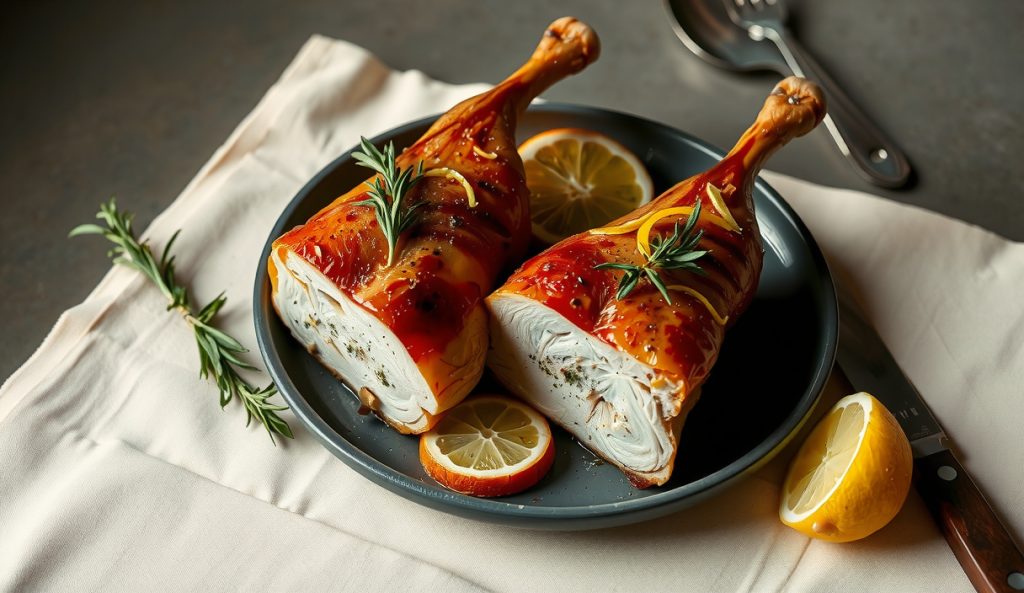
This low-sodium adaptation is the most technically constrained of the four smoked turkey leg variants, and it is worth being direct about why: salt is not a seasoning garnish in this recipe. Salt performs three load-bearing functions simultaneously — osmotic moisture absorption, bark-forming protein denaturation on the surface, and the delivery vehicle for the nitrite cure. Cutting sodium requires compensating for each function individually rather than simply dialing the salt down and hoping for the best.
What changes in the low-sodium version?
Brine sodium reduction: Reduce the kosher salt in the brine by 60% — from a typical 1 cup per gallon to roughly 6 tablespoons per gallon. This keeps the osmotic gradient sufficient for meaningful moisture uptake (the turkey legs will still gain 4–6% retained weight, down from 6–10% at full salinity) while bringing per-serving sodium to a more manageable level. Do not drop below this threshold: below roughly 2% brine salinity, the osmotic driving force reverses and the meat can actually lose moisture into a hypotonic solution.
Potassium chloride as a partial substitute: Replace up to half the reduced salt volume with a food-grade potassium chloride blend (Nu-Salt or NoSalt). Potassium chloride activates the same salt-taste receptors and contributes to osmotic function, but it carries a metallic bitterness threshold at concentrations above roughly 30–35% of total chloride salts — stay below that ratio in the brine and rub combined. The bitterness is most perceptible in the brine liquid itself and mellows substantially once the ions diffuse into the muscle matrix.
Prague Powder #1 — do not reduce: The nitrite dosage of 1 teaspoon per 5 lbs is a food-safety-calibrated figure conforming to USDA-validated cure ratios and is not adjustable for sodium-reduction purposes. The nitrite fraction of Prague Powder #1 is 6.25% of a very small total weight — its sodium contribution to the finished leg is negligible compared to the brine salt. Reducing Prague Powder #1 would compromise both the cured pink color and the botulinum inhibition during the low-oxygen smoke environment.
Dry rub — rebuilding flavor without salt: Reduce rub salt by 50–70% and compensate with lemon zest (brightens perception of saltiness via trigeminal contrast), smoked paprika at double the canonical quantity, fresh-cracked black pepper, dried thyme, and a pinch of ground sumac for tartness. These ingredients amplify the Maillard and smoke flavors the palate reads as savory richness, partially masking the salt reduction.
Bark expectations: Bark on the low-sodium legs will be slightly less aggressively crusted, and that is worth stating plainly. Salt denatures surface proteins that cross-link during drying to form the rigid bark matrix; with less salt, the pellicle forms more slowly and the bark will be thinner and somewhat softer. Mitigate this by extending the pellicle-formation step to 2–3 hours uncovered in the refrigerator and smoking at the full 275°F — higher chamber temperature accelerates surface moisture evaporation and compensates partially for the reduced protein denaturation.
What stays exactly the same?
The 24-hour brine window, two-stage smoke at 275°F, 2:1 cherry-to-hickory wood ratio, and 175°F pull temperature are all unchanged. Collagen hydrolysis to gelatin is temperature-driven, not sodium-driven — the dense, sticky interior texture will be fully intact regardless of the sodium reduction.
Who is this version the better choice for?
This low-sodium smoked turkey leg version is appropriate for guests managing hypertension, heart failure fluid protocols, or chronic kidney disease stages 1–2, where a standard cured turkey leg’s sodium load — often 900–1,200 mg per leg — is prohibitive. This is not a zero-sodium recipe: the cure requires sodium to function safely. It does, however, deliver the essential state-fair smoked turkey leg experience at a substantially reduced sodium burden.
Apply these adjustments at the brine and rub stages detailed in the original Smoked Turkey Legs — State-Fair Style recipe and follow the timing and temperature method exactly as written.