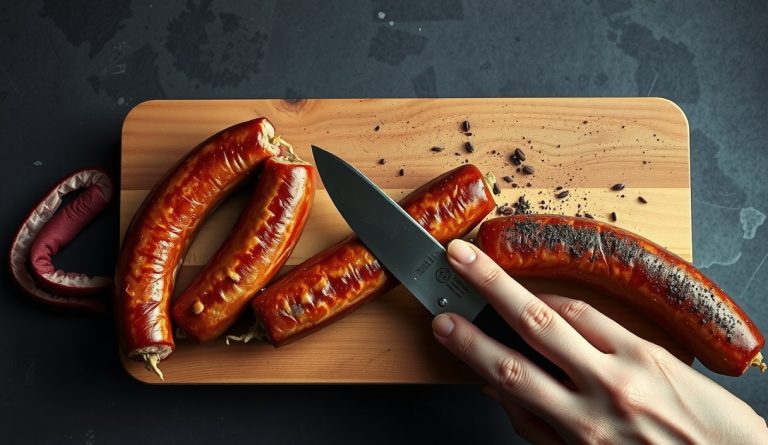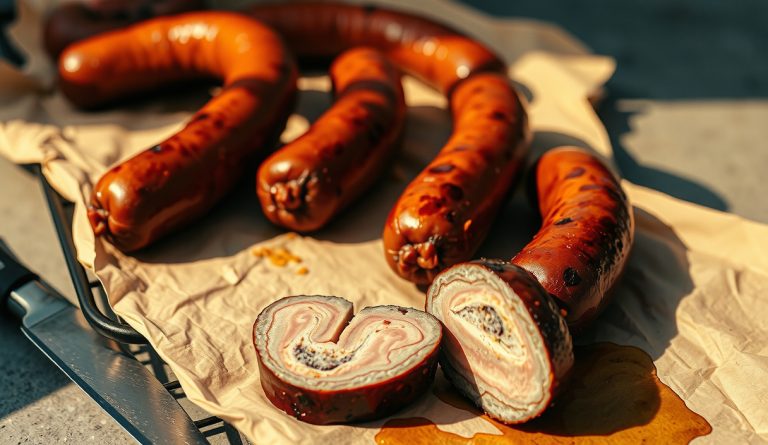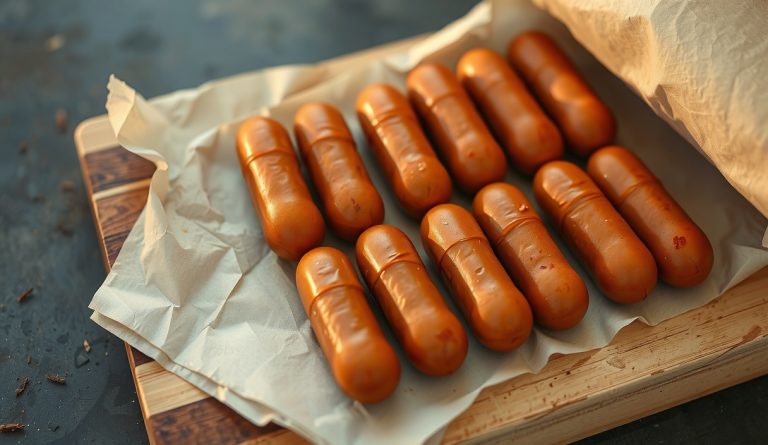
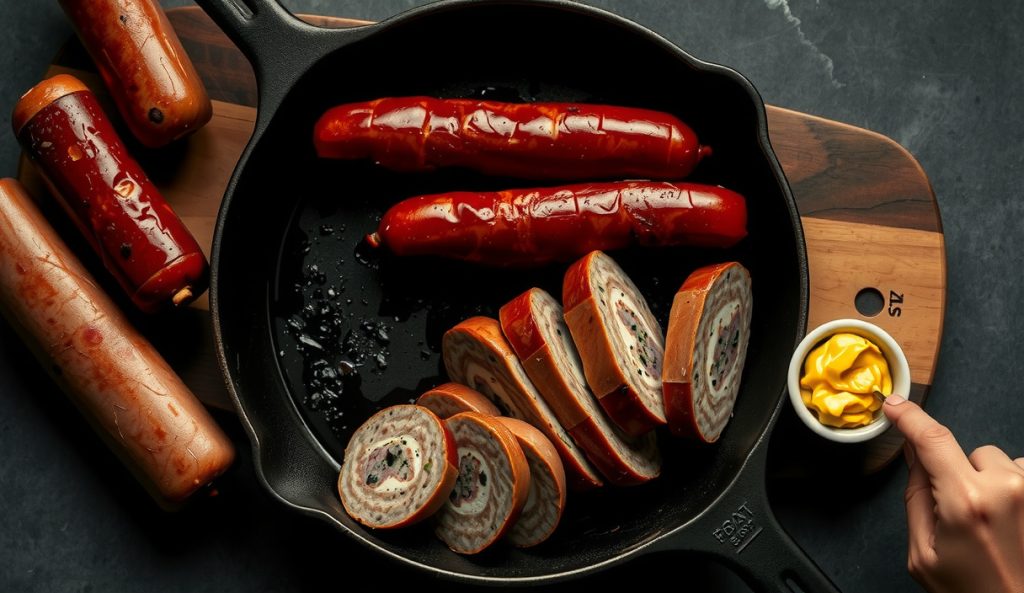
Of all the BBQ recipes that require aggressive reformulation for a ketogenic diet, Hot Guts Sausage is among the friendliest. The protein-and-fat matrix is already the structural point of the dish. Carbohydrate exposure is narrow and comes from specific, identifiable sources — primarily added sugar in the seasoning and any dextrose used as a cure carrier — not from any structural ingredient. This adaptation addresses those sources with precision rather than wholesale reinvention.
What changes in the keto version?
Dextrose in the cure carrier. Many curing blends and some Prague Powder #1 products include dextrose (glucose) as a carrier or flavor moderator. At typical sausage cure rates — roughly 1 teaspoon per five pounds of meat — dextrose contributes only about 1–2g of carbohydrate to the entire batch, which distributes to well under 0.5g per link. For strict therapeutic keto this still matters; choose a Prague Powder #1 brand that lists only sodium chloride and sodium nitrite, or account for the dextrose in your daily tracking.
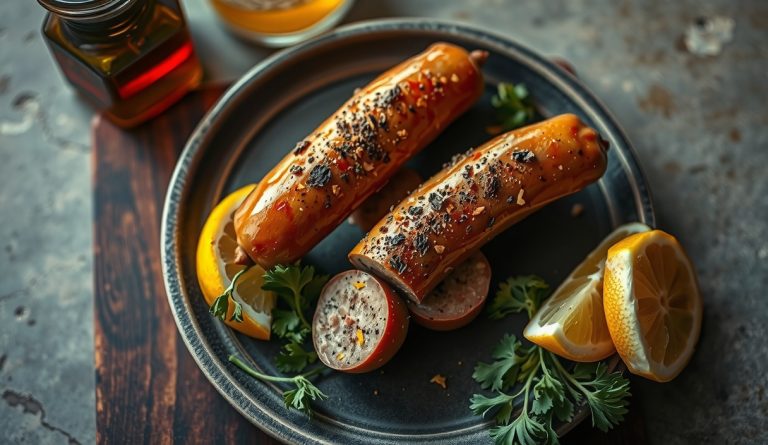
Sugar in the spice rub. Some Hot Guts recipes add a small measure of brown sugar or turbinado to round the paprika and moderate the black pepper bite. Brown sugar contributes roughly 4–5g of sucrose per tablespoon, and at sausage seasoning concentrations that lands at 0.5–1g per link — meaningful on a 20g daily net-carb ceiling. Replace it 1:1 by weight with an allulose-erythritol blend (70/30 ratio works well). Allulose is the functional workhorse here: it browns and caramelizes on the casing surface via a Maillard-adjacent reaction at temperatures consistent with the 200°F smoke environment, replicating the mahogany color development that sucrose would otherwise drive. Erythritol alone resists browning and can produce a faint cooling sensation in the finish — the blend neutralizes both liabilities. Monk fruit concentrate can substitute at roughly 1/4 the volume of sugar but does not contribute to surface color development.
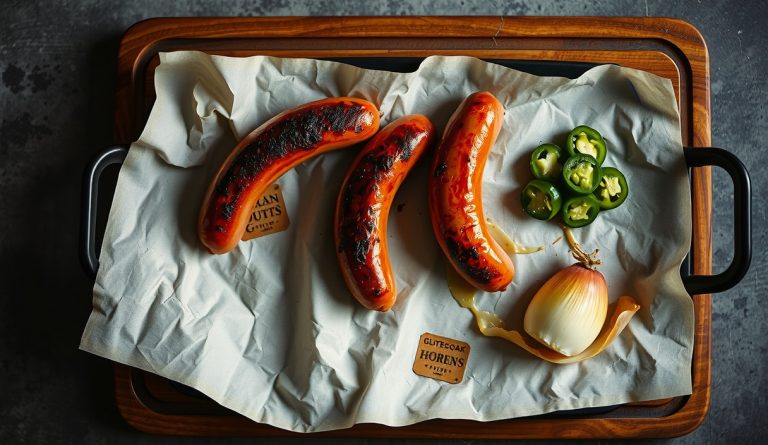
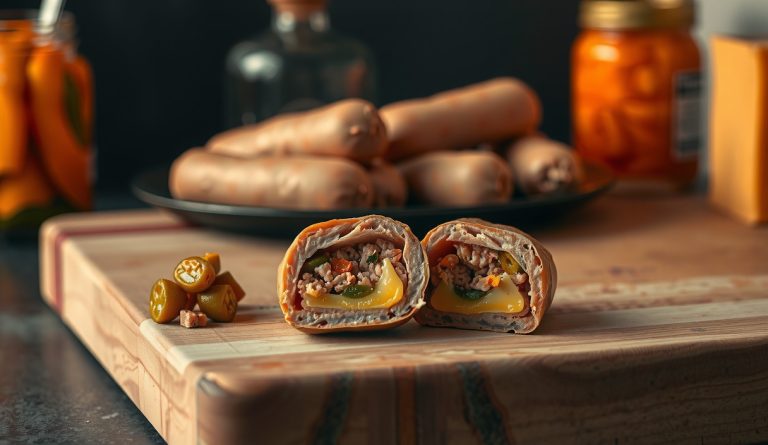
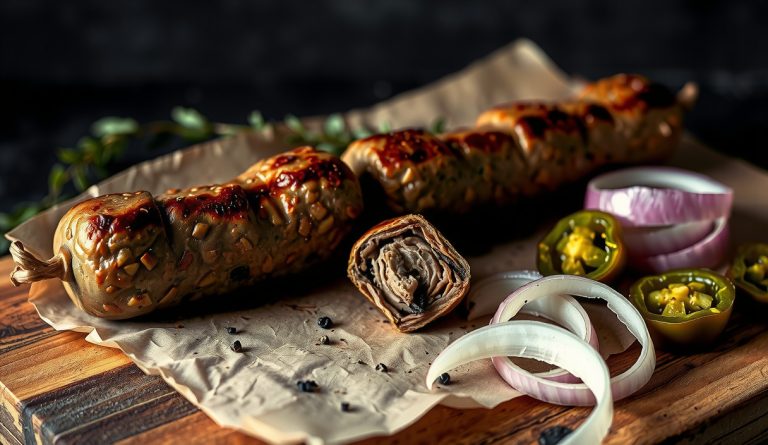
Serving context. The canonical Hot Guts Sausage is typically served on butcher paper with saltine crackers and a smear of yellow mustard — the crackers are the only table-side carb concern, at roughly 2g net per cracker. Swap to pork-rind cracklins for the same fatty, crunchy vehicle with effectively zero net carbs. Yellow mustard is gluten-free and negligibly low-carb. A pickled jalapeño or raw onion alongside adds brightness without meaningful carbohydrate load.
What stays the same in the keto Hot Guts Sausage?
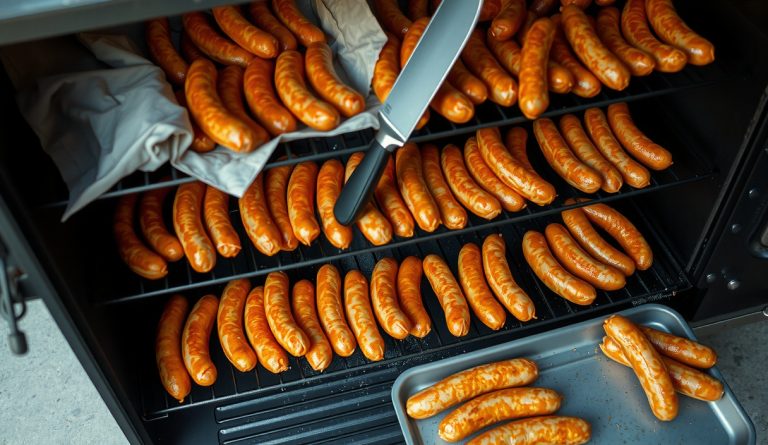
Everything that makes the sausage the sausage remains untouched: the coarse 3/8-inch grind, the pork-and-beef fat ratio, the 0.25% cure rate, the pellicle formation, the 200°F post oak smoke, and the 152°F internal pull temperature. The lipid-basting mechanism — back fat melting at 130–145°F and saturating the protein matrix — is not only preserved but is the central keto virtue of the recipe. A five-inch link runs approximately 1g net carbs with the sugar swap, against 18–22g of fat and 14–16g of protein.
When is this version the better choice?
This keto Hot Guts Sausage is the everyday cut for practitioners who want Central Texas sausage without tracking anxiety. The reformulation is invisible in flavor, the fat profile is exactly what a ketogenic diet calls for, and the swap requires changing two ingredients in a spice mix rather than restructuring the recipe from the ground up.
Complete curing ratios, stuffing technique, and smoking protocol are at the original Texas-Style Hot Guts Sausage recipe.