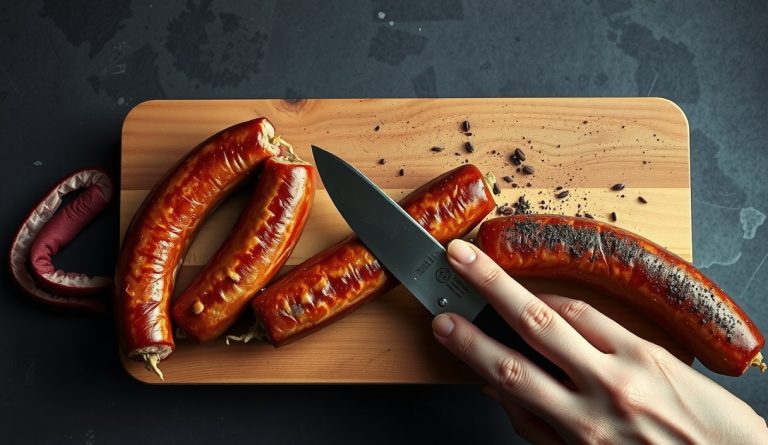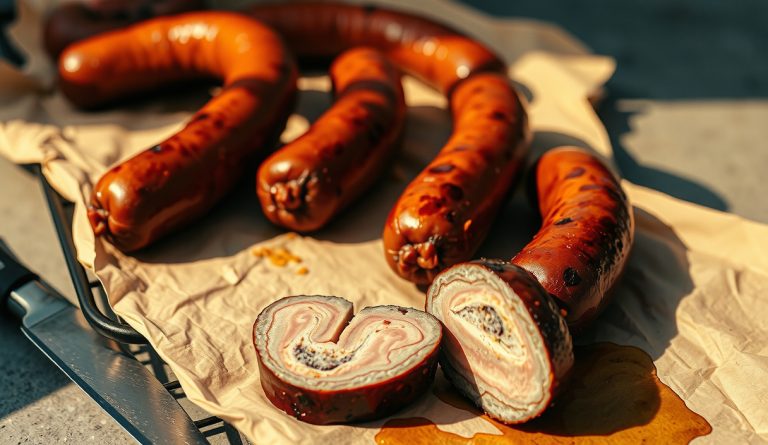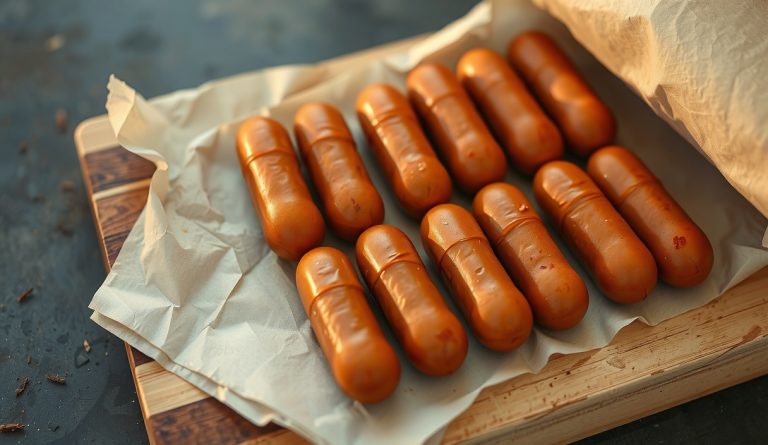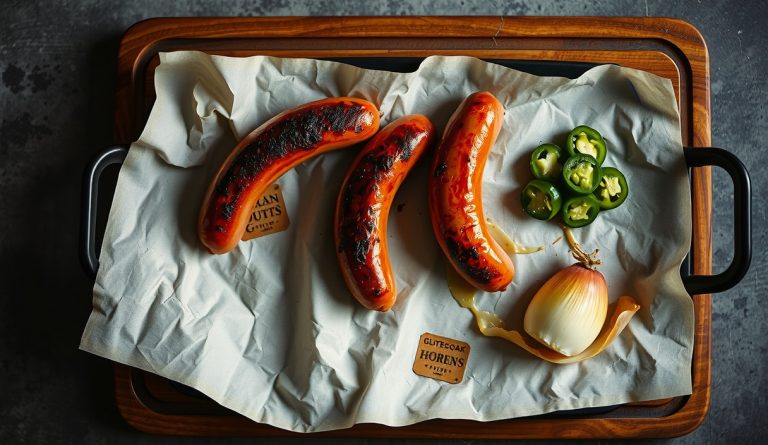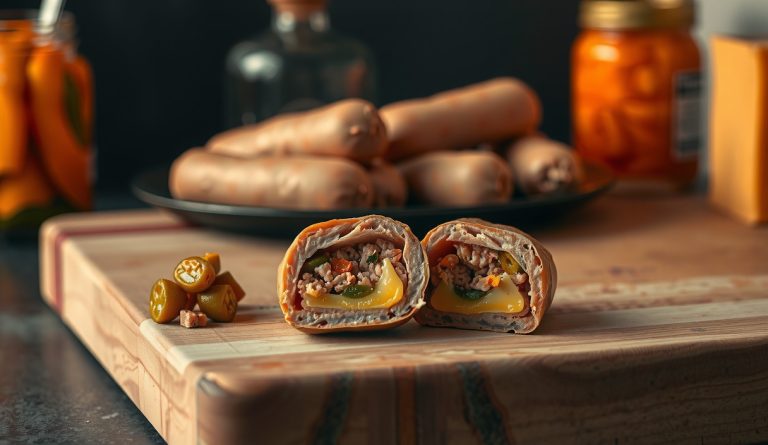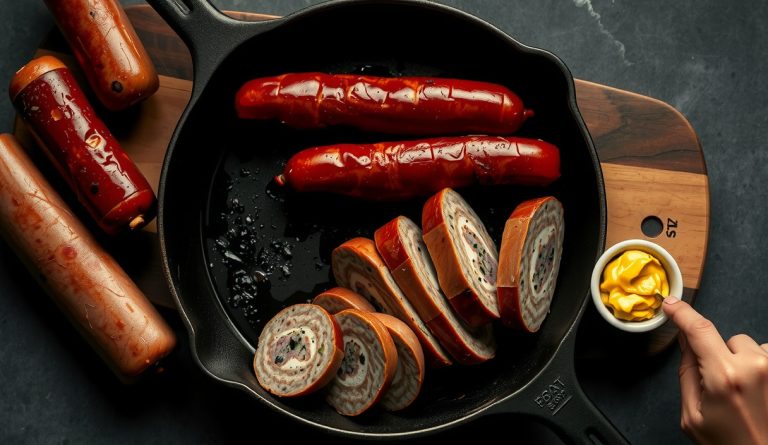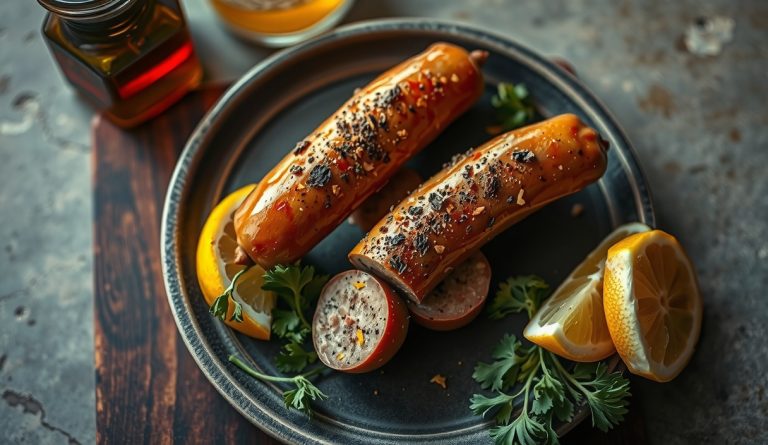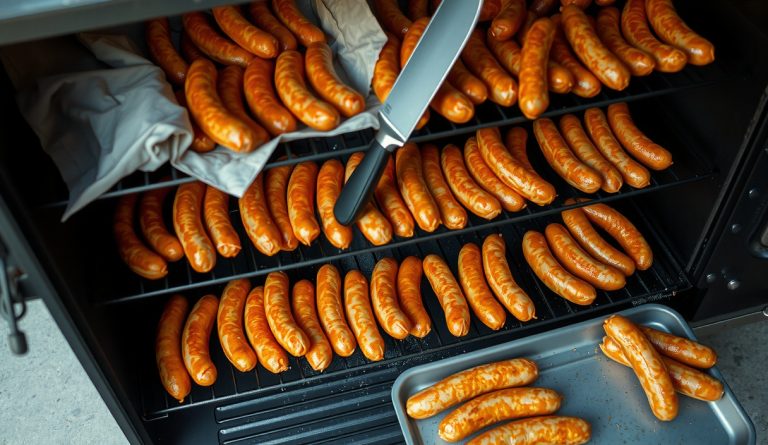
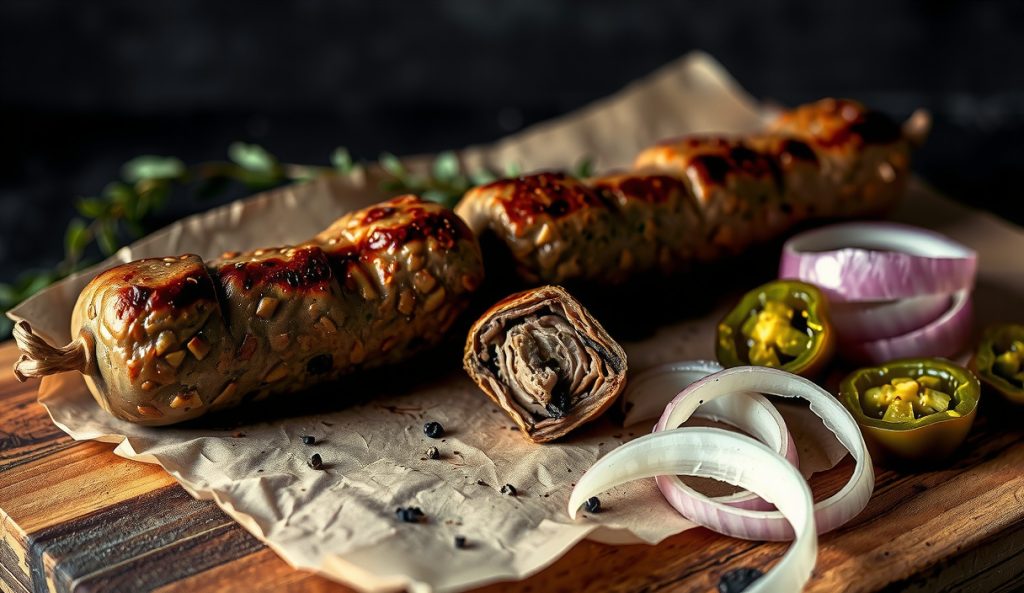
This is not a vegetarian Hot Guts Sausage. That product does not exist in any honest sense — the snap, the cured pink interior, and the fat-basted coarse grind are the product of collagen, myoglobin chemistry, and pork back fat, none of which have a structural vegetable equivalent. What this is: a smoked, rub-seasoned king oyster mushroom preparation that earns a place on the same butcher paper, carries the same post oak perfume, and delivers the same table energy. Longer tables, not higher fences.
What changes at the smoker — and why it still works?
The analog: king oyster mushroom columns. King oyster mushrooms (Pleurotus eryngii) have a dense, fibrous stipe — the thick stem — that holds structural integrity through a 3-hour smoke at 200°F without collapsing. Select stems 1.5–2 inches in diameter and cut them to 5-inch lengths to approximate link dimensions. The dense cell walls resist moisture loss more aggressively than jackfruit or tofu, and their parallel fiber orientation gives a chew that reads as textural rather than mushy. The mushroom stems will not snap — nothing will — but they resist the bite before yielding, which is the closest vegetable physics gets to casing behavior.
Rub application and smoke uptake. Apply the canonical rub — paprika, black pepper, garlic, and cure-free salt — directly to the mushroom surface at the same weight-based rate used on the sausage. Mushrooms have dramatically higher surface-area-to-volume ratios and more porous cell structure than meat, which means smoke compound absorption is faster and more aggressive. Run the mushroom stems at 200°F over post oak but check at 2 hours rather than 3–4; over-smoking produces a bitter, resinous finish in mushroom tissue that fat in meat would otherwise buffer. The Maillard reaction proceeds on the mushroom surface above 250°F surface temperature, but at 200°F ambient the primary processes are dehydration and smoke deposition — the same gradual bark-building mechanism the sausage uses, just without casing collagen setting around it.
Fat supplement. Brush the stems lightly with a neutral high-smoke-point oil — refined avocado or sunflower — before applying the rub. This oil layer does two things: it helps fat-soluble paprika carotenoids bloom and penetrate the surface, and it provides a lipid layer that blisters and chars at the casing-browning stage, contributing visual mahogany color. The oil does not replicate the internal fat-basting of rendered pork back fat, but it directly addresses the dryness that unsupplemented smoked mushroom stem produces.
No Prague Powder. Nitrite cure is unnecessary and inappropriate in this preparation — its two core functions, myoglobin color fixation and anaerobic pathogen suppression, are meat-specific. The vegetarian preparation is smoked at the same 200°F but without curing time, pellicle formation, or the pink interior that defines the original. Be transparent about this at the table; the visual difference is significant and guests should know what they are eating.
What stays exactly the same as the meat original?
Post oak at 200°F, the full canonical rub profile minus the cure, and butcher paper service all carry over unchanged. The smoke chemistry — guaiacol, syringol, and phenolic compound deposition — is identical regardless of what sits on the grate. The table smells the same. The experience of tearing into something smoky, spiced, and bark-crusted translates directly from the meat version to this companion preparation.
When is the vegetarian companion the better choice?
This companion belongs at any mixed table where one or two guests do not eat meat. The king oyster mushroom preparation runs on the same smoker, uses the same rub, and lands on the same butcher paper without requiring a separate production track or apologizing for what it is.
The full curing and smoking process for the meat original lives at the Texas-Style Hot Guts Sausage recipe.