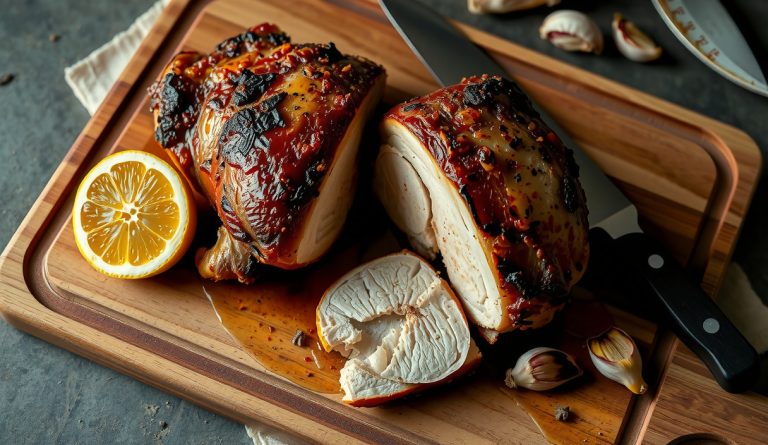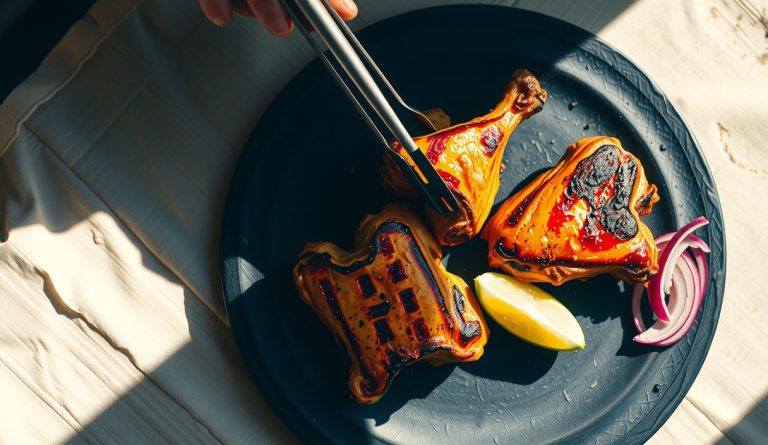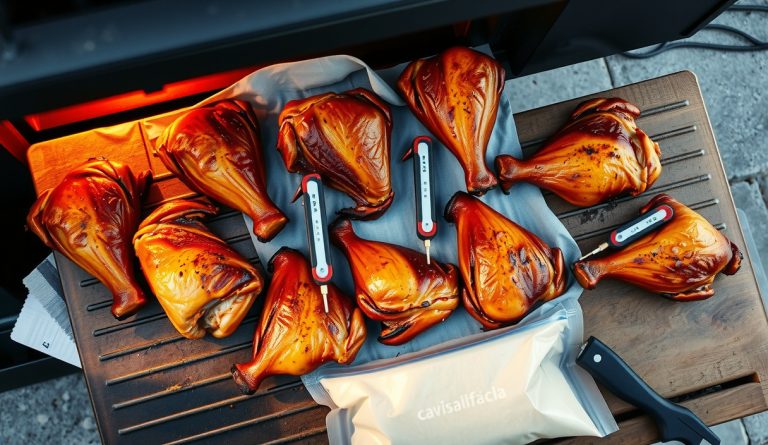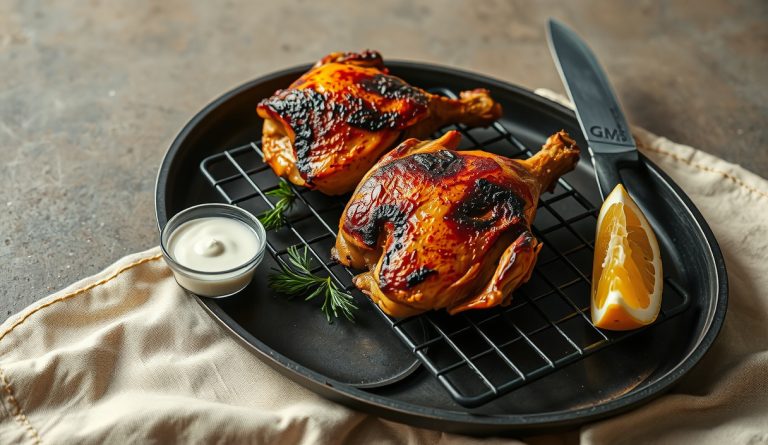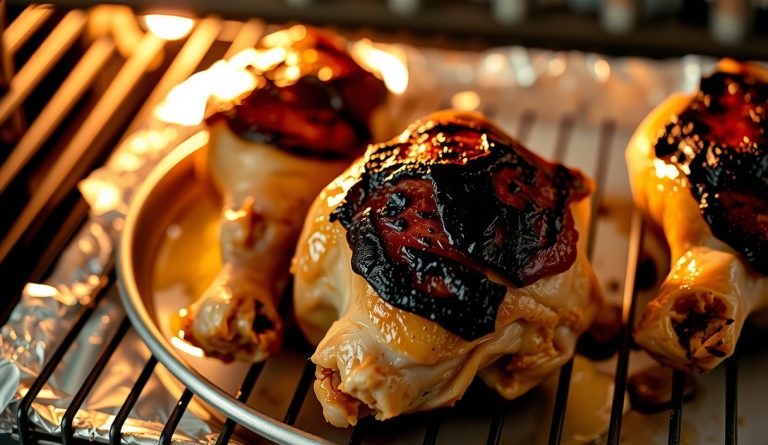

Bone-in, skin-on chicken thighs smoked over cherry wood are a keto cook’s ideal protein: high fat, zero net carbs in the meat itself, and a cook method that renders subcutaneous fat into a self-basting system. This adaptation is narrow but precise — the canonical marinade’s residual lactose in full-fat Greek yogurt and any added sweetener in a finishing glaze represent the only meaningful carbohydrate inputs, and both are addressable without compromising the dual Maillard bark that makes this recipe worth making.
What changes in the keto version — and why?
The yogurt’s lactose load. Full-fat Greek yogurt (Fage Total 5%, Siggi’s) contains approximately 4 to 5 grams of lactose per 100 grams. After straining, a typical 200-gram marinade portion split across four thighs delivers roughly 1.5 to 2 grams of net carbs per serving from lactose — already low. More importantly, most of the lactose at the meat surface is consumed during the Maillard reaction itself, converting to flavor compounds rather than surviving as dietary sugar. Do not swap to a dairy-free yogurt alternative to eliminate this carb load; coconut- or almond-based yogurts lack the casein micelle structure that physically delivers spice VOCs to the meat surface. Keep full-fat dairy Greek yogurt.
Eliminate any added sweetener in the rub or glaze. If the canonical recipe or your household variation includes a teaspoon of honey, a pinch of brown sugar in the spice rub, or a sweetened finishing sauce, replace it with allulose at a 1:1 ratio by weight. Allulose is the correct choice for one mechanical reason: it caramelizes and browns at temperatures similar to sucrose (onset around 320°F surface), producing the same Maillard-adjacent color and aroma contribution that brown sugar or honey would have provided, without impacting blood glucose or counting toward net carbs under US labeling. Erythritol and monk-fruit blends are a viable second choice, but erythritol browns poorly below 350°F surface and carries a notable cooling-sensation aftertaste that amplifies in cold leftovers — a real-world limitation in the 275°F smoker environment. Allulose avoids both problems.
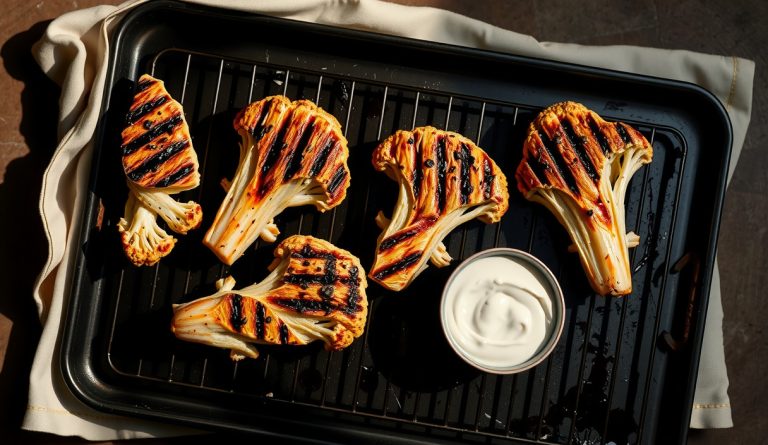
Sides and serving vessel. Serve the smoked chicken thighs directly off the bone — no bun, no pita, no starchy accompaniment. If a plate-filler is needed, smoked cauliflower florets tossed in the same paprika-cumin yogurt mixture and cooked on the upper rack for the final 45 minutes of the smoke session fit the flavor profile exactly. Pork rind crumbles scattered over the finished chicken add textural contrast and zero net carbs where breadcrumbs might otherwise appear.
Net-carb delta. The canonical marinade with a teaspoon of honey per serving delivers approximately 5 to 6 grams of net carbs per thigh. This keto version with allulose and no starchy accompaniments delivers approximately 1.5 to 2 grams of net carbs per thigh — primarily residual lactose. That reduction is meaningful for anyone tracking macros tightly.
What stays exactly the same in the keto build?
The 8-hour marinade, the 275°F indirect smoke, the cherry wood, the pull temperature at 168°F internal, and every mechanism described in the canonical recipe — the pH 4.2 surface priming, the casein VOC delivery system, the stall exploitation — are completely unchanged. Protein and fat are this recipe’s structural backbone; carbohydrate reduction touches only the periphery and does not alter cook behavior or final texture.
Who should default to this version?
This version is the default for anyone running a ketogenic or low-carb protocol, for metabolic health cooks tracking net carbs per meal, and for diabetic cooks managing postprandial glucose response. The high fat content of bone-in skin-on chicken thighs combined with the low glycemic load of the adapted marinade produces a meal with minimal insulin demand and a genuinely satisfying fat-to-protein ratio.
The complete method, smoke setup, and full timing live at the original recipe; the only change required is reaching for allulose instead of honey when building the rub.