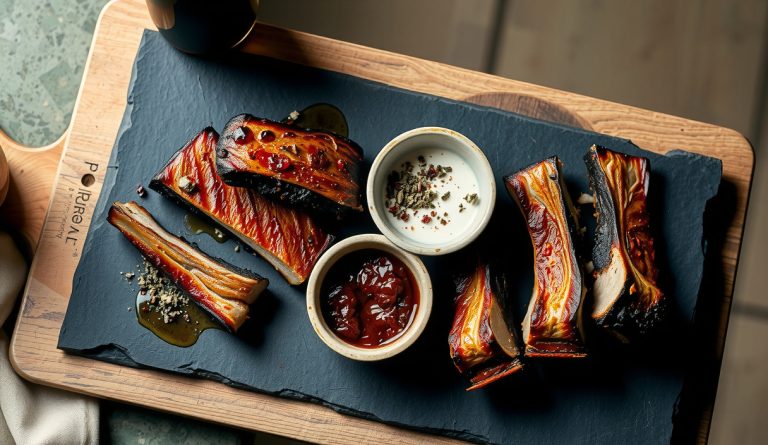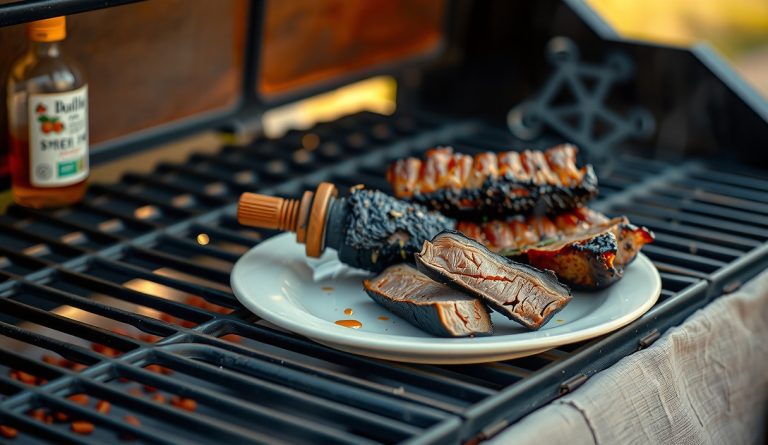
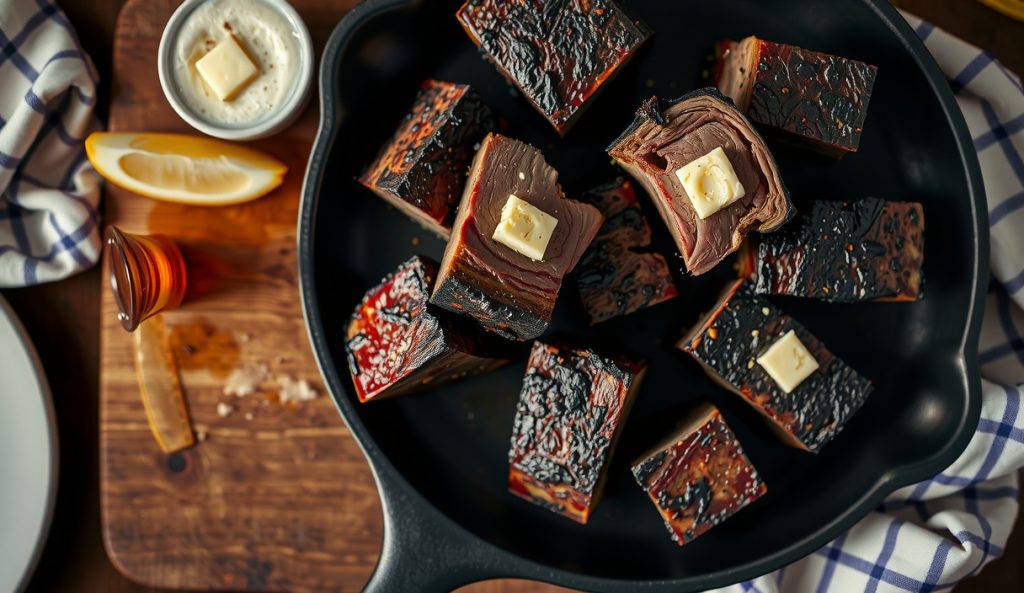
Brisket point is one of the most keto-compatible cuts in the butcher case: high intramuscular fat, zero carbohydrates, and a collagen load that converts to gelatin rather than glucose. The canonical recipe’s carbohydrate burden lives entirely in the rub’s brown sugar, the glaze’s cherry reduction and added sweeteners, and any residual sugars in the bourbon. Surgically remove those three sources and the dish’s architecture — double smoke, lacquered bark, N2O foam — survives intact.
What changes in the keto version?
Brown sugar in the rub. Brown sugar (sucrose plus molasses) is the canonical rub’s primary Maillard fuel and bark-building agent. Replace it with allulose at a 1:1 ratio by volume. Allulose is a rare sugar with 0.4 kcal/g and a negligible glycemic index; critically, allulose participates in the Maillard reaction and caramelizes at temperatures close to sucrose (~320°F), so the melanoidin pigments responsible for the lacquered black bark still form. Erythritol-monk fruit blends are an alternative but carry two penalties: erythritol does not Maillard meaningfully below 350°F, and erythritol recrystallizes on cooling, producing a sandy, cooling-sensation crust rather than a glassy one. If you use erythritol, accept a matte bark and a slightly crystalline surface texture — the flavor will still be savory-smoky but the visual result is different. Allulose is the mechanistically correct choice for this recipe.
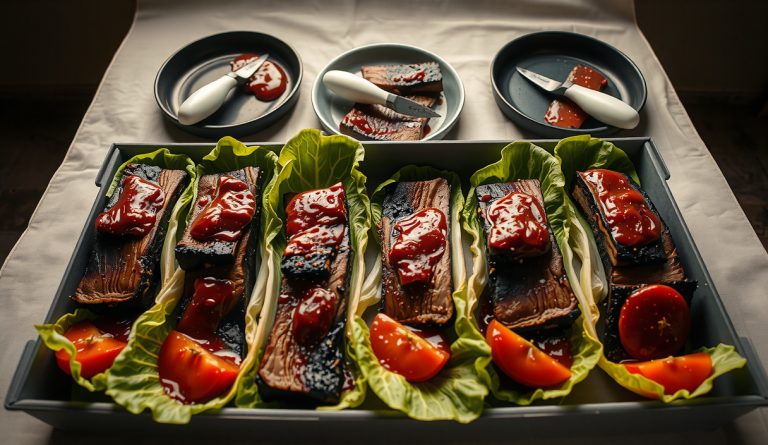
Cherry reduction in the glaze. Fresh or frozen sweet cherries are moderate in sugar (~12 g per 100 g). Reduce the cherry volume by 50% and supplement with tart cherry juice concentrate — tart varieties run lower in total sugar and higher in anthocyanins that contribute color and slight acidity. The benzaldehyde aromatics central to the foam’s sensory design are concentrated in pit and skin compounds that survive reduction regardless of sugar level; you lose sweetness, not the characteristic cherry volatile profile. Add a small measure of allulose to the glaze reduction to restore body and promote the water-activity-lowering concentration needed for the second Maillard pass. Net carb reduction in the glaze versus the canonical version: approximately 60–70% lower per serving.
Bourbon in the glaze and foam base. Standard bourbon carries roughly 0 g of sugar per 1.5 oz shot — distillation removes fermentable sugars — so the bourbon itself is keto-safe. As bourbon cooks down in reduction, residual congeners concentrate but carbohydrates do not increase. Keep the bourbon quantity as written in the original recipe; it is not a carb source.
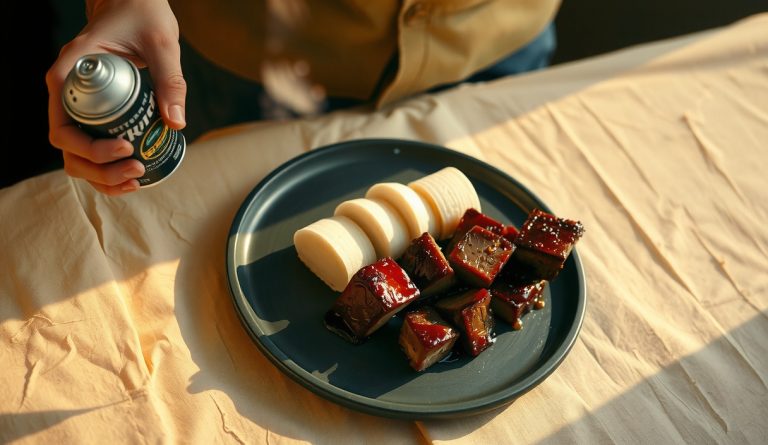
The foam base. The xanthan gum (0.2% w/w) and sunflower lecithin (0.5% w/w) used in the foam are both zero net-carb. Substitute the same allulose-sweetened, reduced cherry-bourbon liquid as the foam base. The xanthan pseudoplasticity and lecithin interfacial stabilization are unaffected by the sweetener swap — the foam’s shear-collapse mechanics depend on the xanthan network, not on sucrose concentration.
What stays exactly the same?
The brisket point, the two-phase smoke protocol, the 203°F collagen-hydrolysis target, the post oak or cherry wood selection, the full iSi N2O foam build, and the 8-to-12-minute service window are completely unchanged. Fat rendering, gelatin conversion, and smoke-ring formation have no dependence on dietary sugar whatsoever — those are purely thermal and biochemical processes driven by temperature and time.
When is the keto version the better choice?
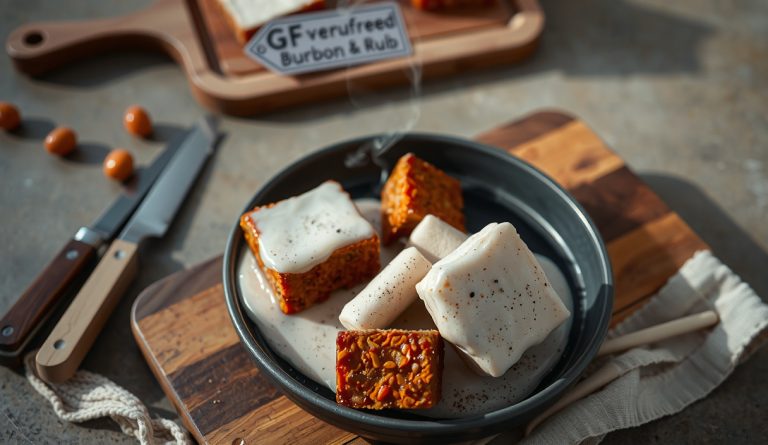
This version is the right call for any low-carb or ketogenic household that still wants the full technical experience — bark, foam, retronasal cherry-bourbon burst — without the blood-glucose spike. The keto variant is also the honest answer to the myth that great BBQ bark requires sucrose: allulose proves that great bark requires Maillard-reactive carbonyl chemistry, and allulose delivers exactly that chemistry at ~320°F, the same threshold as cane sugar.
Build the full method step by step at the original recipe.