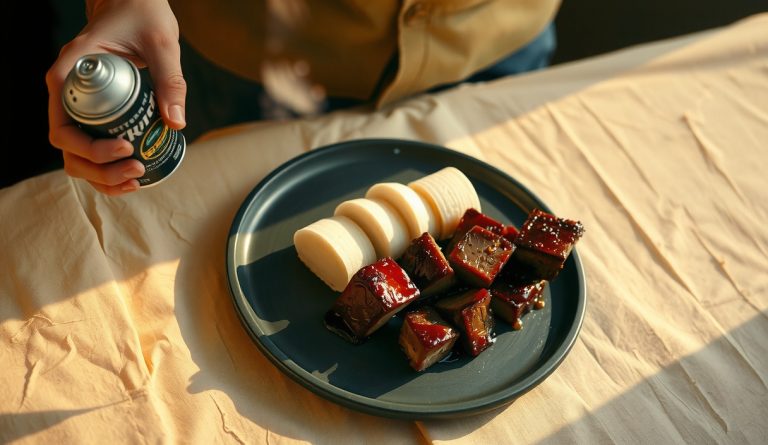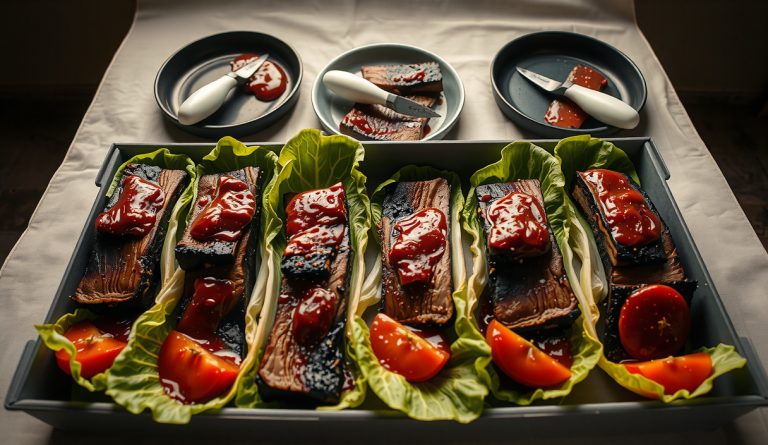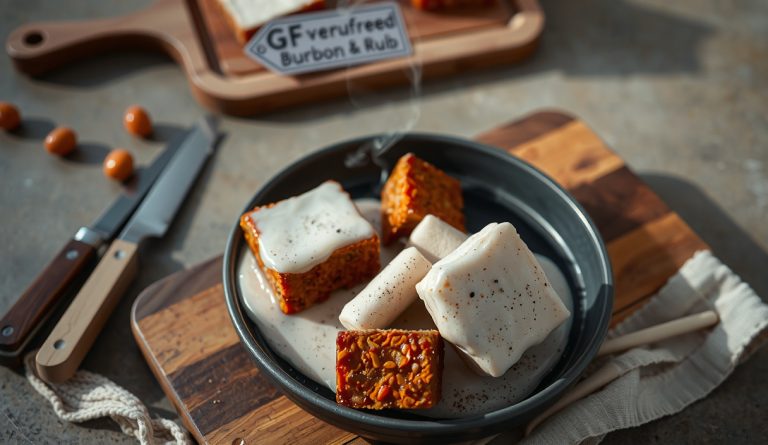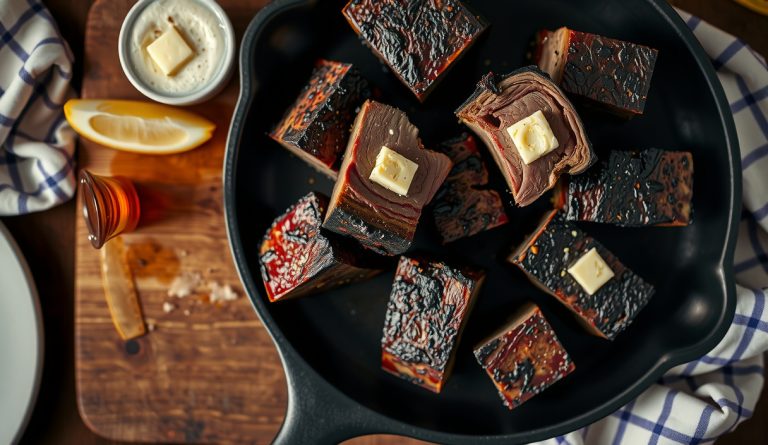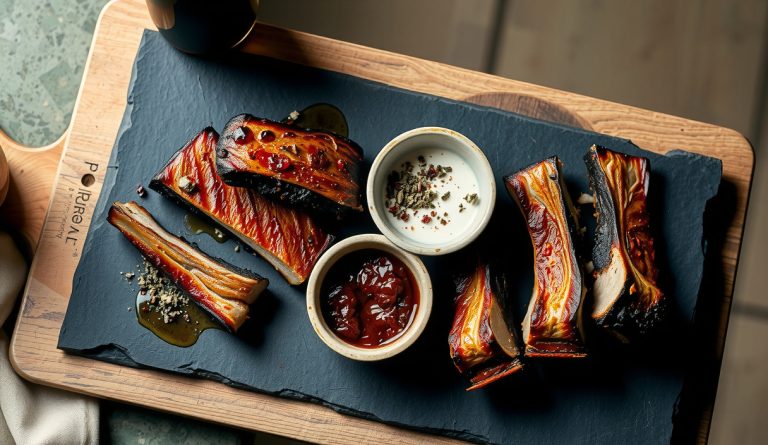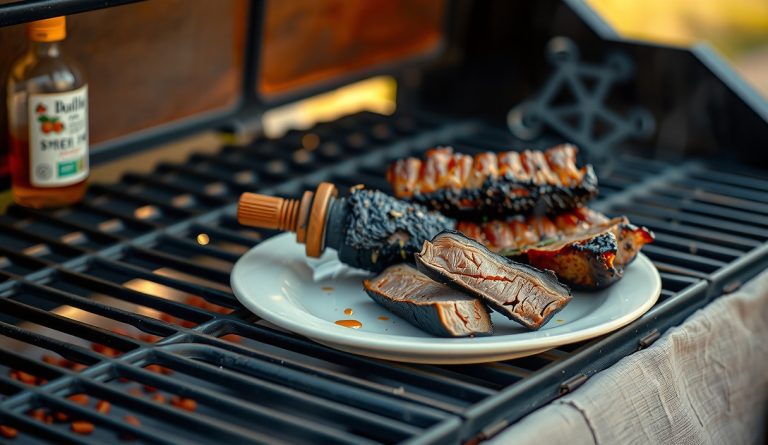
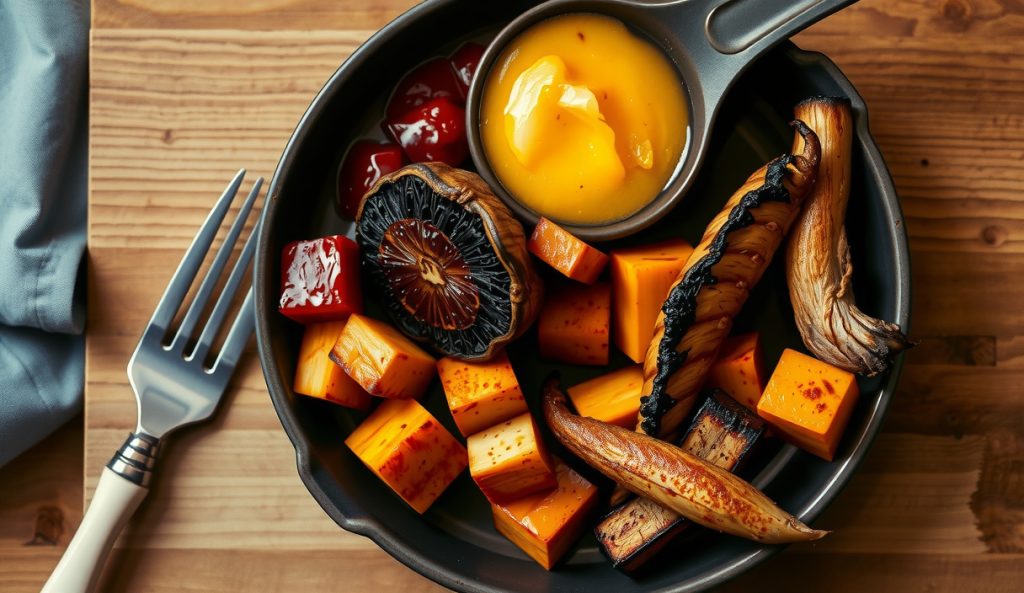
This is not a replacement for brisket burnt ends. It is a companion dish designed to occupy the same table, carry the same rub, and wear the same cherry-bourbon foam cloud — one that vegetarian guests can reach for without the awkward pause. The honest argument for smoked watermelon burnt ends is texture and surface chemistry, not mimicry: the goal is a deeply caramelized exterior with a yielding, almost gelatinous interior, and watermelon — when handled with discipline — delivers exactly that profile through entirely different but equally legitimate physics.
What changes in the vegetarian version — and why it still works?
The protein. Use a 10–12 lb seedless watermelon, rind on. Cut the watermelon into 2-inch cubes retaining the rind — the rind’s pectin-rich cell wall structure behaves analogously to collagen in one critical way: it softens and becomes translucent under prolonged heat as pectin demethylation and partial hydrolysis weaken the middle lamella. Watermelon contains no collagen and will not produce gelatin, but the rind delivers a yielding, slightly jammy interior beneath a heavily Maillard-reactive exterior that is structurally analogous in mouthfeel to a well-rendered burnt end. The rind also provides structural rigidity through the smoke phase that pure flesh cubes lack.
Smoke uptake. Watermelon flesh is 92% water and has an open, low-density cell matrix. That high water activity initially resists bark formation, but it also means phenolic smoke compounds — guaiacol, syringol, and 4-methylguaiacol — absorb aggressively into the aqueous phase during the first smoke phase. Apply the same rub (salt, allulose or brown sugar, black pepper, smoked paprika, garlic powder) to the rind-on cubes and cold-smoke over cherry wood at 225°F for 90 minutes. Do not target an internal temperature; target surface color and water loss. The cubes should lose 25–30% of their starting weight by the end of the first smoke as free moisture evacuates, dropping surface water activity and enabling the Maillard cascade.
The glaze and second smoke. Apply the cherry-bourbon glaze identically. Because watermelon flesh contains fructose and glucose at roughly 6 g per 100 g, the surface already carries reducing sugars that accelerate Maillard browning beyond what sucrose alone provides in the beef version — the amino-carbonyl partners here are the amino acids in the rind’s cell wall proteins rather than myosin-derived peptides, but the melanoidin products and color outcome are visually similar. Return the glazed cubes to a 300°F smoker uncovered for 30–45 minutes. Watch for a brick-red-to-mahogany glaze set; slight charring at the rind edge is correct and expected.
The foam. The cherry-bourbon N2O foam is unchanged and, if anything, benefits the watermelon companion more: watermelon’s neutral-sweet base flavor provides less aromatic competition, so the benzaldehyde and bourbon phenolics from the foam read louder and cleaner on the palate. The formula is identical — 0.2% xanthan, 0.5% sunflower lecithin, one N2O charge per 500 mL — and the same 8–12-minute service window applies.
What stays exactly the same as the canonical burnt ends?
The complete rub formula, the cherry-bourbon glaze reduction, the N2O foam build, the post oak or cherry wood, the two-phase smoke-and-glaze sequence, and the plating choreography are identical to the canonical brisket version. The companion sits on the same tray, wears the same cloud, and is served in the same window.
When is the vegetarian companion the better choice?
The smoked watermelon companion earns its place at any mixed table where vegetarian guests deserve something technically serious rather than an afterthought side salad. The companion is also a compelling standalone for cooks who want to explore how smoke and Maillard chemistry operate on plant cell matrices — different, collagen-free physics aimed at the same sensory ambition.
The full two-stage brisket method and foam build are documented at the original recipe.