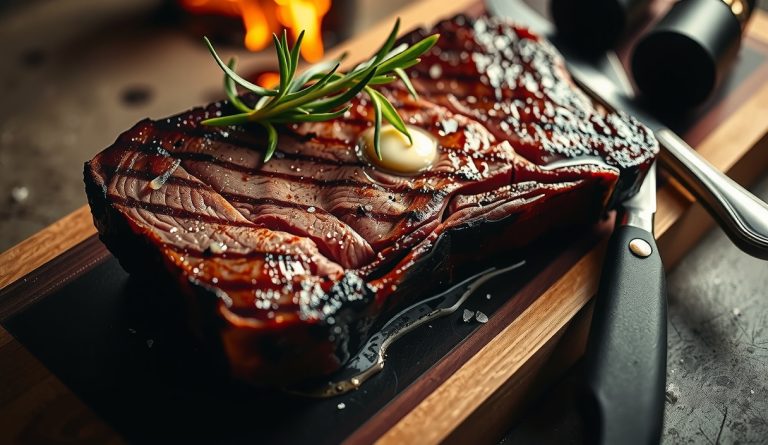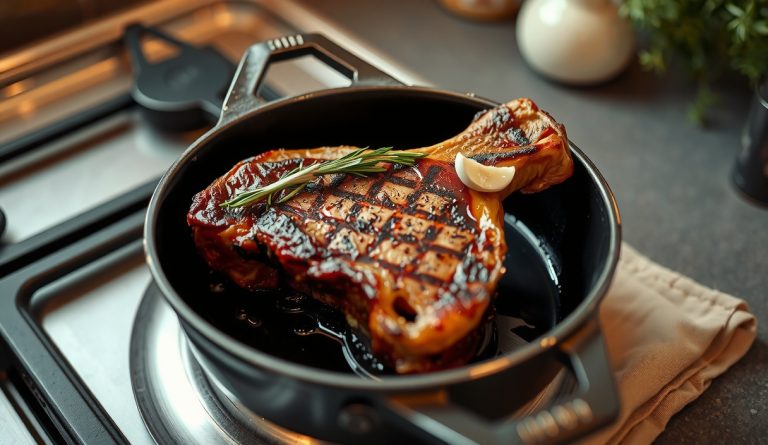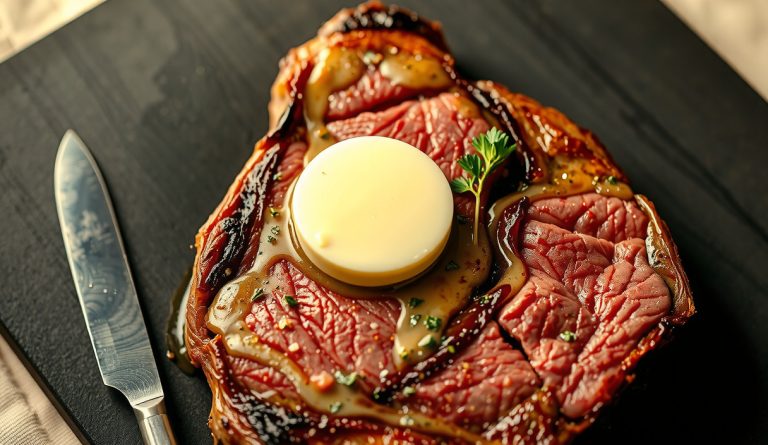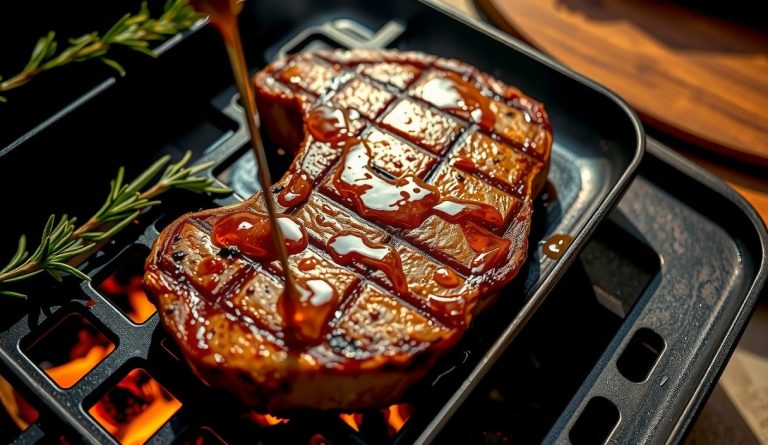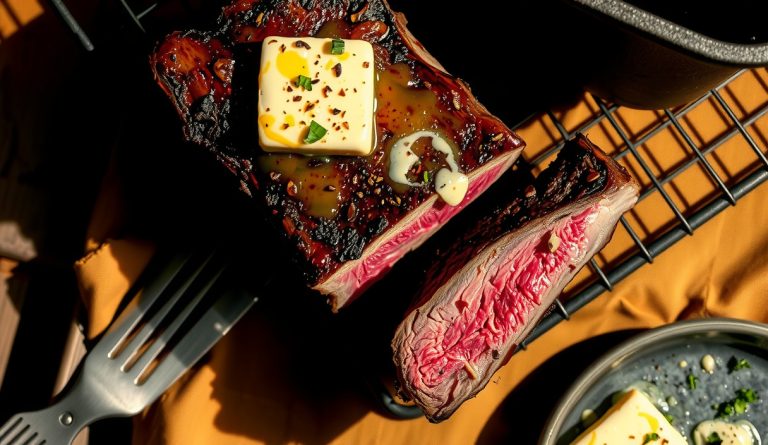
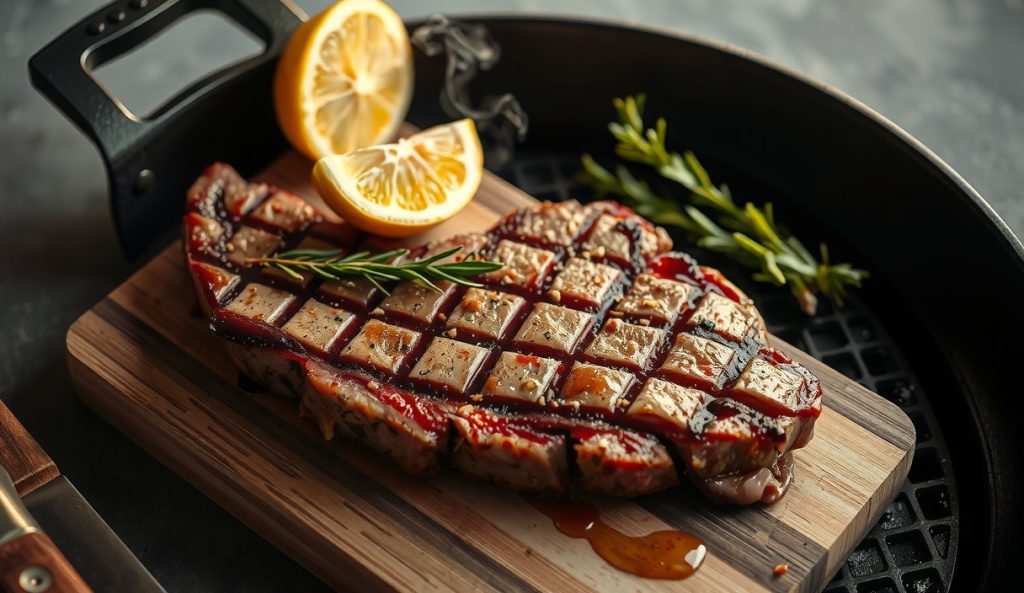
Reducing sodium in a reverse-sear ribeye is not as simple as using less salt. Kosher salt in this recipe is not just a seasoning — it is an active ingredient that denatures surface proteins to form the pellicle, draws a small amount of moisture out and then back in as a brine, and lowers the surface water activity that allows Maillard browning to begin faster at sear time. Cut it without compensation and you get a paler, less cohesive crust and a blander interior. The protocol below cuts sodium roughly 60% while defending every functional role salt performs.
What changes in the low-sodium reverse-sear ribeye?
Salt reduction with potassium chloride partial replacement: Dial kosher salt down to 40% of the original volume and replace up to half of that remaining salt with a potassium chloride substitute such as Nu-Salt or NoSalt. KCl provides genuine saltiness and supports surface protein denaturation similarly to NaCl, but it contributes a metallic-bitter edge at concentrations above roughly 30–40% of total seasoning. Stay at or below that threshold and the bitterness is masked by smoke, fat, and Maillard compounds. The 40% NaCl / 20% KCl split by volume keeps total sodium in the 200–250 mg range per serving — down from roughly 600–800 mg in a full-salt version — while preserving functional ion concentration at the surface.
Rebuilding the pellicle: Reduced salt means reduced osmotic pull, which means the surface protein layer forms more slowly. Compensate by extending the uncovered refrigerator dry period to a full 48 hours rather than the canonical 24-hour minimum. The longer dry time allows evaporative surface concentration to do more of the work that salt osmosis normally accelerates, maintaining sufficient pellicle tackiness for Maillard precursors to adhere at sear time.
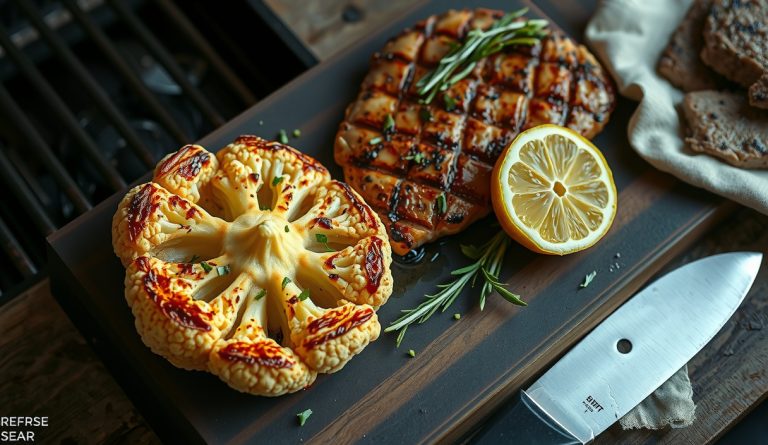
Flavor rebuilding without sodium: Increase black pepper aggressively — piperine compounds contribute genuine pungency and aromatic complexity. Add fine lemon zest (not juice, because liquid raises surface water activity) to the rub: the limonene and citral volatiles amplify perceived brightness and partially substitute for the contrast salt provides between fat and lean bites. Fresh thyme leaves, garlic powder (not garlic salt), and a small amount of smoked paprika all contribute Maillard-active amino acids and volatile aromatics that increase sensory saturation without adding sodium. Lean harder on smoke: add a small chunk of hardwood — oak or cherry — to the indirect phase, because the phenolic compounds in smoke interact with surface proteins in ways that enhance crust perception and partially compensate for reduced bark formation.
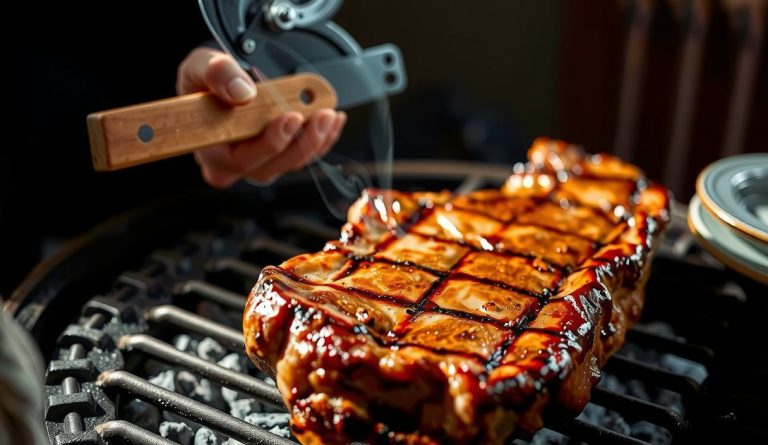
Honest bark assessment: The crust on the low-sodium ribeye will be slightly less dark and slightly less shatteringly crisp than the full-salt version. The pellicle is thinner and Maillard kinetics at the surface are marginally slower. Partially offset this by ensuring the grate is at absolute maximum heat during the sear — any reduction in surface dryness must be countered by increased thermal intensity. A 10-second longer sear per side is a practical starting point.
What stays the same in the low-sodium version?
The two-zone fire, the 225°F indirect target, the 115°F internal pull temperature, the 60-to-90-second Maillard sear, and the rest period are entirely unchanged. The ribeye’s protein chemistry — myosin tenderization window, actin-collapse threshold — is unaffected by the salt reduction. The thermometer remains the only reliable decision variable, in the low-sodium version exactly as in the original.
Who is the low-sodium reverse-sear ribeye the better choice for?
This adaptation is built for anyone managing hypertension, heart disease, or a medically directed sodium restriction who does not want to give up the best steak technique in the canon. The result is not a compromise version of the reverse-sear ribeye — it is a different expression of the same physics, with smoke and aromatics doing more of the sensory work that full-salt seasoning normally handles alone.
All temperature targets, fire geometry, and timing remain exactly as described at the original recipe.