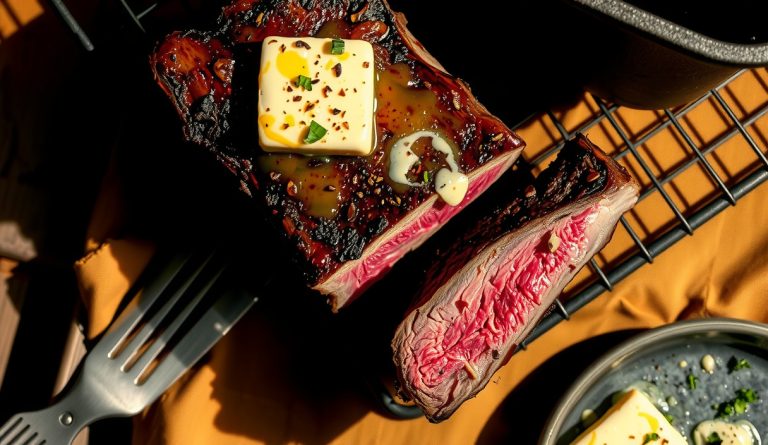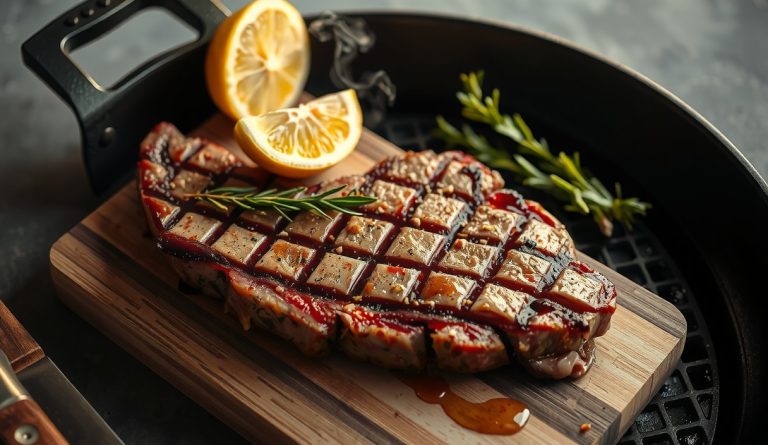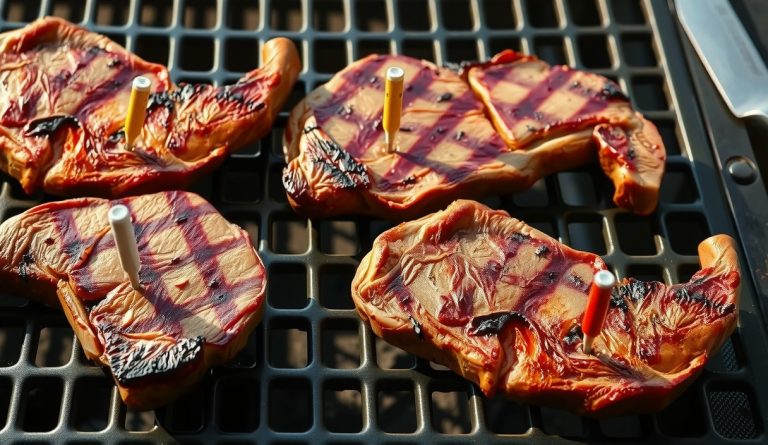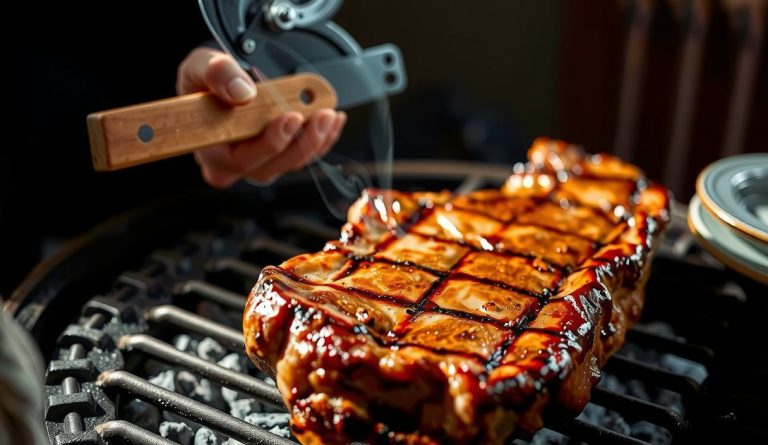
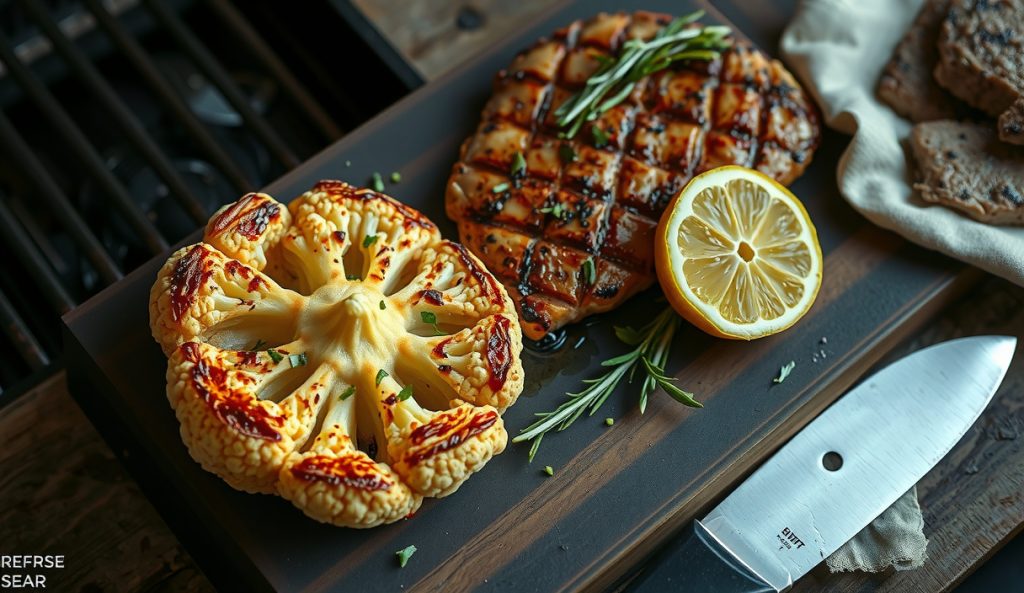
This is not a vegetarian ribeye. That framing does a disservice to both the steak and the vegetable. What follows is a companion dish for the same fire, the same table, and the same moment — built on king trumpet (king oyster) mushrooms cut into two-inch columns and taken through a genuine reverse-sear protocol. The goal is not to replicate ribeye; the goal is to produce a vegetable centerpiece with a deeply browned, bark-like exterior, a yielding but substantive interior, and the same smoke and Maillard character that defines the canonical recipe. Longer tables, not higher fences.
What changes — and why does it matter for a vegetable?
The analog: King trumpet mushrooms are the correct choice for this technique over portobello, jackfruit, or seitan for a specific structural reason: their thick, dense stipe (stem) is composed of tightly packed hyphae with a water content of roughly 85–90% and very little air space, which means king trumpet columns lose moisture slowly and maintain structural integrity under prolonged low heat. Slice the stipes into cylinders 1.5 to 2 inches tall and 1.5 inches in diameter. This geometry mirrors the thermal mass challenge of a thick steak and makes the reverse-sear logic apply rather than collapse.
The dry-brine equivalent: Salt the cut faces and sides generously with Diamond Crystal kosher salt and leave the columns uncovered on a wire rack in the refrigerator for a minimum of two hours. Mushroom cell walls rupture under osmotic pressure faster than beef muscle tissue — the salt will pull a significant amount of free moisture to the surface within the first 30–40 minutes, then partially reabsorb. Pat the surface dry before cooking. This step is not optional: a wet mushroom surface at sear time will steam for 90 seconds before browning begins, and by then the interior will be fully collapsed.
The rub: Use the canonical rub exactly as written — kosher salt, cracked black pepper, and any aromatics specified. Mushrooms contain free glutamate and ergothioneine; the Maillard reaction between their reducing sugars and free amino acids produces pyrazines and furanones that are genuinely analogous in character to beef crust volatiles. Smoke penetrates king trumpet tissue readily because the hyphal structure is porous along the cut face, absorbing phenolic smoke compounds more efficiently per unit surface than muscle fiber does.
The reverse-sear protocol adjusted for mass: The indirect phase runs at the same 225°F target, but the mushroom columns will reach an internal equilibrium temperature of approximately 150–160°F in 20–30 minutes rather than 45. Use an instant-read thermometer to track this — the target is not a pull temperature analogous to 115°F for beef; the target is a surface that feels dry and slightly tacky to the touch with an interior reading above 140°F, indicating sufficient moisture migration. Move the columns directly over maximum-heat coals for 60–75 seconds per side, pressing lightly with a spatula to maximize contact. The crust forms quickly; the Maillard window is narrow because the sugar content of king trumpet is slightly higher than beef surface, so watch closely. Finish with a knob of butter (or high-quality olive oil for vegan guests) and fresh thyme basted over the cut faces during the final 20 seconds.
What stays the same — and why keep the same grill setup?
The two-zone fire setup, the hardwood smoke, the rub composition, and the core Maillard-first philosophy are identical between the ribeye and the king trumpet companion. The mushroom columns go on the cool side of the grate alongside the ribeye and come off for their sear after the steak has been pulled to rest — same grill, same coals, same moment in the cook.
When is this companion dish the right call?
This is the right dish when one person at the table does not eat meat and you want to serve them something built with the same craft and intention as the main event — not an afterthought pulled from the freezer. The king trumpet companion holds its own on the plate and earns its place next to a great ribeye.
All fire setup details, two-zone geometry, and timing references are drawn from the original recipe.