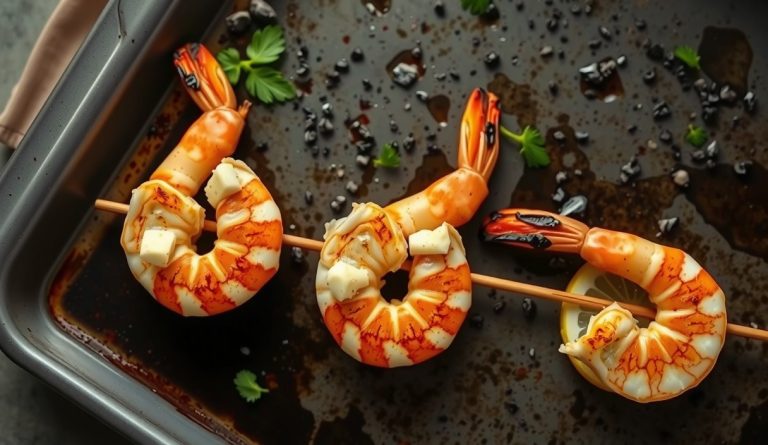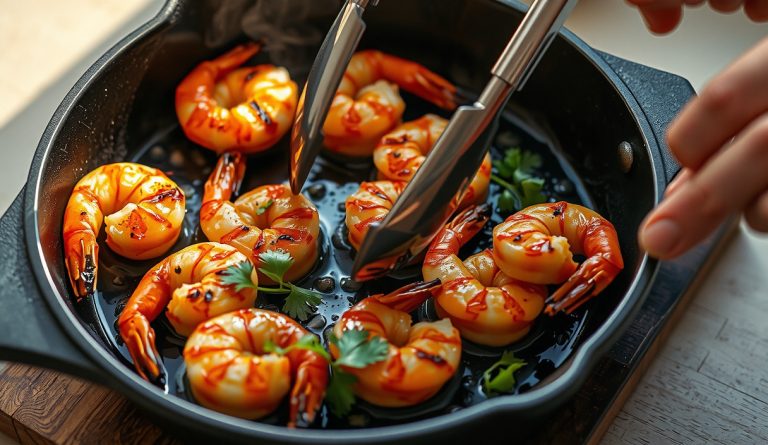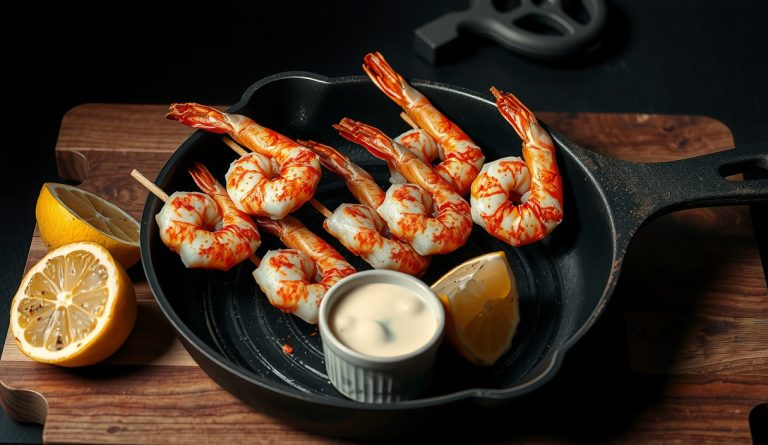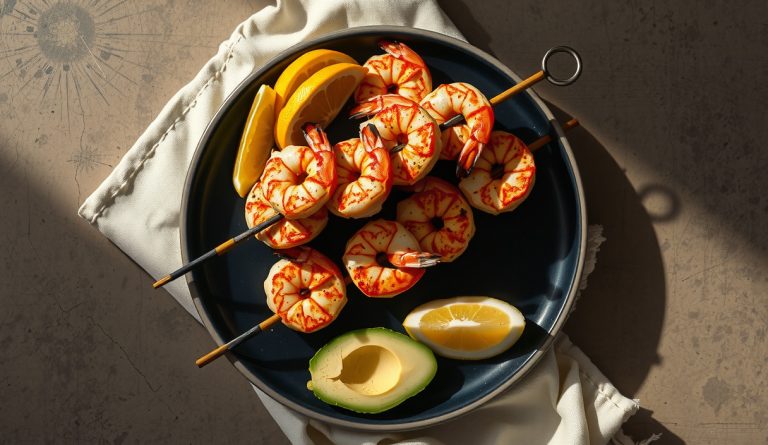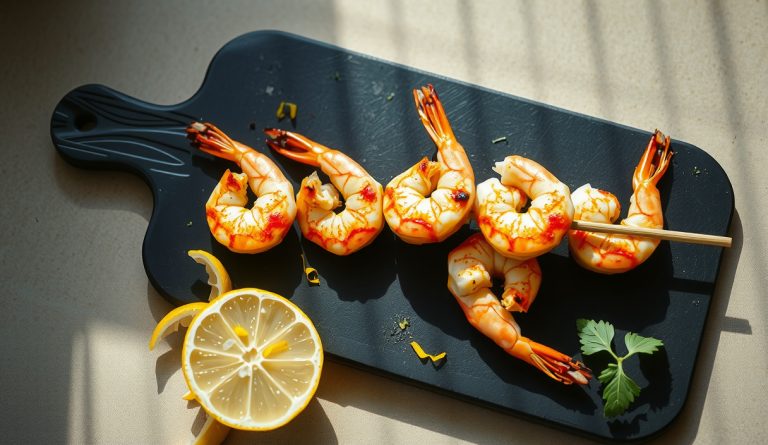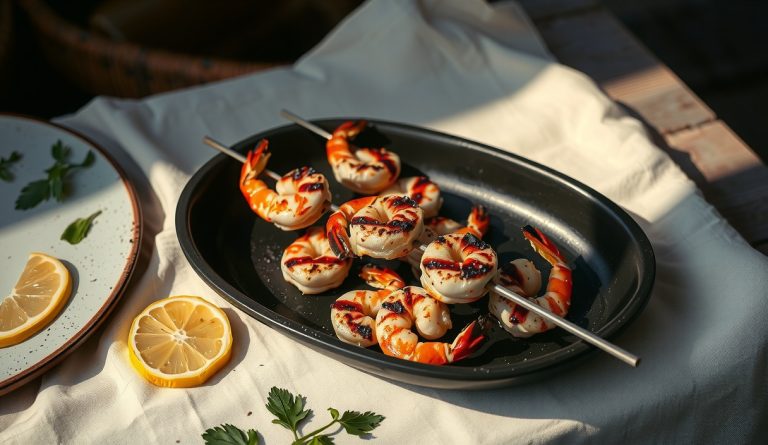
This is not a shrimp replacement. It is a companion dish engineered for the same table, the same grill session, and the same Cajun flavor architecture — built for guests who do not eat shellfish or meat, without asking anyone to pretend it is something it is not. The vehicle is the king oyster mushroom (Pleurotus eryngii), and it earns its place on this board through real food science, not wishful substitution thinking.
What changes when you swap shrimp for king oyster mushrooms?
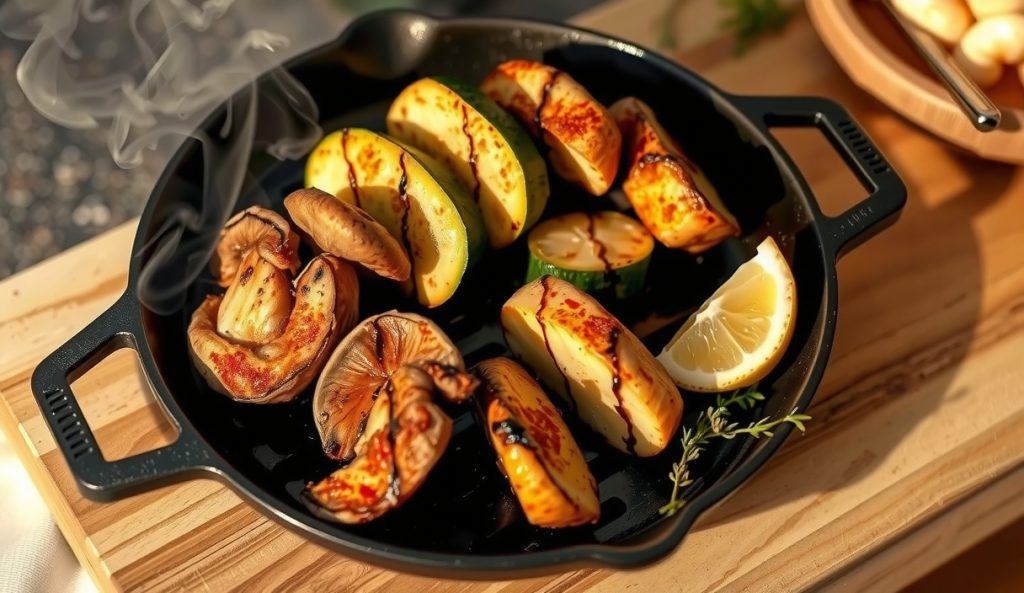
The protein: king oyster mushroom, cut to shrimp geometry. Select large king oyster mushrooms with thick, dense stems — 1.5 to 2 inches in diameter. Cut the stems into cylinders approximately 1.5 inches long, mirroring the cross-sectional mass of a 16/20 jumbo shrimp. This geometry is deliberate: it gives you the same surface-area-to-mass ratio that allows a two-minute-per-side sear to build crust before the interior overcooks.
King oyster stems are composed primarily of chitin-reinforced cell walls that hold structure under direct high heat far better than button or cremini mushrooms, which collapse and steam. King oyster mushrooms also have a naturally firm, slightly fibrous bite that reads closer to scallop than any other culinary mushroom — satisfying on its own terms, not a shrimp facsimile.
Smoke and Maillard mechanics on the mushroom surface. Mushrooms contain free amino acids (glutamate, alanine) and reducing sugars that participate actively in the Maillard cascade above 280°F — the same threshold at which smoked paprika’s reactive carbonyls begin browning. At a 500°F grate, king oyster cylinders develop a genuinely dark, aromatic crust within 90 seconds of contact.
The critical difference from shrimp is moisture management: king oyster mushrooms hold roughly 90% water by weight, and that internal moisture creates a steam-off that delays browning unless addressed directly. Pat the cut cylinders firmly with paper towels, then allow them to air-dry on a rack uncovered in the refrigerator for 30 minutes before rubbing. This step concentrates surface proteins and sugars, accelerating Maillard onset. A generous coat of high-smoke-point oil — avocado or refined grapeseed — on the oiled grate surface eliminates the evaporative stall at the contact face.
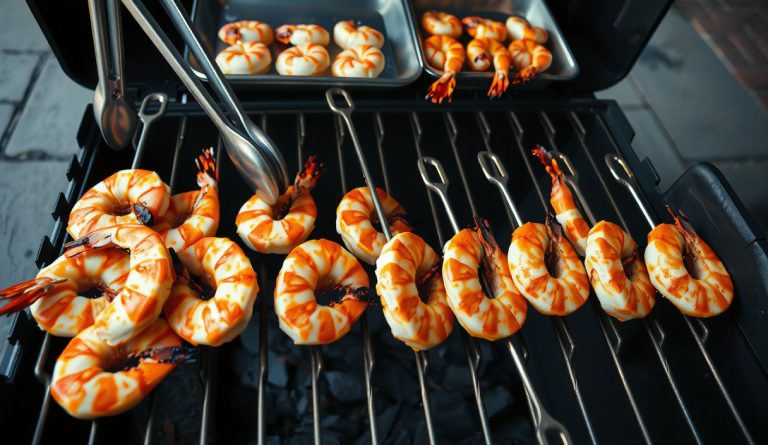
The rub: identical. Apply the canonical Cajun dry rub — smoked paprika, cayenne, thyme, oregano, garlic powder, black pepper, salt — at the same weight ratio relative to surface area. The rub’s terpene volatiles (thymol, carvacrol) vaporize off the hot mushroom surface and carry retronasal aroma through the same olfactory pathway as on shrimp. Double-skewer the cylinders through their flat faces using two parallel metal skewers to prevent spinning on the flip, exactly as with the shrimp.
Cook time adjustment. Target 2.5 minutes per side rather than 2 — the king oyster stem needs the additional 30 seconds per face to drive enough internal moisture out for the center to firm without remaining spongy. The doneness cue is visual: look for a deeply browned exterior and visually collapsed cell structure at the core. There is no protein coagulation temperature to hit; texture is your doneness signal.
What stays exactly the same as the shrimp recipe?
The 500°F direct-sear setup, the smoked paprika Maillard cascade, the full Cajun rub formula, the dual-point metal skewering technique, the wood smoke environment, and the two-zone grill configuration are all identical. The king oyster skewers and the shrimp skewers can share the grate simultaneously — this cook runs on the same grill, at the same time, with the same rub tin.
When is the king oyster mushroom skewer the better choice?
Run both on the same grill for a mixed table. The king oyster skewers give vegetarian guests a full-flavored, texturally interesting Cajun experience built on the same flavor logic as the shrimp, without requiring a separate menu or a separate cook. Longer tables, not higher fences.
For the complete shrimp technique, heat-zone geometry, and skewering method this companion is built alongside, see the original Grilled Cajun Shrimp Skewers recipe.