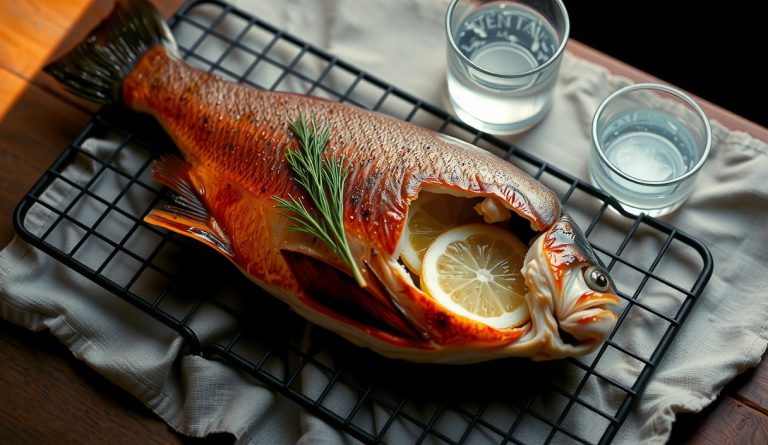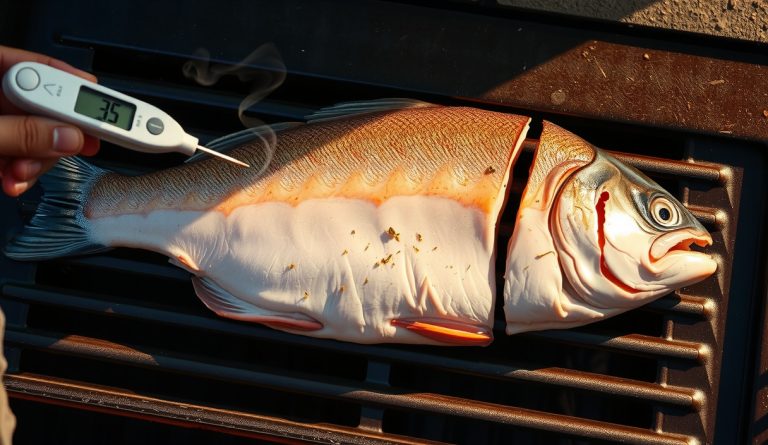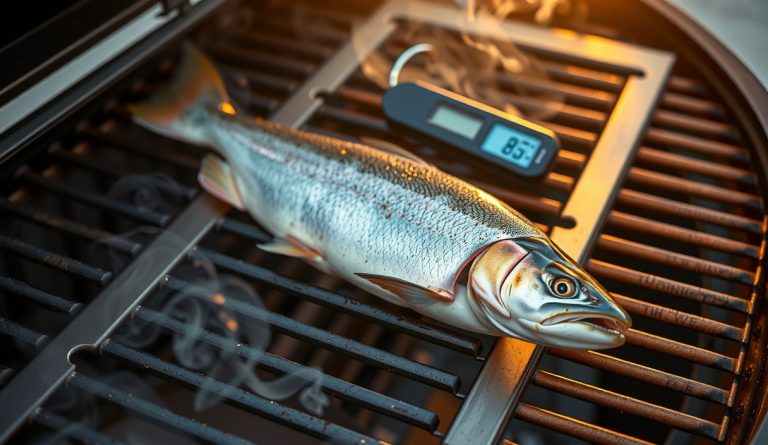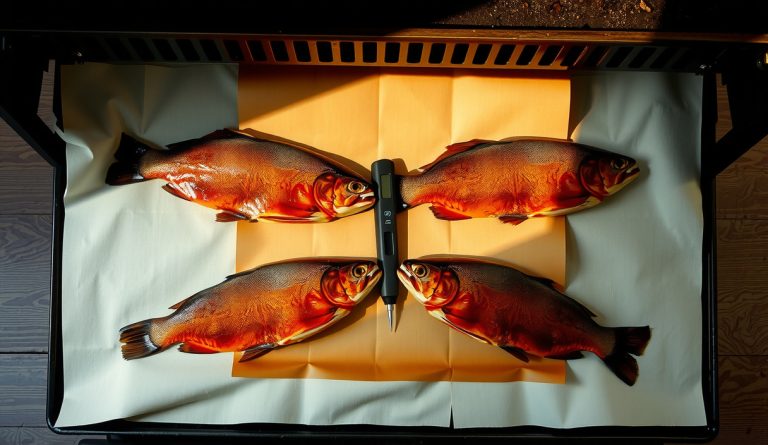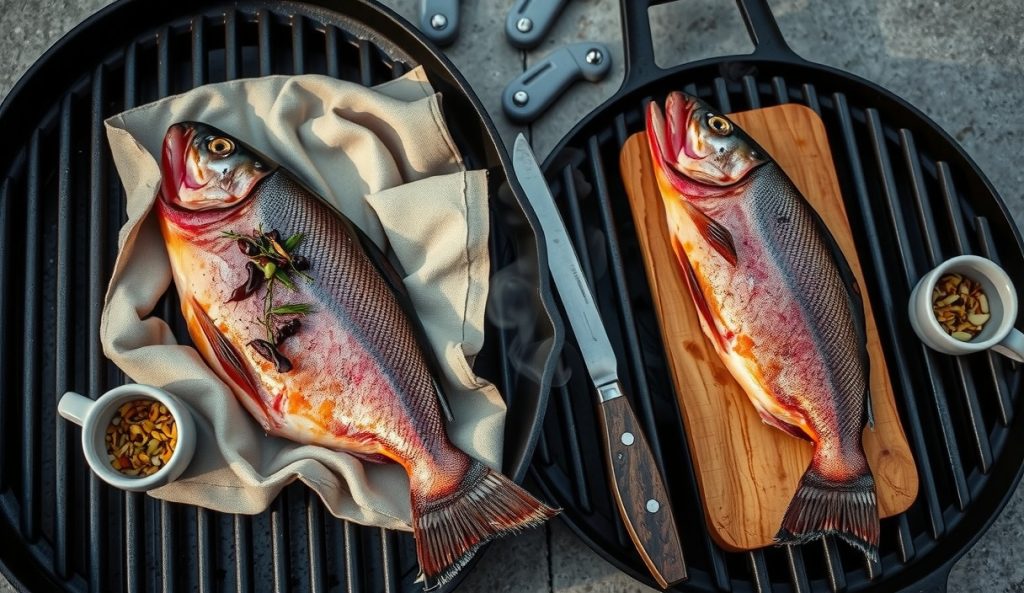
The base dry brine in the canonical smoked whole rainbow trout recipe is intentionally spare — salt, sugar, and time — because the goal is to let the fish and the wood smoke speak first. That same brine structure is a reliable platform for building layered aromatic profiles without disrupting the osmotic curing function. Two profiles are worth knowing: a Scandinavian spice build and a Pacific Northwest cedar plank presentation. They share the same underlying technique but arrive at very different flavor destinations.
What changes between the two flavor builds?
For the Scandinavian profile, add 1 tablespoon of lightly crushed juniper berries and 1 teaspoon of finely ground white pepper to the dry brine mixture before applying it to the trout. Juniper berries contain terpene compounds — primarily alpha-pinene and sabinene — that volatilize during the warm smoke phase and deposit on the fish surface, contributing a resinous, slightly citrus-pine character. That profile pairs naturally with the clean smoke of alder or mild fruitwood pellets. White pepper adds a floral, oxidative heat note from piperine and related alkaloids that is less aggressive than black pepper on delicate trout flesh. The brine-to-fish contact time and the rinse step remain the same; the aromatics ride along in the brine layer.
For the Pacific Northwest cedar plank presentation, soak a food-grade untreated cedar plank in cold water for a minimum of 2 hours before the cook. Place the brined, rinsed trout directly on the soaked plank and load the plank onto the pellet grill grate. As the plank heats, it releases a secondary layer of volatile phenolic and terpene compounds — primarily cedrol and thujopsene — that diffuse upward into the trout, adding a woody-resinous dimension that wood pellets alone do not replicate. The plank also acts as a mild radiant heat buffer under the trout, slightly slowing bottom-side cooking and reducing the risk of skin sticking or tearing on the grate. The internal temperature target and cook time are unchanged across both builds.
What stays the same across every flavor build?
The salt-to-sugar ratio, the brine contact time, the rinse-and-dry pellicle step, the 200°F chamber set-point, and the 140–145°F internal doneness target all remain identical regardless of which aromatic build is chosen. These flavor builds are additions to the brine, not replacements for the core technique.
When is each flavor build the better choice?
Use the Scandinavian build when serving the trout as a composed plate alongside pickled vegetables, crème fraîche, or rye bread — the juniper profile bridges Scandinavian smoked fish traditions with the American pellet-grill format. Use the cedar plank build when presentation and ceremony matter: the plank arrives at the table as its own serving vessel and delivers a visual and aromatic moment that the neutral base recipe does not. Both builds require no changes to cook time, chamber temperature, or doneness target.
Use the full method, equipment list, and base brine measurements from the original Smoked Whole Rainbow Trout on a Pellet Grill.