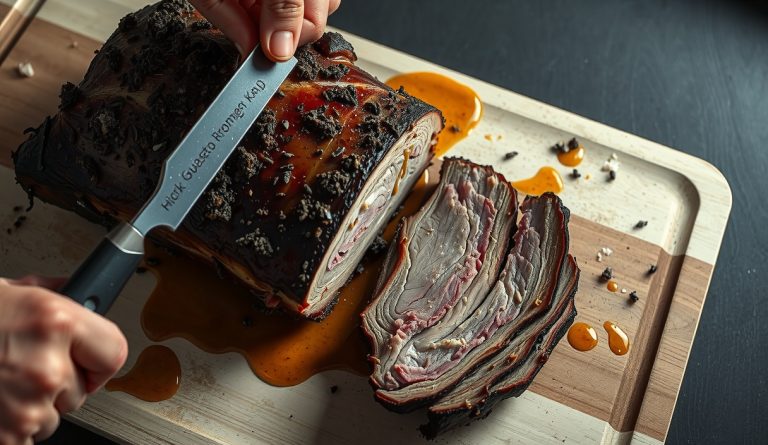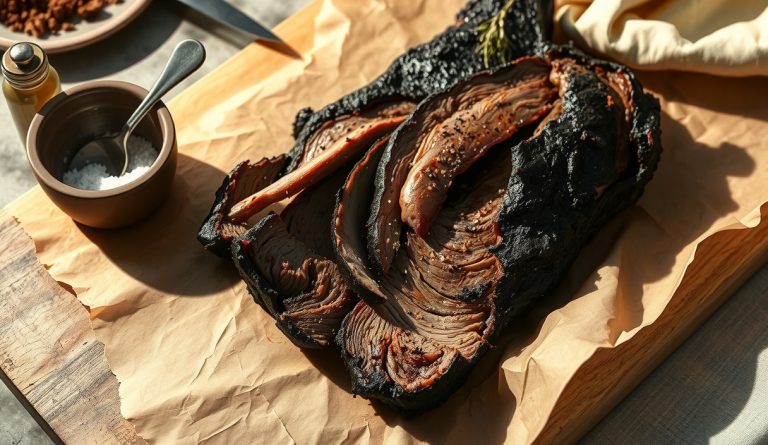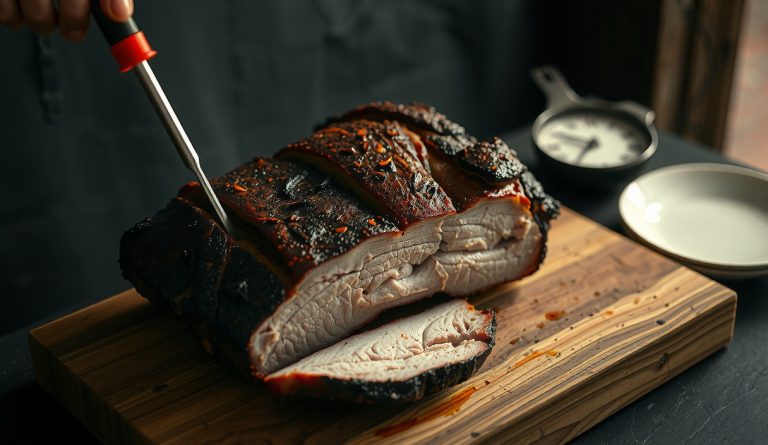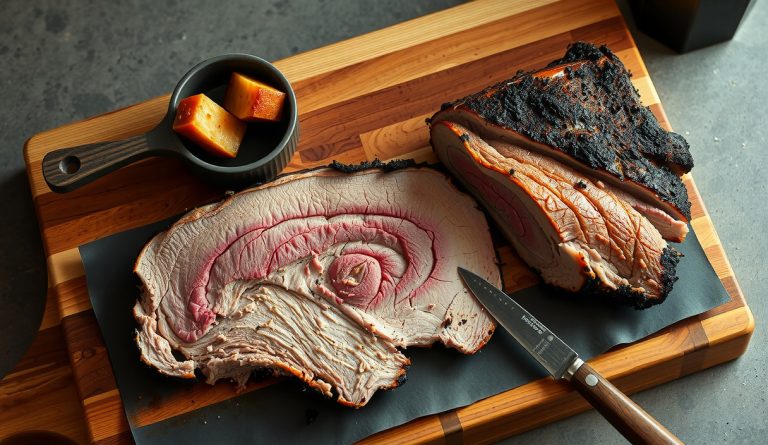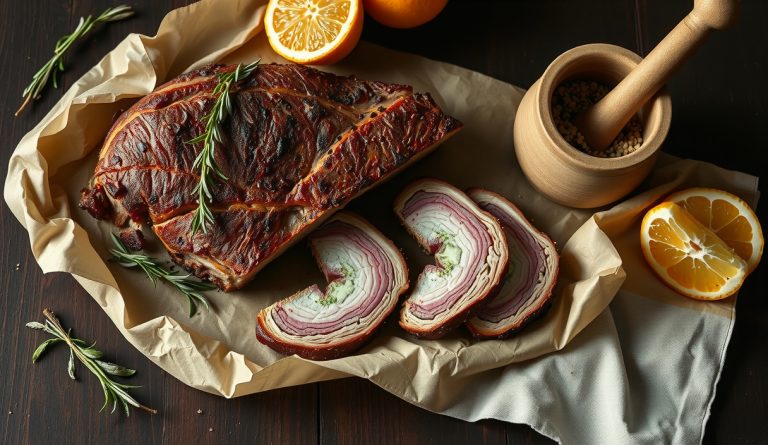
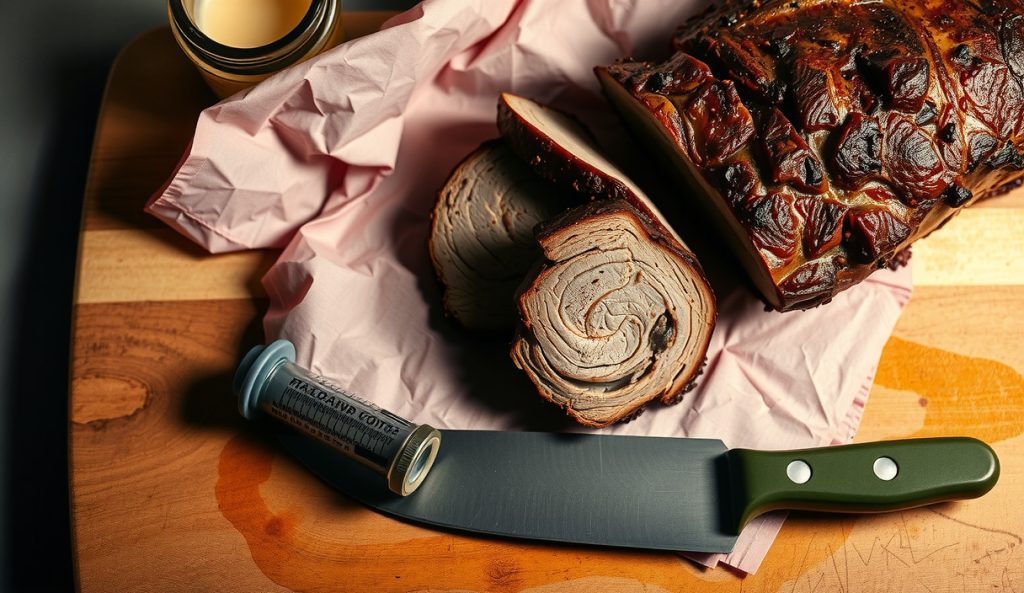
A whole packer brisket — flat and point intact — is the canonical format for Central Texas barbecue because the point’s dense intramuscular fat and high collagen content actively protect the leaner flat during the long cook. When you work with a flat only, that buffer is gone. The flat is a predominantly lean muscle with lower fat marbling and less connective tissue, which means its tolerance for heat and time is narrower. This is, as any honest pitmaster will tell you, a concession to sourcing constraints rather than a preferred approach — but it is a concession you can execute well with the right adjustments.
What changes when you cook a flat-only brisket?
Trim the fat cap to 1/4 inch — the same standard as the full packer — but inject the flat before seasoning with a warm solution of equal parts rendered beef tallow and low-sodium beef broth, targeting roughly 10% of the raw weight as injection volume. Tallow at cooking temperatures stays liquid within the muscle fibers and substitutes partially for the rendered point fat that would normally baste the flat from within during a whole-packer cook. The broth component maintains moisture and slows surface desiccation during the stall.
Wrap timing moves earlier on a flat-only brisket — around 160°F internal rather than 170°F — because the flat has less collagen and less fat to sustain moisture once evaporative cooling is drawing aggressively from the surface. Pull temperature also shifts down to 195°F–198°F internal. At a full 203°F, the flat’s leaner fiber structure reaches a point of excessive protein contraction before adequate moisture retention, resulting in a dry, stringy slice. Probe-tenderness is still the definitive test: the probe should slide in with minimal resistance, but the window closes faster than with a whole packer, so check every fifteen minutes once the flat clears 190°F.
What stays the same as a full packer brisket?
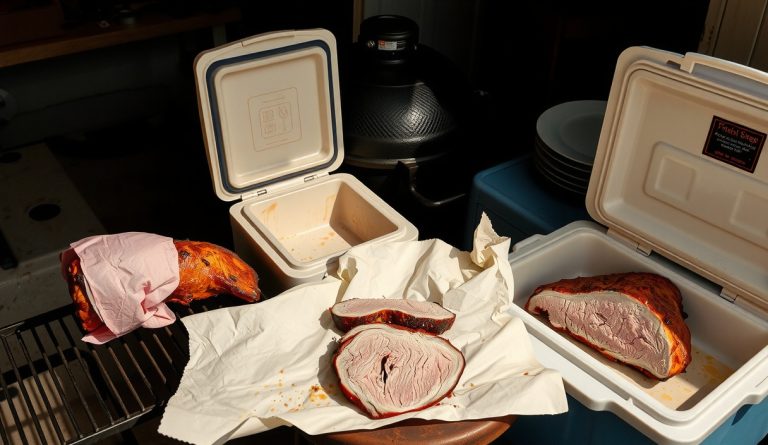
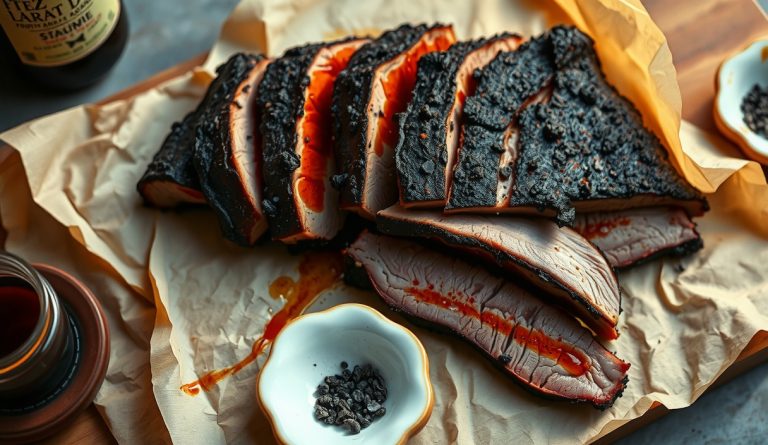
The 50/50 salt-and-pepper rub, post-wrap rest in a faux Cambro (minimum ninety minutes), slicing against the grain, and the target cook temperature of 225°F–250°F all carry over directly from the whole-packer method. The goal — a tender, well-seasoned slice with a defined dark bark — does not change; only the path to get there narrows.
When is a flat-only brisket the better choice?
Cooking a flat only makes sense when a whole packer is genuinely unavailable, when you are cooking for a smaller group where a full twelve-pound packer would produce excessive leftovers, or when a guest’s preference is exclusively for lean slices. A flat-only brisket is not a superior product to a well-executed whole packer, but it is a respectable one when the technique is dialed in. Budget extra time for injection prep and plan your pull window tightly — the margin for error at the high end of the temperature range is significantly smaller than with a full packer.
Use the full method, equipment, and rub measurements from the original Central Texas Brisket — Salt-and-Pepper Bark.