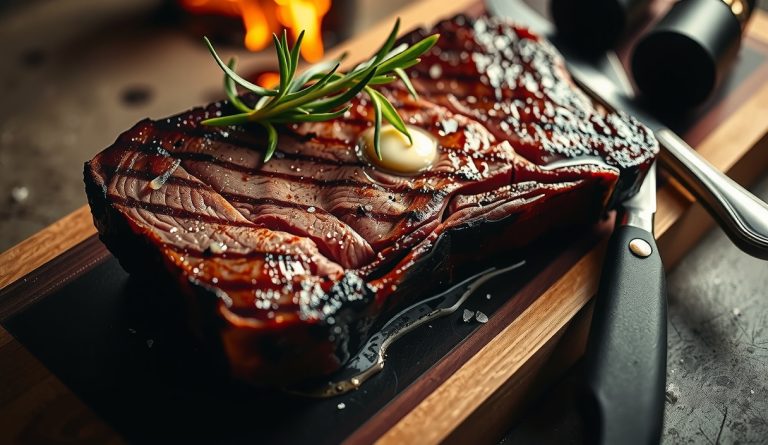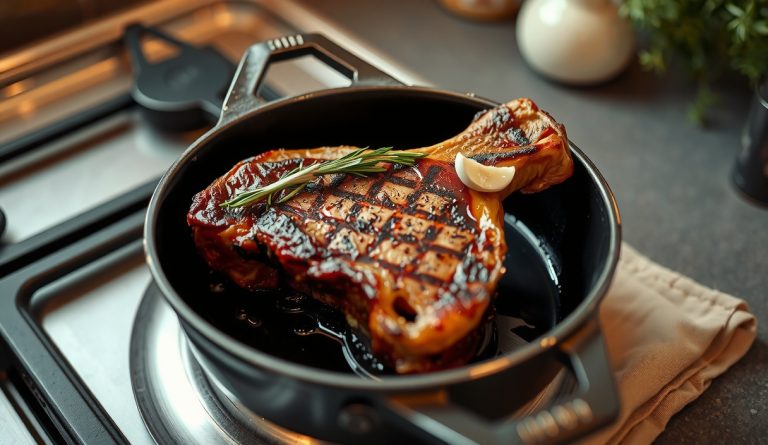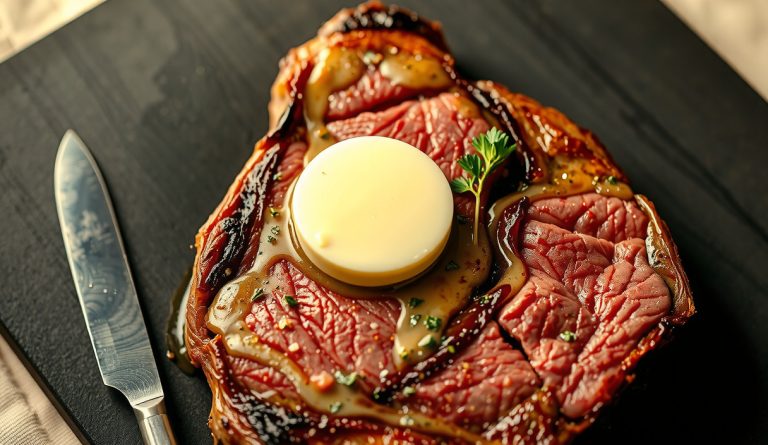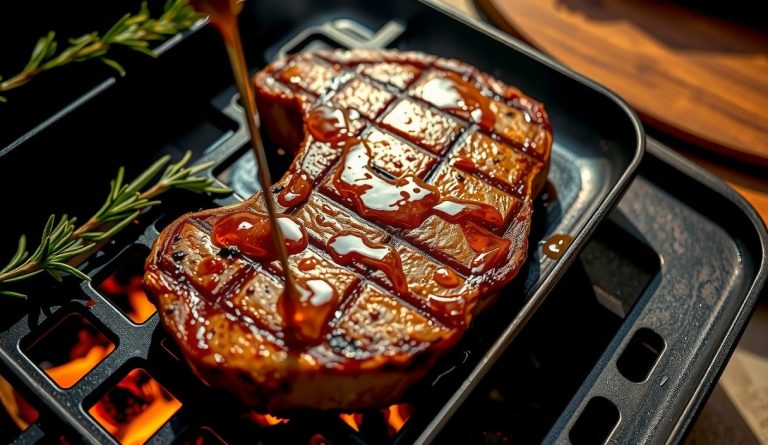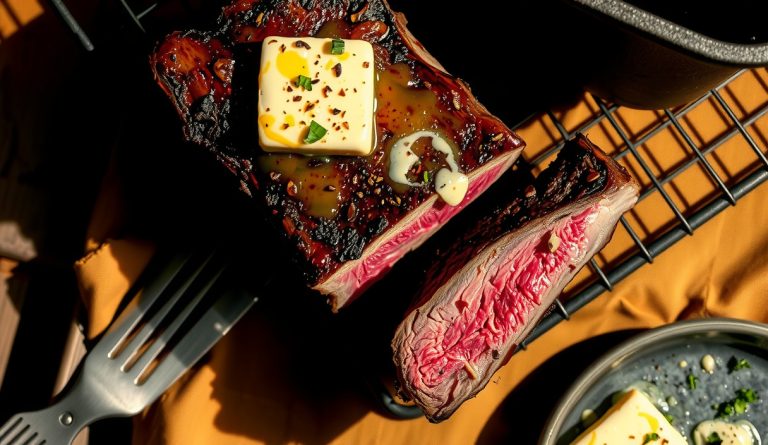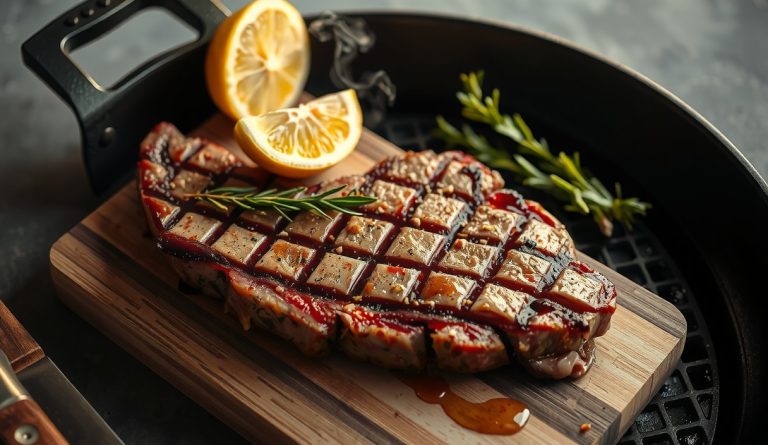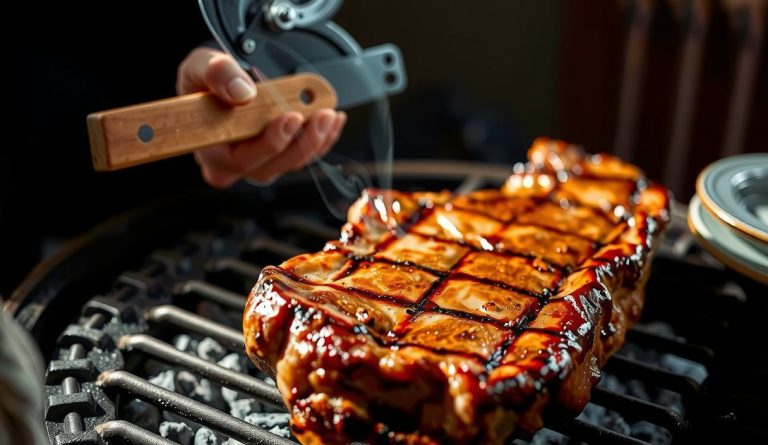
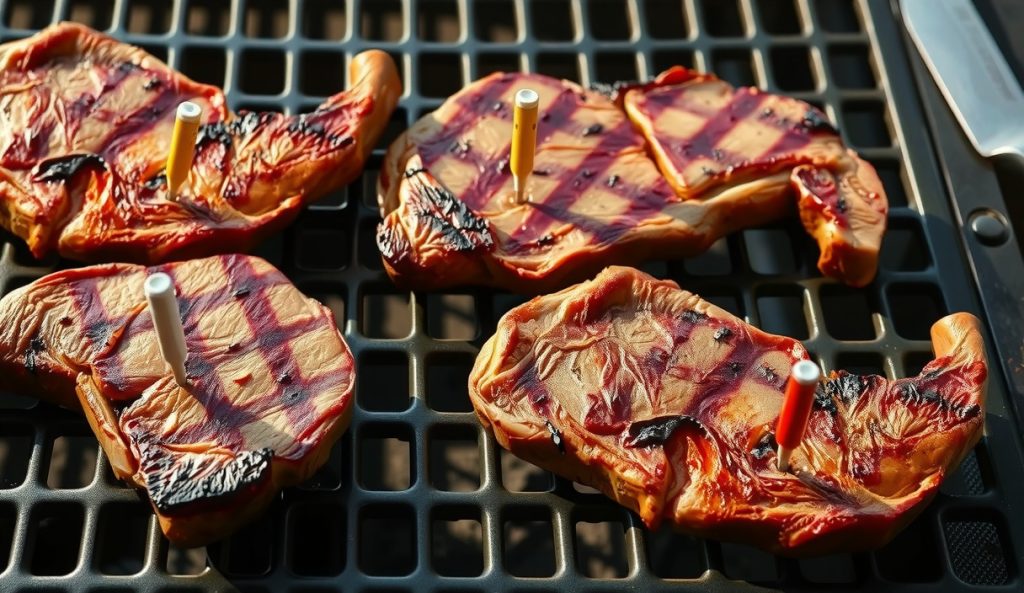
The reverse-sear method scales well in theory — the indirect phase is low-stress and the grill can hold multiple steaks — but scaling to four or more ribeyes introduces two specific execution challenges that do not exist when cooking a single steak. The first is airflow geometry in the indirect zone. The second, and more operationally demanding, is the sear sequence: multiple steaks will reach 115°F at different times, and treating them as a synchronized batch is the fastest way to overcook some while under-searing others.
What changes when you scale up to multiple ribeyes?
In the indirect zone, maintain at least one inch of clearance between each ribeye. This is not a comfort margin — it is a functional requirement. Hot air circulation in a two-zone setup follows convection paths that depend on open grate area. When steaks are touching or overlapping, they create a local low-velocity zone between them where temperature is lower and more variable, producing uneven doneness across the cut.
Four two-inch ribeyes on a standard 22-inch kettle will fit in the indirect zone with correct spacing if arranged in a single row perpendicular to the heat source. Use a leave-in probe thermometer on the thickest steak as your primary reference, but check all steaks individually with an instant-read near the end of the indirect phase.
Multiple ribeyes will not reach 115°F simultaneously — differences of five to ten minutes between the first and last steak are normal, driven by variation in starting temperature, thickness, and fat distribution. Pull each ribeye individually as it hits 115°F and move it to a holding rack away from heat. Have your searing coals fully loaded and ready before the first steak reaches temperature — the transfer window between indirect and sear must stay under two minutes per steak to prevent carryover cooking from advancing the interior beyond the target.
Sear each ribeye to order rather than in a batch. Attempting to sear four steaks simultaneously will crowd the sear zone and drop coal temperature, extending contact time and risking gray band formation along the outer edge of each steak.
What stays exactly the same per steak?
Per-steak seasoning ratios, dry-brine timing, target pull temperature of 115°F, sear duration per side, and the four-minute rest all apply identically to each individual ribeye. Scaling changes logistics, not technique.
When is cooking multiple ribeyes the better choice?
This approach is correct any time you are feeding four or more guests who all want ribeye. It is especially suited to dinner parties where staggered serving is acceptable — guests receiving their steak two to three minutes apart is unremarkable in most contexts, and the quality of each individual steak is meaningfully higher than batch-searing would produce. If perfectly synchronized plating is essential, consider cooking two ribeyes at a time in successive rounds instead.
Use the full method, equipment, and rub measurements from the original Reverse-Sear Ribeye on the Grill.