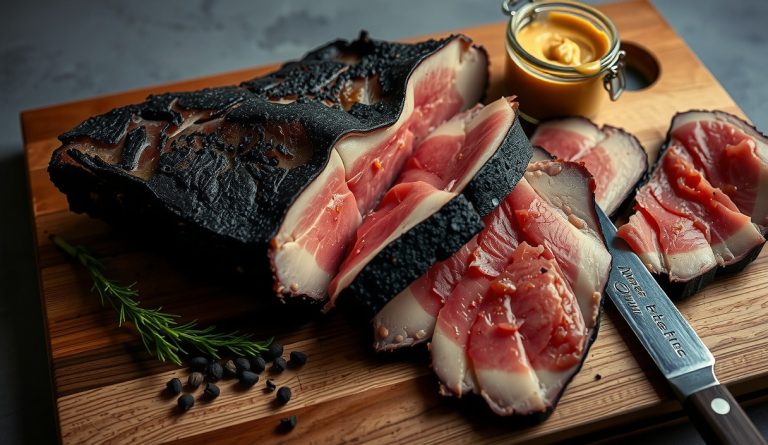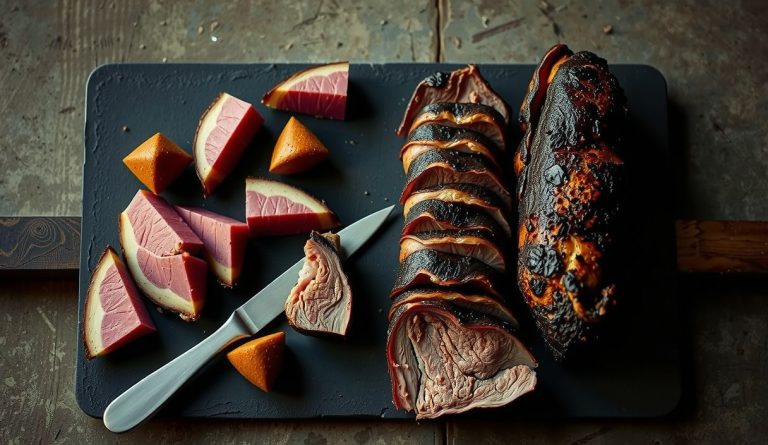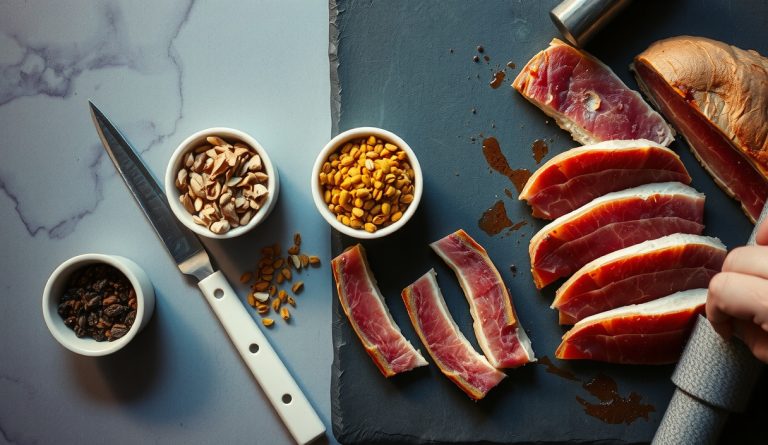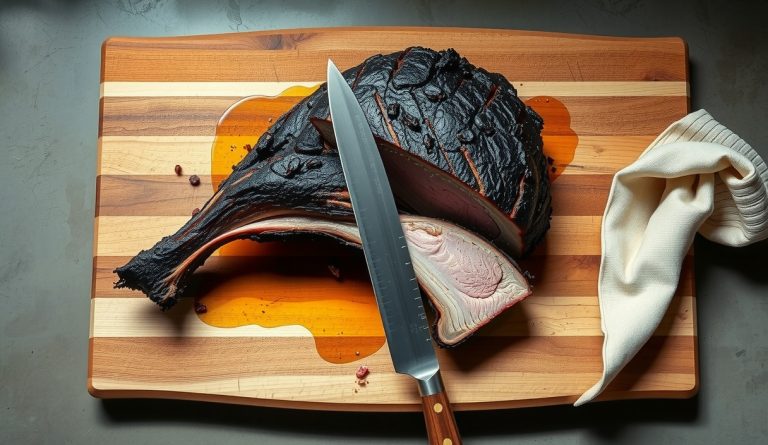
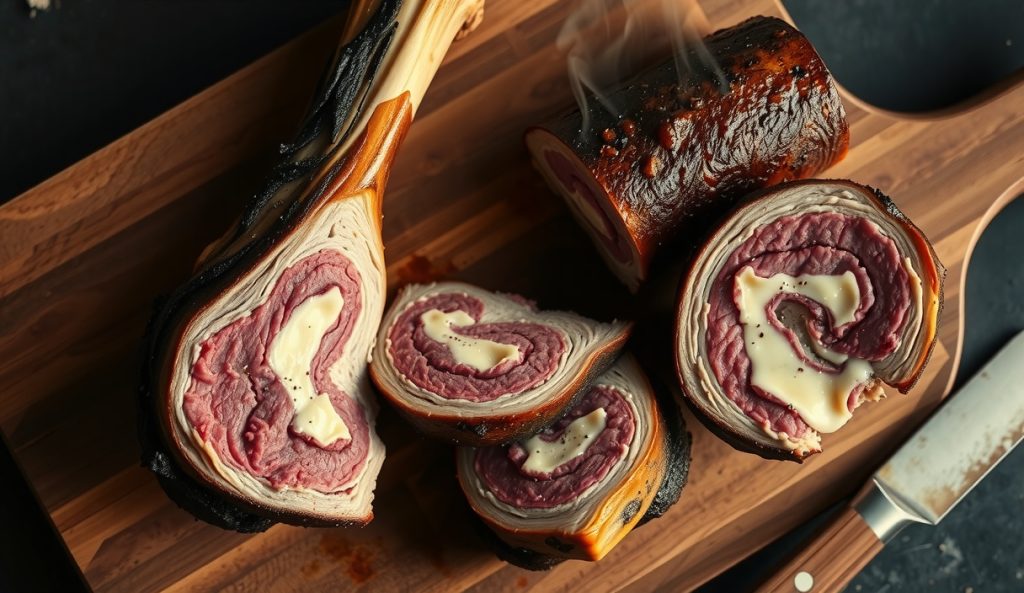
Pastrami is a process as much as it is a cut. The cure, rub, smoke, and steam sequence that transforms brisket works equally well on other collagen-rich beef muscles — specifically bone-in short ribs and boneless chuck roll. Both cuts carry the fat-to-lean ratio and connective tissue density that the steam phase needs to convert collagen into gelatin, and both develop impressive bark under the coriander-pepper rub. This variation is particularly useful when brisket availability or price is a barrier, or when you want a more portioned, individually served format.
What changes when you switch cuts?
Cure time is the primary adjustment when making pastrami from short ribs or chuck roll. A bone-in short rib plate cut to 2 inches of thickness equilibrates faster than a brisket flat because the cross-sectional depth is shorter and brine can penetrate from multiple exposed surfaces — reduce cure time to 4 to 5 days for short ribs at that thickness. A chuck roll, which is thicker and more uniform in shape, should cure for 6 to 7 days. As with any equilibration cure, the goal is for sodium and nitrite ions to reach the geometric center of the muscle — undercuring at the center produces a gray, unseasoned band in the finished slice.
Short ribs carry a notable structural advantage: the rib bone conducts heat differently than the surrounding muscle, creating localized thermal gradients that drive bark formation in irregular, visually interesting patterns at the bone-meat interface. The intercostal muscle — the meat between the ribs — is exceptionally high in collagen, and that collagen hydrolyzes aggressively during the steam phase, producing a texture that in some respects exceeds what brisket delivers. Chuck roll, being boneless, behaves more predictably and slices cleanly, making chuck roll a closer functional substitute for the brisket flat. Smoke and steam temperature targets are unchanged: pull short ribs or chuck roll at 165°F internal from the smoker, then steam to 203°F.
What stays the same as the brisket method?
The brine formula, rub composition, pit temperature of 225°F, the 165°F smoke-phase pull, and the 203°F steam-phase finish are identical to the canonical brisket pastrami method regardless of which cut is used. The two-stage structure — smoke to bark development, then steam to final collagen conversion — does not change. Only cure duration is adjusted based on the geometry of the cut.
When is short rib or chuck roll pastrami the better choice?
Short rib pastrami is the better choice when you want individual bone-in portions for a dinner service, when brisket is unavailable or cost-prohibitive, or when the eating experience you are after is intensely rich and gelatinous rather than lean and sliceable. Chuck roll pastrami is the better choice when you need a brisket-flat analog that is easier to source and slices cleanly for sandwiches.
Use the full brine ratios, rub measurements, and steam technique from the original Smoked Pastrami from Scratch, adjusting only cure duration as noted above: 4 to 5 days for 2-inch short ribs, and 6 to 7 days for chuck roll.