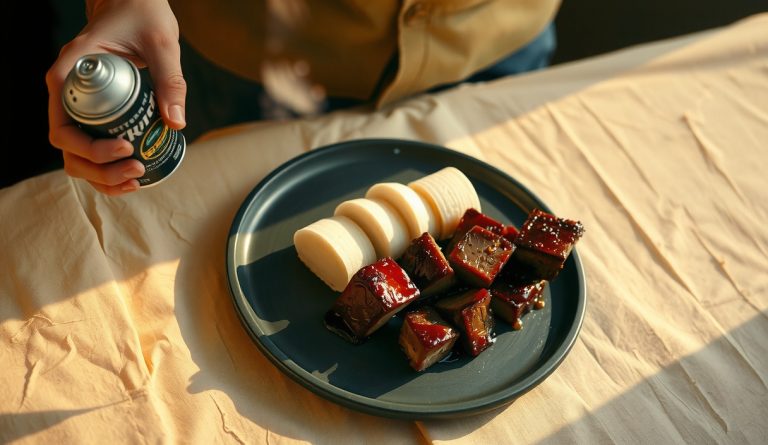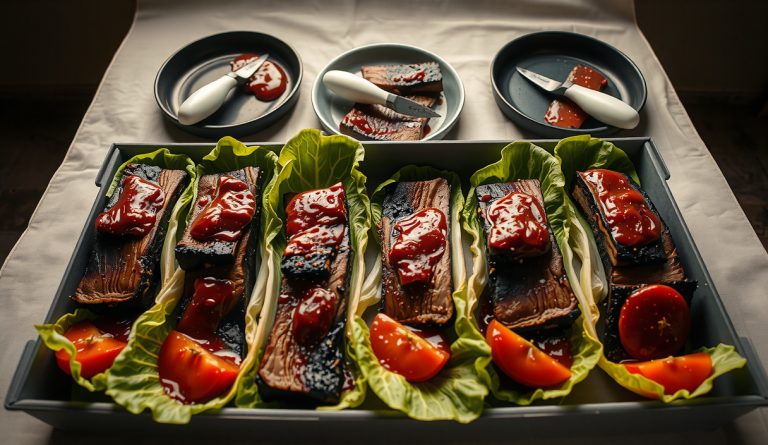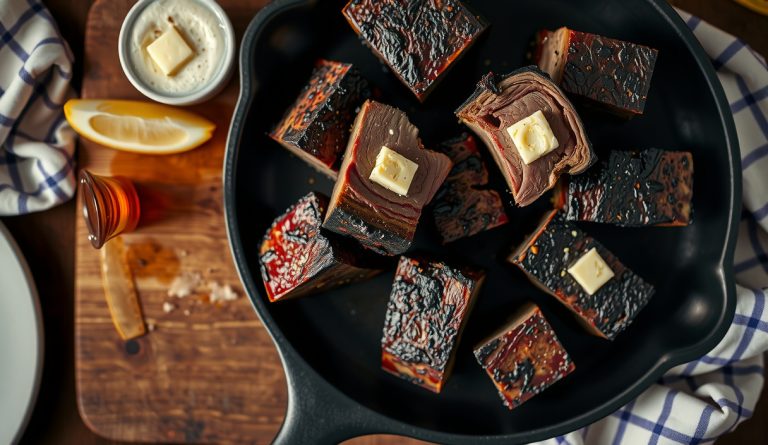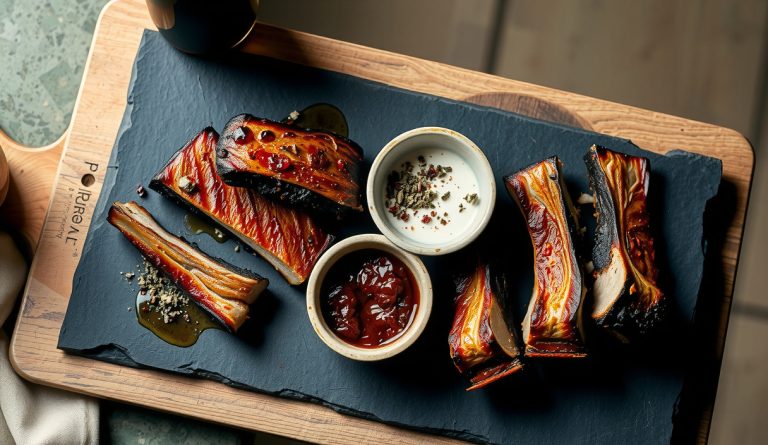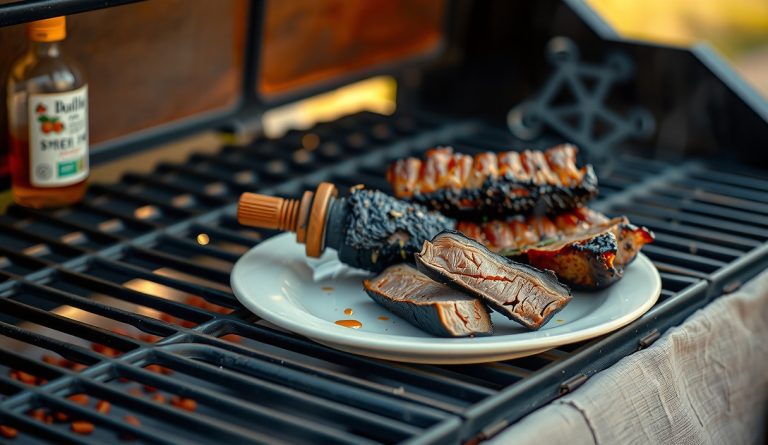
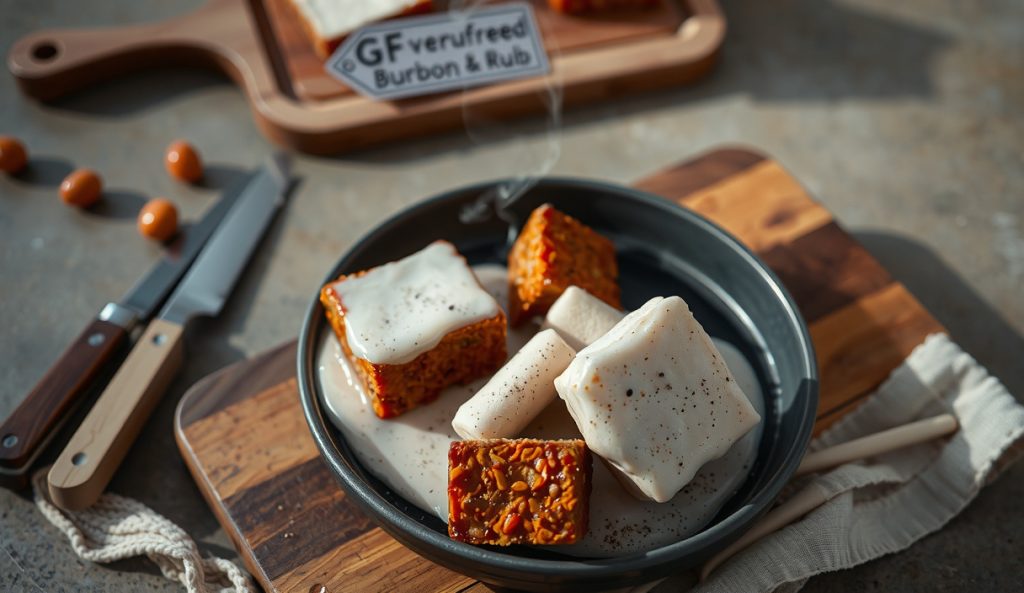
Burnt Ends with Cherry-Bourbon Foam is, at its structural core, a beef-smoke-sugar recipe — and beef, smoke, and sugar are naturally gluten-free. The hazard lives in the pantry staples that sneak into the rub, the glaze, and the bourbon itself. Audit those four specific points and every cube comes out compliant without sacrificing a molecule of bark.
What changes when you make Burnt Ends with Cherry-Bourbon Foam gluten-free?
Worcestershire sauce in the glaze. Standard Worcestershire — Lea & Perrins in the US, Henderson’s in the UK — contains malt vinegar distilled from barley, a gluten source that survives reduction because it is a protein-bound hordein fraction, not a volatile compound. Swap to a certified gluten-free Worcestershire such as Annie’s or Wan Ja Shan, or replace it 1:1 with coconut aminos, which contributes comparable umami depth via glutamate while adding a mild sweetness that reinforces the cherry reduction. Either substitution is chemically inert to the Maillard cascade on the bark surface.
Commercial rub blends. Pre-mixed BBQ rubs frequently contain wheat-based anti-caking agents — calcium silicate with wheat starch carrier — or maltodextrin derived from wheat starch. Build the rub from single-ingredient components: kosher salt, coarse black pepper, smoked paprika, garlic powder, onion powder, and celery seed, every one of which is inherently gluten-free when sourced from a dedicated gluten-free grinder. Cross-contamination at the spice-grinder level is the real risk: buy certified GF labeled spices if your household includes a celiac diner rather than a sensitivity diner.
Bourbon selection. All straight bourbons distilled in the United States are legally required to be made from a grain mash of at least 51% corn, and the distillation process removes gluten proteins below the 20 ppm Codex threshold. Some flavored or blended whiskeys, however, add post-distillation grain extracts that reintroduce gluten. Stick to a straight bourbon — Bulleit, Knob Creek, or Maker’s Mark — labeled as such with no flavored expressions, and the burnt ends are fully covered. The high-rye varieties recommended in the canonical recipe are all straight bourbons and fully safe.
Xanthan gum. Xanthan is produced by bacterial fermentation of a sugar substrate, and that substrate is sometimes glucose derived from wheat starch, meaning trace gluten can persist in industrial grades. For foam duty in this recipe, source xanthan explicitly labeled gluten-free — Bob’s Red Mill and NOW Foods both qualify. The 0.2% w/w dose is small, but the surface area exposure in an aerated foam maximizes any residual protein contact with oral mucosa in sensitive individuals, making the label check non-negotiable.
Cross-contamination protocol. Dedicate a spice grinder, a silicone brush for glazing, and an iSi whip canister that have never contacted wheat-based batters or rubs. A shared wire brush on a grill grate that previously cooked flour-dusted proteins can deposit gluten onto the brisket surface — use a clean grate, or burn off thoroughly and re-brush before the burnt ends go on.
What stays exactly the same in the gluten-free version?
The entire brisket point, the two-stage smoke method, the collagen-hydrolysis target of 203°F internal, the cherry-bourbon reduction chemistry, the 0.5% sunflower lecithin foam stabilization, the N2O charge protocol, and the 8-to-12-minute service window are completely unchanged. Gluten plays no structural role anywhere in bark formation, collagen hydrolysis, or foam physics — removing it means removing a contaminant, not altering the recipe’s mechanics in any measurable way.
When is the gluten-free version the better choice for everyone at the table?
This version is essential for any gathering that includes guests with celiac disease or non-celiac gluten sensitivity, and it is the right default for competition cooks where ingredient transparency is scrutinized by judges. Because the substitutions are invisible in the final dish — coconut aminos produces an identical Maillard-active sugar-amino environment in the glaze — there is no reason not to make this the permanent house standard.
Follow the complete two-day smoke and foam method at the original recipe.