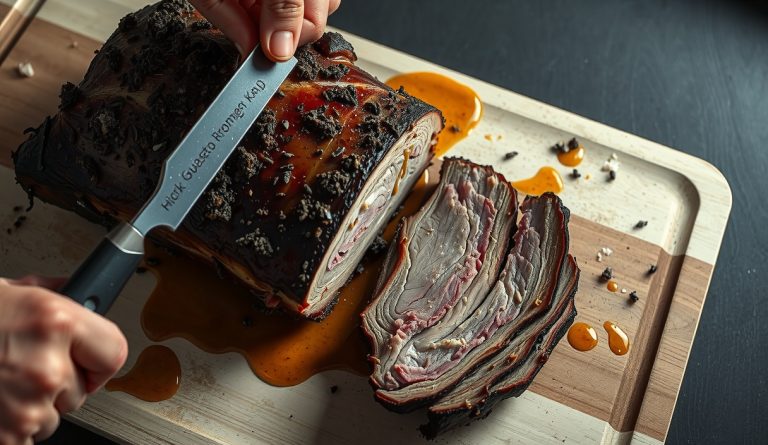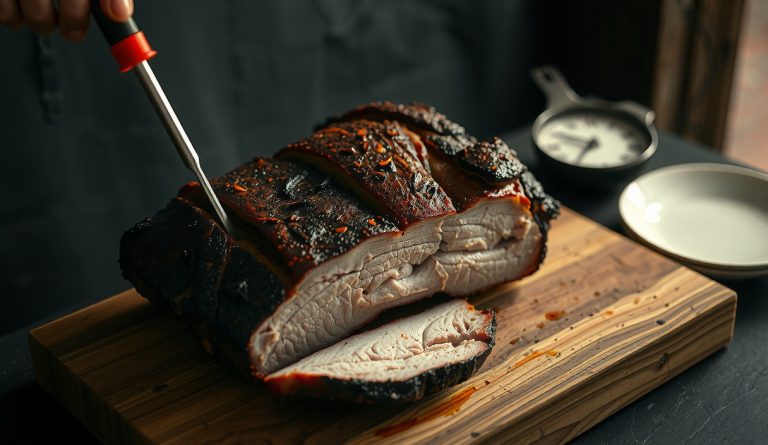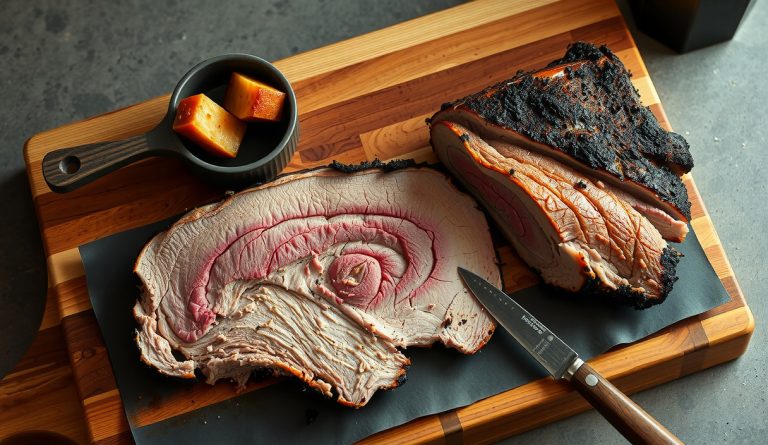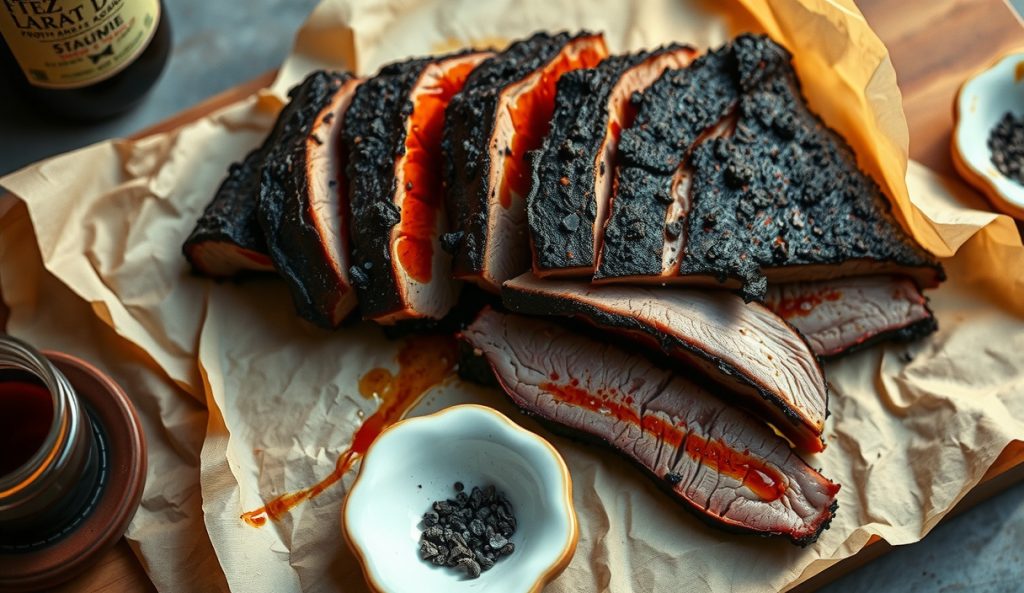
Central Texas brisket’s canonical ingredient list — kosher salt, coarsely cracked black pepper, post-oak smoke, and beef — contains zero gluten by design. That is genuinely good news for anyone managing celiac disease or non-celiac gluten sensitivity. The risk is not in the recipe itself; it lives in the equipment, in pre-mixed commercial seasonings some cooks substitute in, and in the side items that land on the same board. This guide closes every one of those gaps with the same specificity the recipe demands.
What changes when you make Central Texas brisket gluten-free?
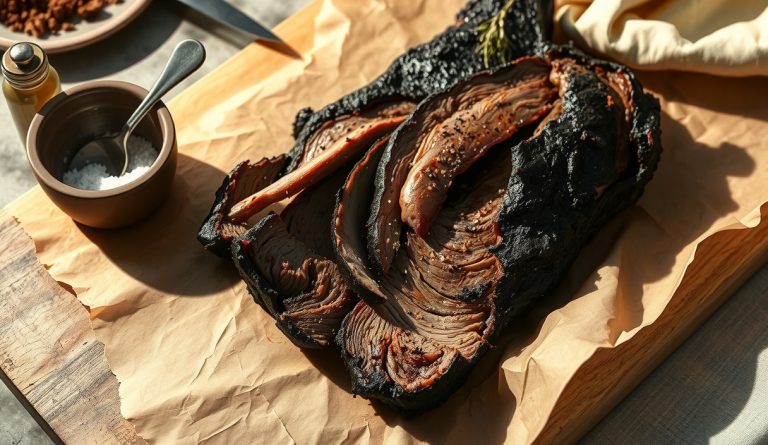
The rub — audit your salt and pepper. Diamond Crystal kosher salt is pure sodium chloride with no anti-caking additives and is certified gluten-free. Morton kosher salt is similarly safe. The danger enters when a cook reaches for a commercial seasoning blend labeled “salt and pepper” or a pre-made brisket rub: many contain wheat-based anti-caking agents (typically wheat starch or maltodextrin derived from wheat), hydrolyzed wheat protein for umami depth, or are processed on shared lines with gluten-containing spices. Buy whole black peppercorns and crack them yourself in a dedicated burr grinder or pepper mill that has never contacted gluten-containing spices. Pre-ground commercial pepper is frequently processed alongside blends that include wheat starch. This single step eliminates the most common hidden-gluten vector in an otherwise clean recipe.
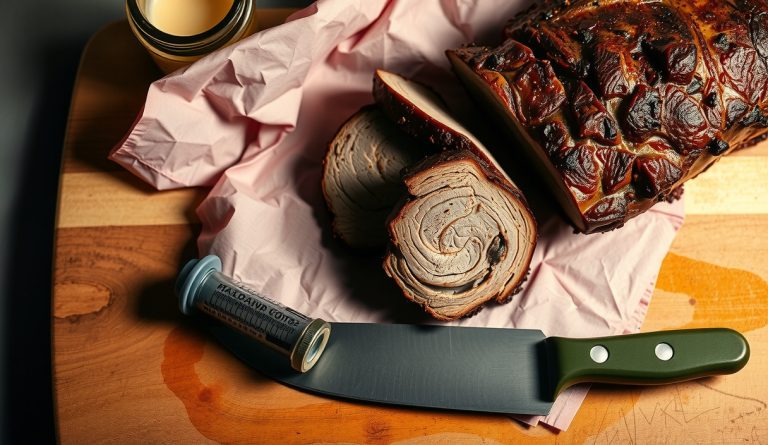
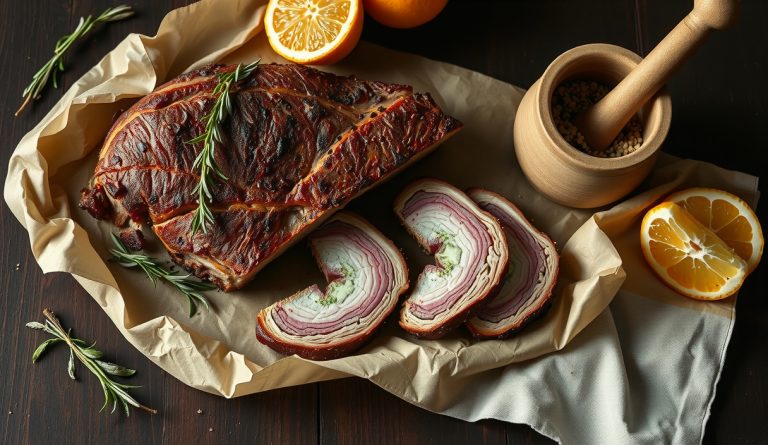
The butcher paper. Uncoated pink (peach) butcher paper — the correct choice on food-science grounds regardless of diet — is naturally gluten-free. Avoid any waxed or coated butcher paper, since some coatings use wheat-based starch sizing. Standard restaurant-supply uncoated pink paper (e.g., Bryco or Oren brand) is safe; confirm with the manufacturer if you are managing celiac disease rather than preference-level sensitivity.
Side sauces and accompaniments. If you serve the brisket with any sauce — even a minimalist Texas drizzle — Worcestershire sauce is the classic hidden-gluten trap. Lea & Perrins’ U.S. formulation contains malt vinegar (barley-derived) and is not gluten-free. Use a certified GF Worcestershire (e.g., French’s GF Worcestershire) or substitute coconut aminos for the savory-umami note. Pickled jalapeños from a jar are typically safe, but verify no malt vinegar is used in the brine — cider vinegar or distilled white vinegar are gluten-free; malt vinegar is not. White sandwich bread served alongside at Texas joints introduces direct cross-contamination; substitute corn tortillas or serve the brisket unaccompanied.
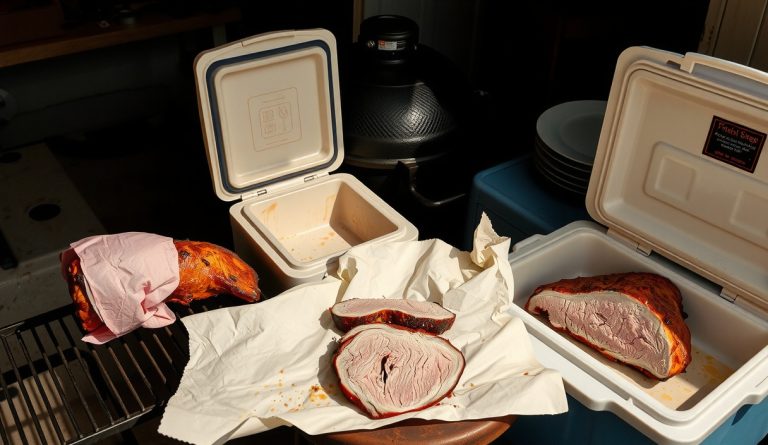
Cross-contamination at the pit. A wire grill brush that previously cleaned a grate used for beer-can chicken (wheat beer residue) or a basting brush shared with a gluten-containing marinade can deposit enough protein to trigger a celiac response. Dedicate a stainless brush and grate to the gluten-free cook, or clean the grate with a thorough high-heat burn-off followed by a wipe with a fresh paper towel and neutral oil. The preheated cooler (faux Cambro) poses no gluten risk if it has been cleaned; towel liners from a household that handles gluten-containing foods should be freshly laundered before use.
What stays exactly the same in the gluten-free version?
Every load-bearing variable in the canonical recipe — the 225°F cook temperature, post-oak smoke, the 50/50 salt-to-pepper ratio by weight, the butcher-paper wrap at 170°F internal temperature, the two-hour faux-Cambro rest, and the slicing protocol — is completely unchanged. The Maillard reaction that builds bark, the collagen hydrolysis that produces gelatin, and the evaporative-cooling stall that demands patience are all gluten-free processes driven by heat, time, and protein chemistry. No step is modified; only the sourcing is verified.
Who is this version best for?
This version is essential for any table where a celiac guest is present and the cook wants to serve the canonical Central Texas brisket experience without modification or apology. Because the recipe’s soul is already two ingredients, the gluten-free version is not a compromise — it is the recipe, executed with verified ingredients and clean equipment. Sourcing whole peppercorns and cracking them fresh also improves bark texture independently of any dietary requirement, making this a useful discipline for every cook.
The full science, timing, and method are at Central Texas Brisket — Salt-and-Pepper Bark; these notes layer on top of that foundation without changing a single step.