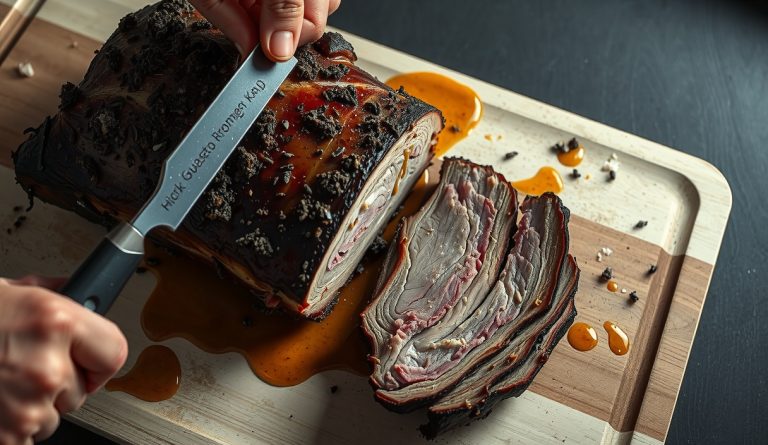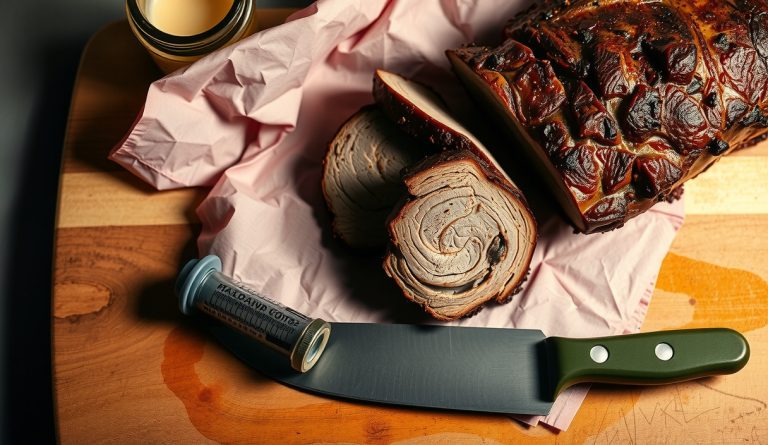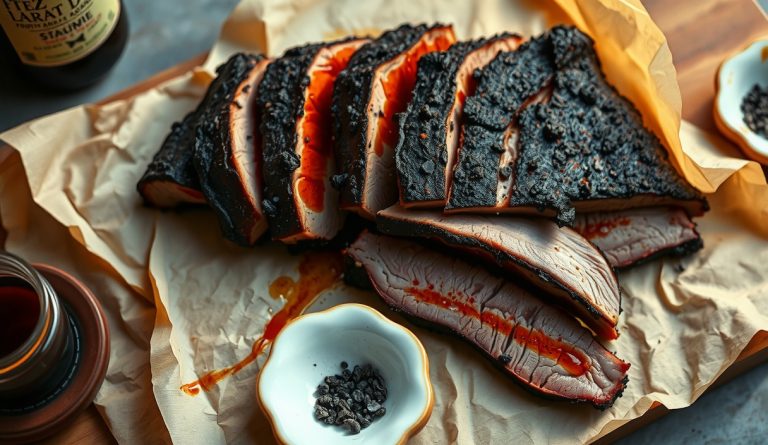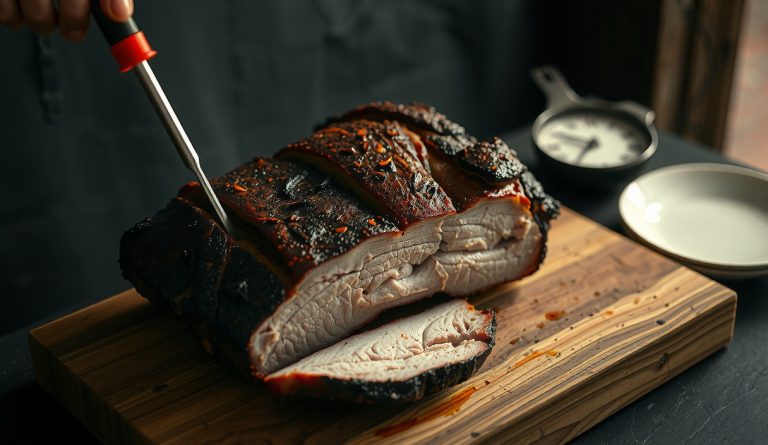
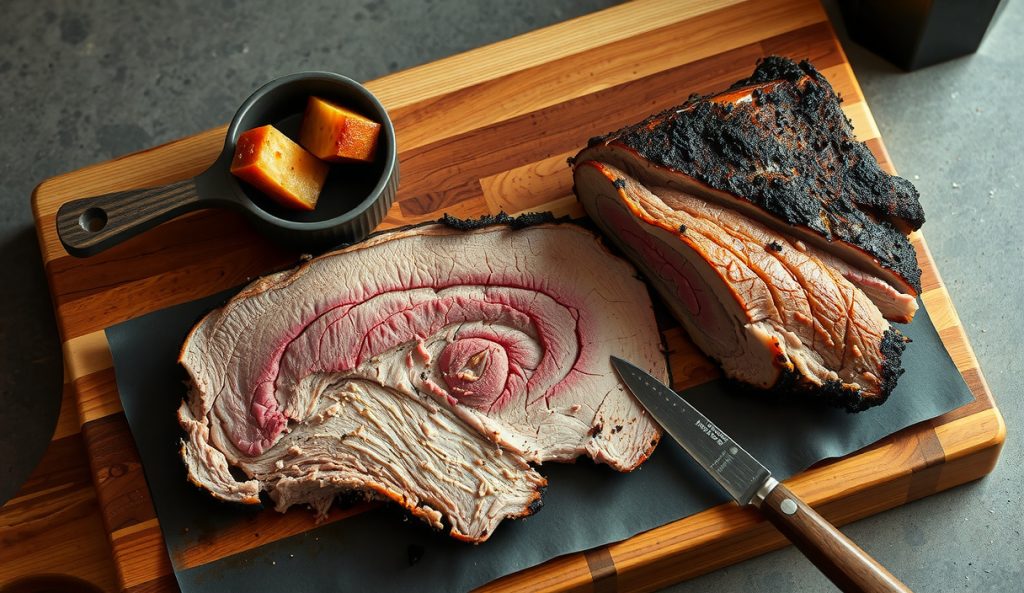
Central Texas brisket is the rare canonical BBQ recipe that arrives at the keto table nearly unmodified. A whole packer brisket is predominantly protein and fat — the point alone runs 60–70% fat by calorie — and the canonical two-ingredient rub contributes essentially zero net carbohydrates. The adaptations below are surgical: they target the handful of places where carbs quietly enter through side sauces, accompaniments, and the occasional cook’s improvisation, and they protect the fat-rendering and bark-formation chemistry that makes this recipe worth the sixteen-hour commitment.
What changes
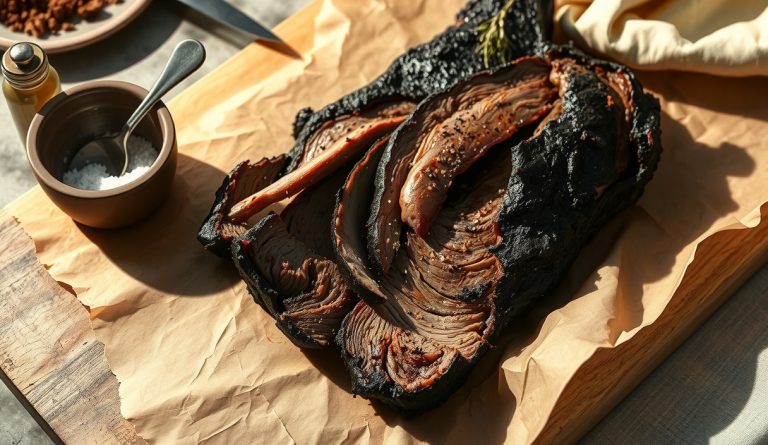
The rub — it’s already keto, but verify. A 50/50 salt-and-pepper rub by weight has negligible net carbohydrates. The carb risk appears only if a cook supplements with a commercial brisket rub that includes brown sugar, turbinado, or dextrose (common in Central Texas-style commercial blends marketed as “competition rubs”). If you stay true to the canonical — salt and cracked pepper only — your rub contributes fewer than 0.5g net carbs per serving. If you want a faint sweetness that caramelizes on the bark without sucrose, a light dusting of allulose (roughly 10% by weight of the pepper fraction) is the correct choice: allulose undergoes Maillard browning and caramelization at temperatures close to sucrose, unlike erythritol, which has a higher melting point, resists browning at typical bark-surface temperatures, and can deposit a crystalline, cooling-sensation residue. Monk-fruit/erythritol blends share the same browning limitation. Use allulose if you want any sweetness in the bark — or simply omit it entirely, which is the orthodox approach.
Finishing sauces. A traditional Texas table serves brisket unadorned, but if sauce appears, the carbs arrive fast. Commercial BBQ sauce runs 12–16g net carbs per two-tablespoon serving from high-fructose corn syrup, molasses, and ketchup (itself sugar-laden). A keto-compliant drizzle: combine unsweetened tomato paste, apple cider vinegar, smoked paprika, garlic powder, and allulose to taste — this delivers the acid-smoke profile at under 2g net carbs per serving. Avoid honey-mustard, sweet pickle brines, and any glaze applied post-wrap.
Accompaniments. The canonical Texas plate — sliced white bread, pinto beans, and coleslaw with sweet dressing — carries 40–60g net carbs before the brisket is even considered. Replace white bread with pork-rind crackers (zero net carbs, the fat and crunch serve the same plate-mopping function). Swap pinto beans for a warm side of smoked bone marrow or creamed spinach. For coleslaw, dress shredded cabbage and celery seed with full-fat mayonnaise, apple cider vinegar, and a small amount of allulose — under 4g net carbs per cup. Pickles are typically fine (dill, not bread-and-butter).
Net-carb delta. The canonical recipe as written (brisket + rub only) sits at roughly 0–1g net carbs per 6oz serving. Adding a traditional plate with bread, beans, and sweet coleslaw pushes that to 55–65g. The keto plate described above keeps the total meal under 6g net carbs without altering a single minute of the cook.
What stays the same
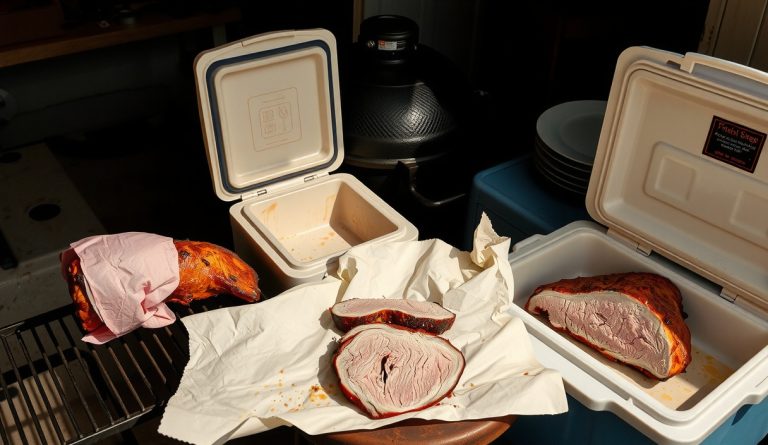
The entire cook is unchanged: 225°F over post-oak, salt-and-pepper rub at 50/50 by weight, butcher-paper wrap at 170°F internal, and the two-hour faux-Cambro rest. Brisket fat renders through the same thermodynamic pathway regardless of what accompanies it at the table; collagen hydrolysis kinetics are indifferent to ketosis.
When this is the better choice
This is the ideal recipe for a keto cook who wants a centerpiece with zero dietary anxiety: the entire carbohydrate management happens on the cutting board and the side dish selection, not in the smoker. The point’s high fat content — intramuscular fat plus the rendered fat cap — also makes it exceptionally satiating, which aligns with keto’s appetite-regulation mechanism in a way that leaner proteins do not.
The complete method and science are at Central Texas Brisket — Salt-and-Pepper Bark; follow every step there and simply swap the plate as described above.