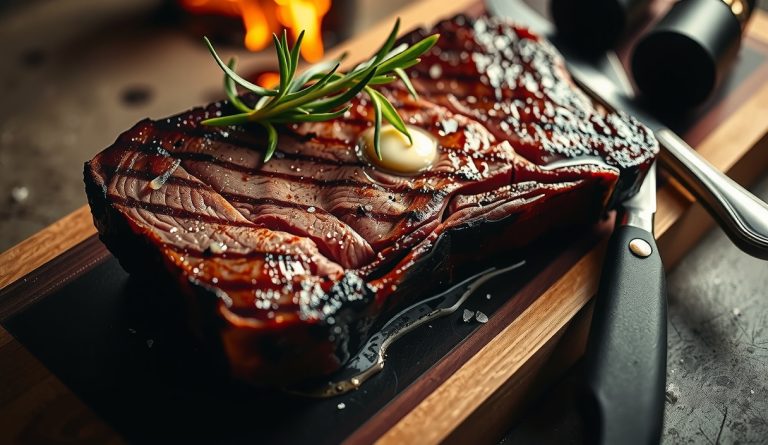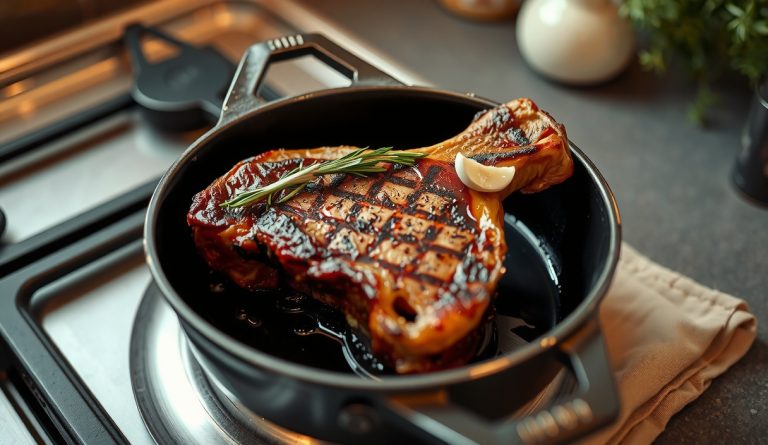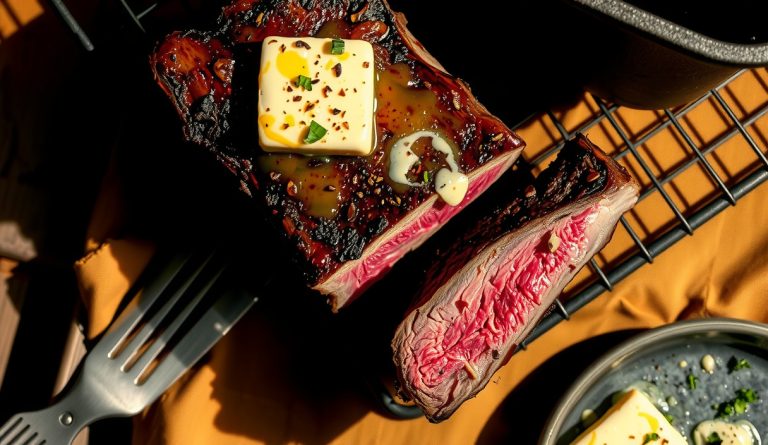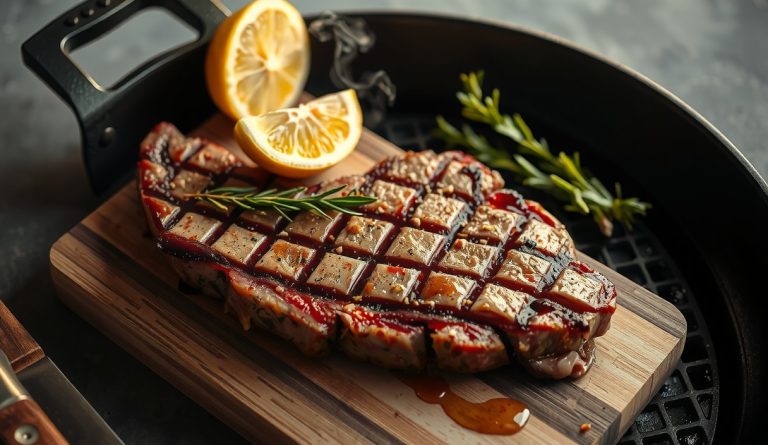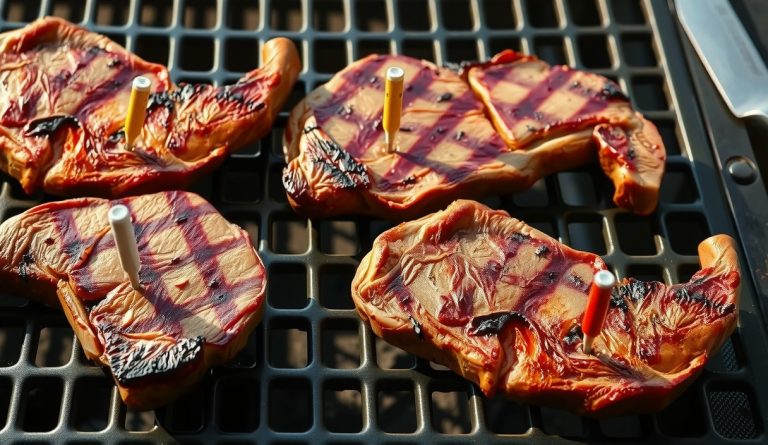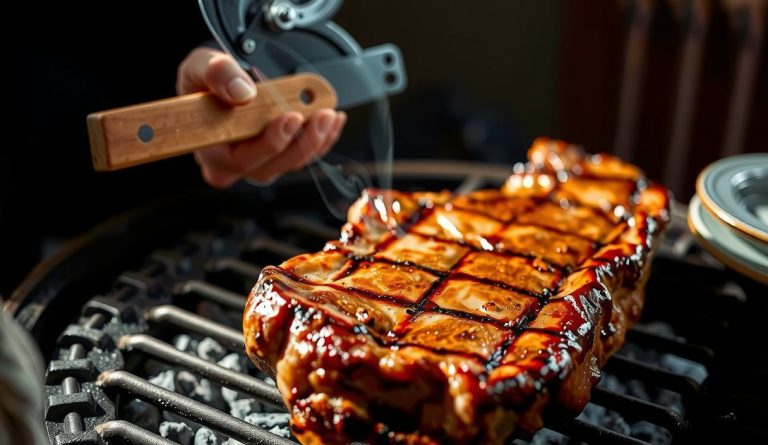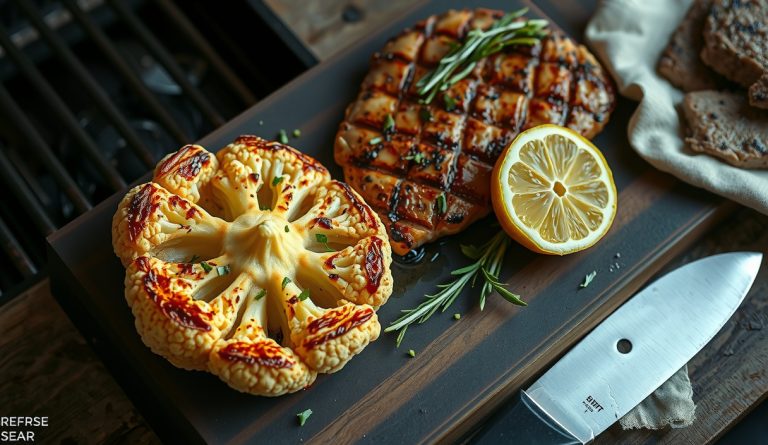
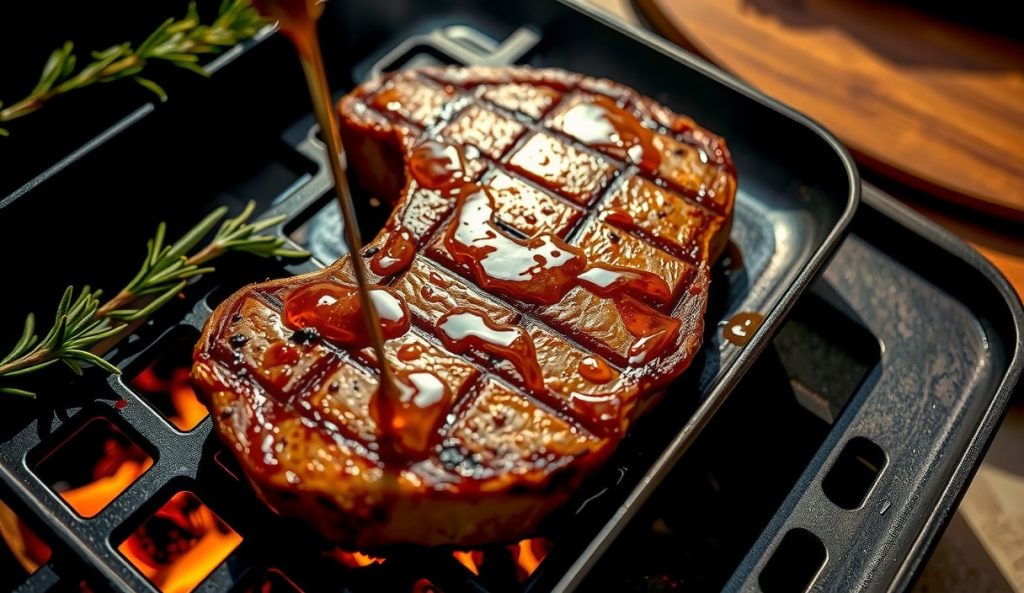
Good news arrives early for gluten-free cooks: the reverse-sear ribeye is, at its structural core, a technique built on beef, kosher salt, fire, and thermodynamics — none of which contain gluten. The risks are narrow but real, and they cluster in the compound butter, any commercial rub, and cross-contamination at the grilling surface. This guide names exactly where gluten can sneak in and how to close every gap without changing a single thing about the crust physics.
What actually changes to make reverse-sear ribeye gluten-free?
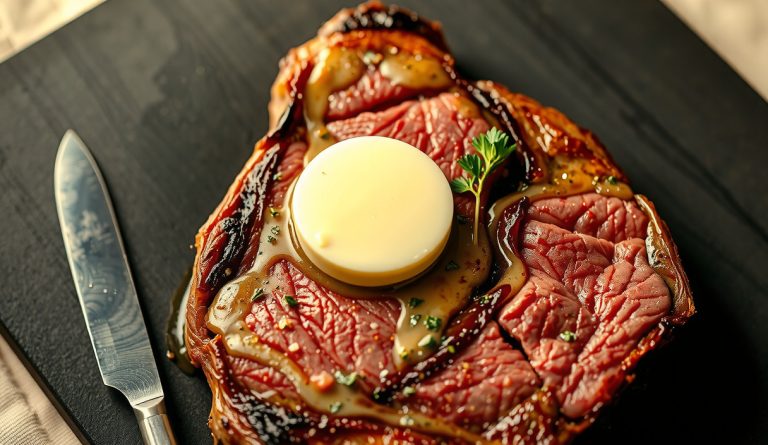
Compound butter: The most common compound butter additions — Worcestershire sauce and prepared horseradish — are the two places gluten hides in a steak finish. Conventional Worcestershire (Lea & Perrins in the US is barley-malt-free, but many store brands are not) can contain barley malt vinegar. Read the label every time, or substitute Wizard’s Organic Gluten-Free Worcestershire or coconut aminos, which deliver the same umami-acidic brightness. Prepared horseradish is typically safe, but check for wheat-based thickeners or malt vinegar in the brine — plain grated fresh horseradish root eliminates the variable entirely.
Commercial rub or spice blends: If you reach for a pre-mixed steak rub, verify it carries a certified gluten-free mark. Many spice blends use wheat flour or wheat starch as an anti-caking agent. For this recipe the canonical seasoning is kosher salt and cracked black pepper — both naturally gluten-free — so the safest path is to grind your own pepper fresh and leave it at that. The pellicle formed during the uncovered refrigerator rest adheres Maillard precursors to the surface regardless of rub complexity; you lose nothing by keeping the seasoning simple.
Finishing sauces at the table: Steak sauces like A.1. contain malt vinegar; béarnaise made with white wine vinegar is safe; chimichurri built from fresh herbs, garlic, olive oil, and cider vinegar is entirely gluten-free. Swap malt vinegar for cider vinegar or white wine vinegar anywhere acidity is needed — the flavor difference is negligible and the pH contribution to sauce brightness is identical.
Cross-contamination: A wire brush that has swept crumbs of a marinated, bread-crumbed item from a previous cook can transfer trace gluten to the grate. For a celiac-level standard, burn the grate clean on high heat for ten minutes, then wipe with a fresh paper towel held in tongs. Use dedicated long-handled tongs and a probe thermometer that has not been wiped on a shared kitchen towel. The grill grate itself — cast iron or stainless — is inert and non-porous, so a thorough heat-clean is sufficient.
What stays exactly the same in the gluten-free reverse-sear method?
The entire method is unchanged: the 24-to-48-hour salted dry-brine in the refrigerator to build the pellicle, the two-zone indirect phase at 225°F to bring the interior to 115°F, and the final 60-to-90-second blast over maximum-heat coals to drive the Maillard cascade. Beef, kosher salt, black pepper, fire, and a reliable thermometer are all naturally and completely gluten-free. The crust physics are unaffected.
When is the gluten-free reverse-sear ribeye the right choice?
This variant is the right call any time someone with celiac disease or non-celiac gluten sensitivity is at the table — but because the changes amount to reading two labels and swapping one condiment, it is also the version worth making every time. There is no texture compromise, no flavor loss, and no technique modification whatsoever.
Follow every step of the core method — salting schedule, indirect phase, sear, and rest — at the original recipe.