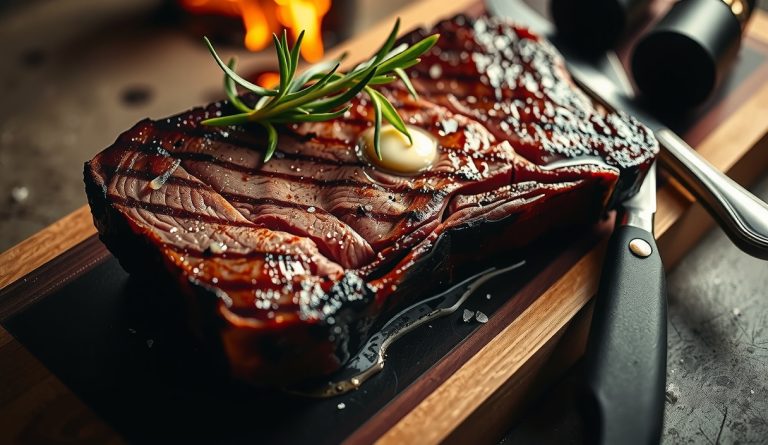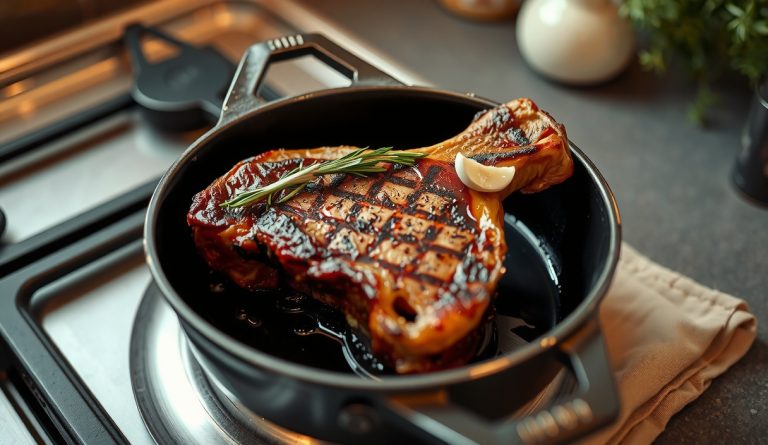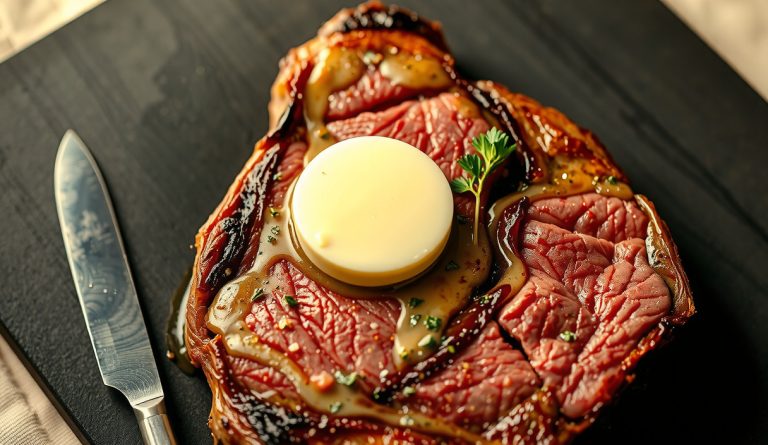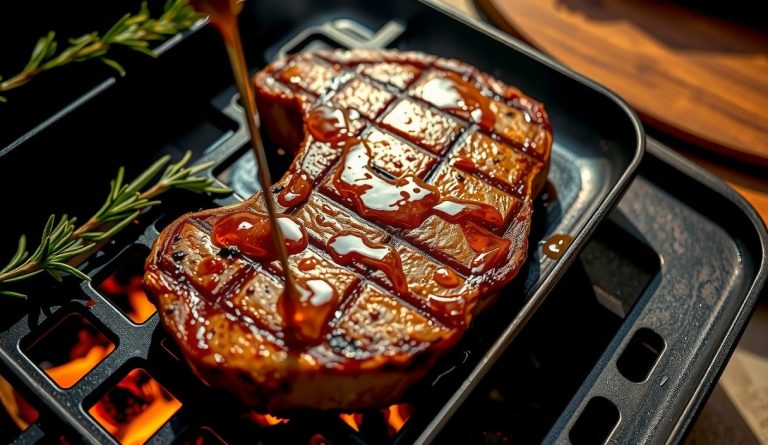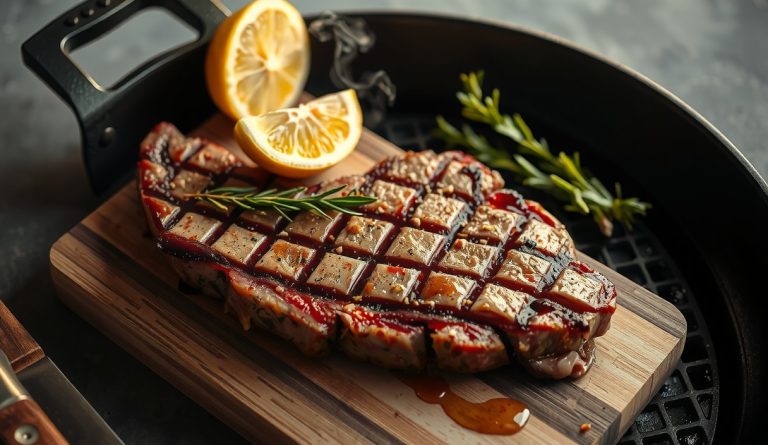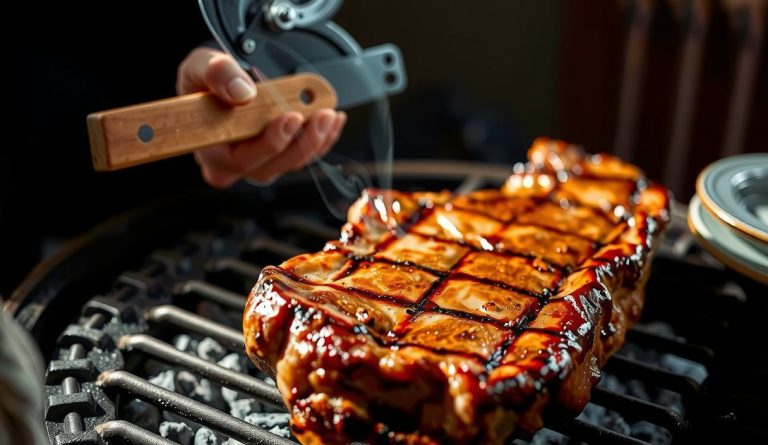
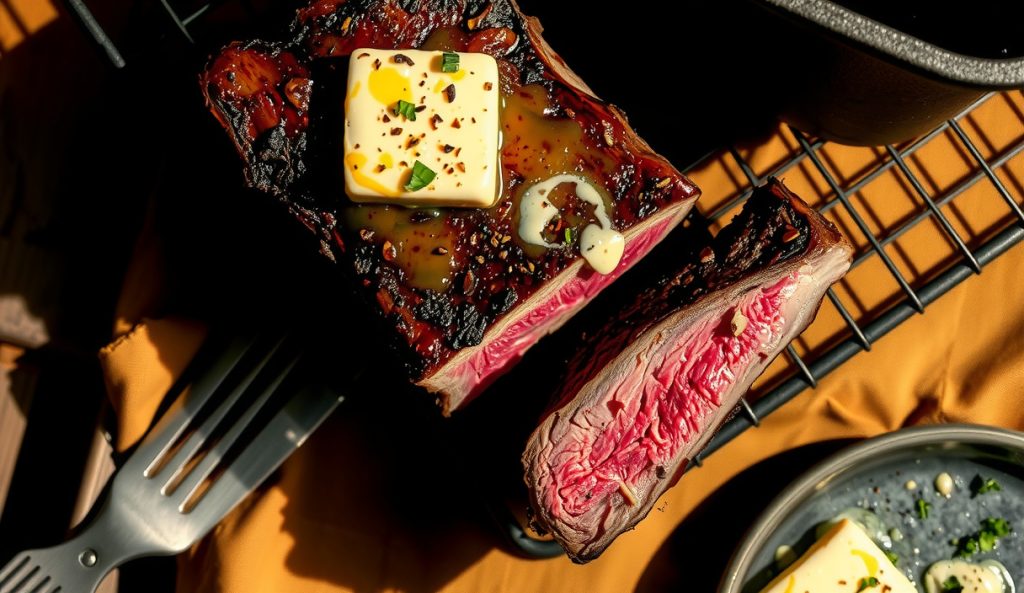
The reverse-sear ribeye is so naturally aligned with ketogenic eating that the adaptation work is almost embarrassingly small. A bone-in, well-marbled ribeye is predominantly protein and fat, and the core technique — dry-brine, low indirect heat, hard sear, rest — adds zero carbohydrates. The only place sugar exists in this recipe is in optional compound butter additions and any table sauce. Here is exactly where to look and what to do.
What actually changes for keto — and why?
Compound butter sweetener: If the canonical compound butter includes a touch of honey, reduced balsamic, or a sweet steak sauce to balance the horseradish and herb bitterness, replace it with a small amount of allulose. Allulose is the preferred keto sweetener here for a specific reason: unlike erythritol, allulose participates in Maillard browning and caramelization at nearly the same rate as sucrose. If you are finishing the steak with a brief compound butter baste during the rest, allulose will let the butter brown and develop nutty, caramelized flavor on the hot surface. Use allulose at a 1:1 swap for any sweetener in the butter, keeping the addition to one teaspoon or less per two-tablespoon butter portion.
Why not erythritol or monk-fruit blends? Erythritol recrystallizes as it cools, creating a faint cooling sensation and a gritty mouthfeel on a butter-finished steak — neither of which belongs on a reverse-sear ribeye. Monk-fruit blends behave similarly and do not melt the same way allulose does on a hot surface.
Table sauces: Worcestershire contributes roughly 1g of carbohydrate per teaspoon — minor, but it accumulates in a heavy-handed sauce. A.1. and most commercial steak sauces contain high-fructose corn syrup or molasses as their second or third ingredient and run 3–5g net carbs per tablespoon. Replace them with a pan-dripping reduction built from the steak’s own fond, a splash of dry red wine or beef stock, a knob of butter, and fresh thyme. Net carbs: effectively zero.
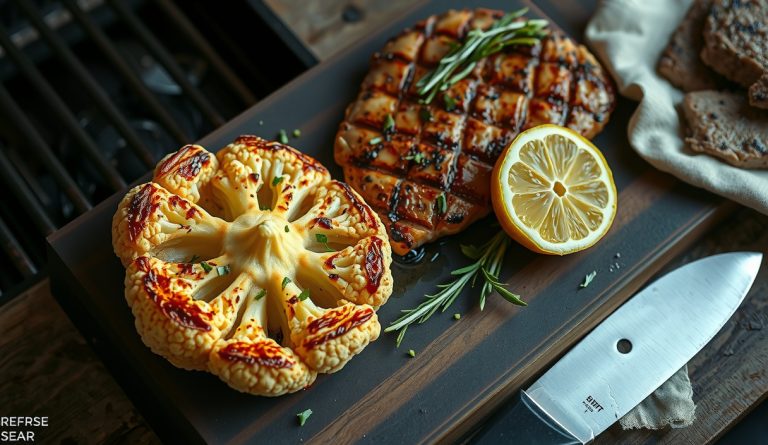
Sides and starch accompaniments: The canonical recipe’s natural companions — crusty bread to catch drippings, steak fries, or roasted potatoes — are the actual carbohydrate load in this meal. Replace them with roasted bone marrow, a wedge salad with blue cheese and bacon, smashed and seared cauliflower florets (which take on genuine Maillard browning at high heat when dried well), or crispy pork rinds as a textural contrast. Net-carb delta versus a potato side: approximately minus 25–30g per serving.
Macros on the steak itself: A 16-oz bone-in ribeye (USDA Choice) contains roughly 0g net carbs, 70–80g protein, and 55–65g fat depending on marbling grade. The dry-brine salt, cracked pepper, and smoke contribute no carbohydrates. The reverse-sear ribeye is already a keto-ideal protein-fat vehicle before any adaptation is applied.
What stays exactly the same — and why does it matter for keto?
Everything that matters stays unchanged: the uncovered refrigerator dry-brine, the two-zone 225°F indirect phase to 115°F internal, the maximum-heat Maillard sear, and the rest. The fat rendering during the indirect phase — intramuscular fat migrating through muscle fiber bundles as described in the original recipe — is not just palatability, it is your primary keto fuel source. Protect that fat by not overshooting the actin-collapse threshold at 165°F internal.
When is the keto version the better choice?
This is the version to run when the table is tracking macros or managing blood glucose — or simply when you want a sauce that tastes like the steak’s own concentrated self rather than a bottle. The single-ingredient audit takes two minutes and costs nothing in flavor.
The full timing, temperature targets, and fire setup live at the original recipe.