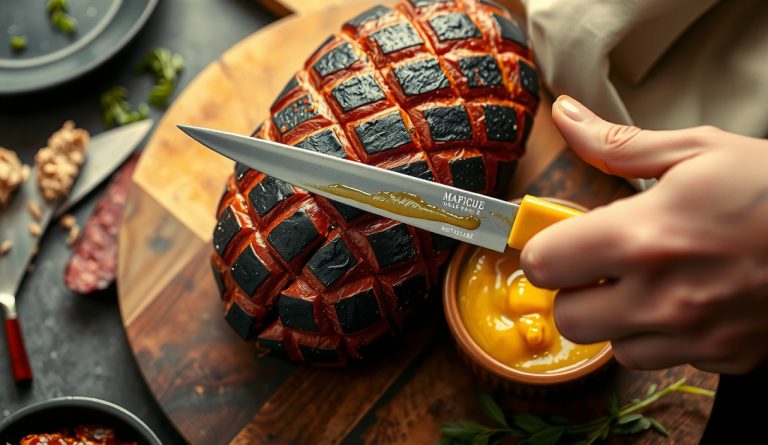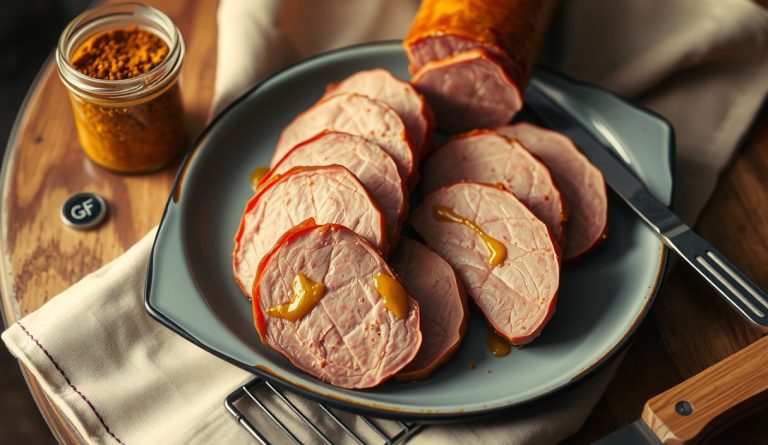
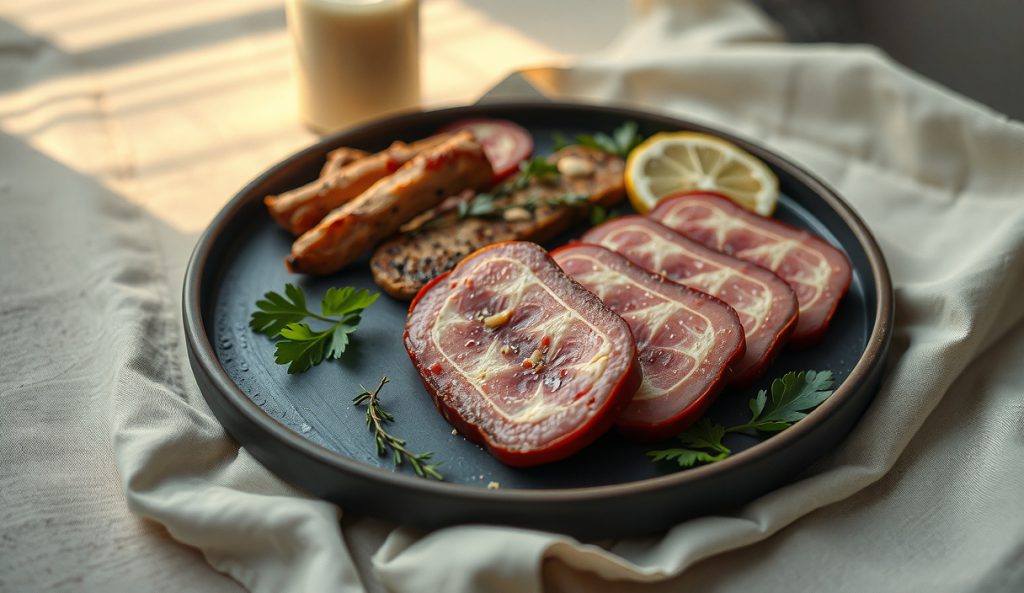
Low-sodium smoked bologna requires confronting an uncomfortable truth: bologna is a processed emulsion product, and its sodium content is baked into the manufacturing, not just the rub. A standard commercial chub delivers 520–590mg of sodium per 2-oz serving before you add a grain of rub. This adaptation focuses on what you can actually control — selecting a lower-sodium chub, reformulating the rub, and using smoke and aromatics as compensatory flavor levers — while being honest about the ceiling.
What changes when you make smoked bologna low-sodium?
Start with a reduced-sodium chub. Boar’s Head offers a lower-sodium bologna that runs roughly 25–30% less sodium than its standard formulation without meaningfully altering fat content or emulsion structure. This is your highest-leverage move — no rub adjustment saves as many milligrams as selecting the right product at the store. If a dedicated reduced-sodium bologna is unavailable, a natural-casing ring bologna from a local butcher made with a lighter cure can work; ask for the sodium panel.
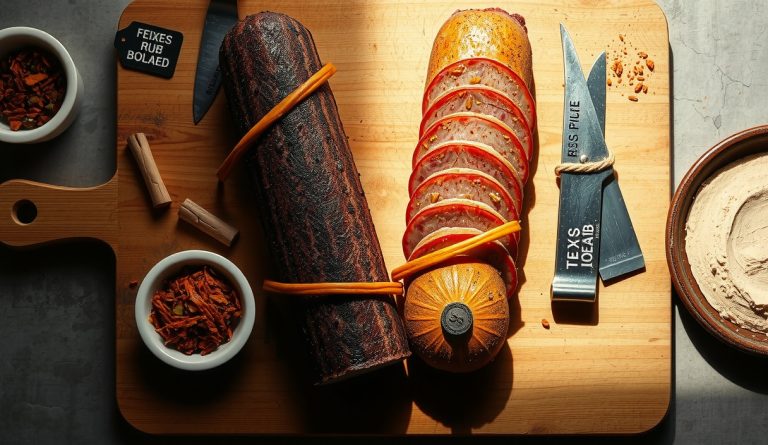
Rub salt: cut 60%, compensate with flavor architecture. Salt in the rub serves three roles in this recipe: seasoning, mild surface dehydration to assist bark development, and amplification of the Maillard flavor compounds. Reduce kosher salt in the rub by 60% — not to zero, because complete elimination collapses seasoning balance and blunts Maillard browning (sodium ions accelerate certain amino-carbonyl reactions). To rebuild aromatic complexity lost with the salt reduction, increase smoked paprika, add 1 teaspoon of lemon zest or orange zest (citrus peel’s limonene and citral carry brightness that mimics salt’s flavor-contrast function), add 1 teaspoon apple cider vinegar whisked into the mustard binder (acidity raises perceived flavor intensity without sodium), and increase cracked black pepper by 50% for structural heat.
Potassium chloride as a partial salt substitute is scientifically valid and practically useful here — it mimics sodium chloride’s ionic behavior in surface dehydration. Use a Nu-Salt or Morton Salt Substitute blend at a 1:1 replacement for the removed sodium portion. The honest caveat: potassium chloride has a detectable bitter, metallic edge at concentrations above roughly 0.4% w/w on the surface; on a smoked, fatty bologna with aggressive hickory phenolics, the bitterness threshold is somewhat masked, but it is not invisible. Keep the KCl contribution to no more than half the total chloride load.
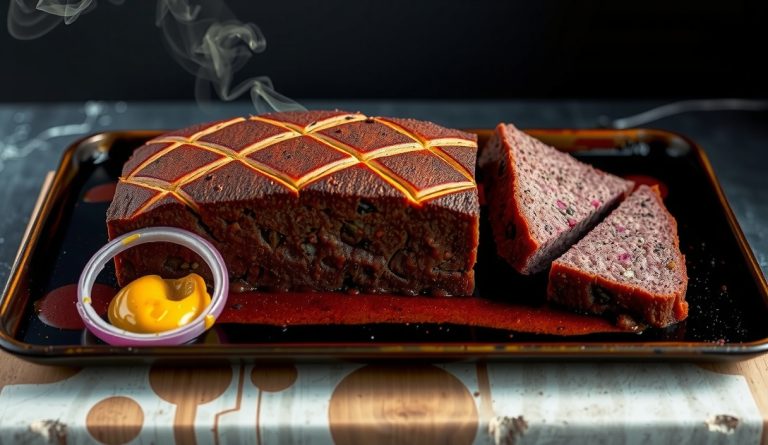
Bark will be slightly less aggressive — this is physics, not a recipe failure. Salt draws surface moisture via osmosis, accelerating the surface-drying step that precedes true Maillard territory. With less salt, the evaporative phase runs slightly longer and the bark forms more slowly. Compensate by running the smoker at the high end of the temperature range (235–240°F instead of 225°F) and extending the cook by 20–30 minutes uncovered. The bark will still form; it will simply be thinner and slightly less lacquered than the canonical version.
What stays the same in the low-sodium version?
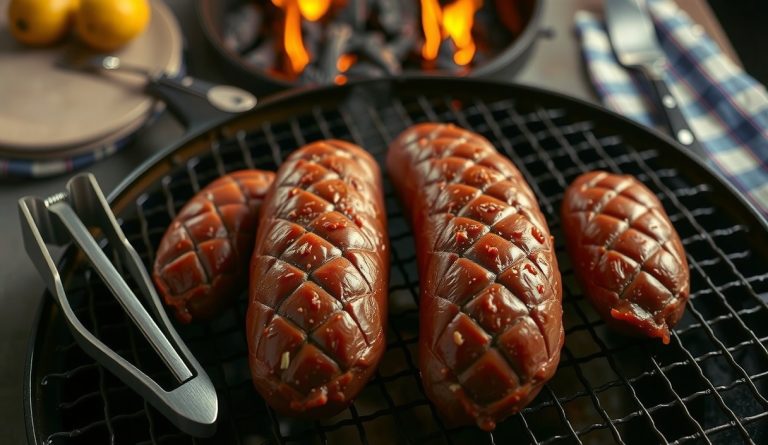
The scoring geometry, mustard binder, hickory wood selection, 4-hour smoke arc, smoke ring formation, and rest-and-slice protocol are all unchanged. Smoke deposition — the phenolic coating from hickory lignin pyrolysis — is independent of sodium level and delivers full flavor compensation from a different chemical pathway entirely.
Who is this low-sodium smoked bologna for?
This version is for guests managing hypertension, heart disease, or sodium-restricted diets where the 500mg-per-serving baseline of standard bologna is a hard ceiling. It is also a useful template for any BBQ cook who wants to understand which salt in their process is structural and which is merely habitual.
Full scoring, smoking, and slicing instructions are at the original Smoked Bologna — Oklahoma Steakhouse Style recipe.