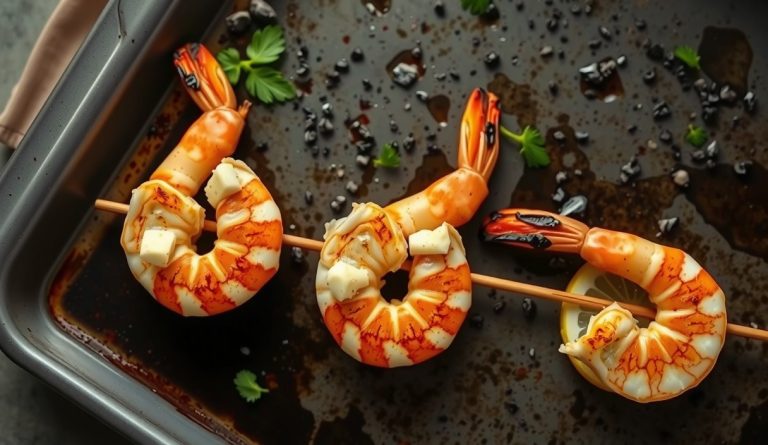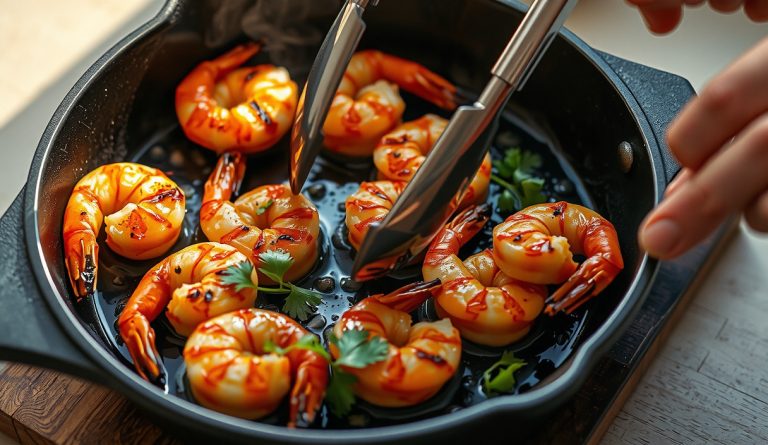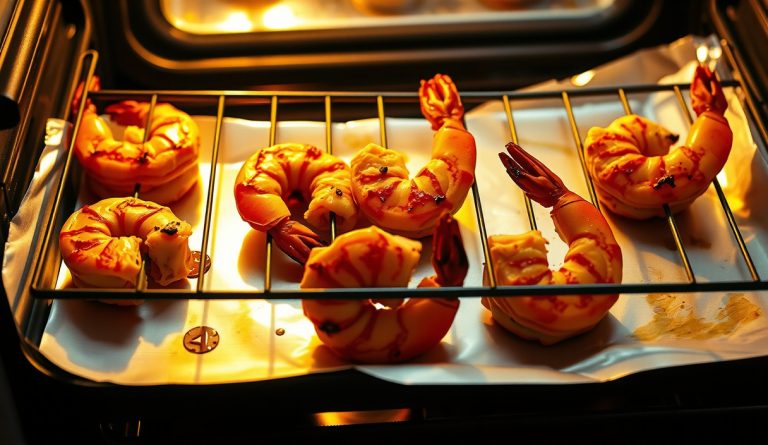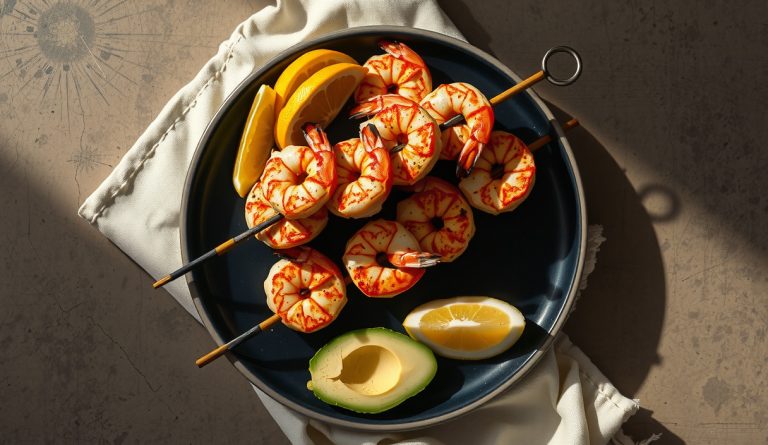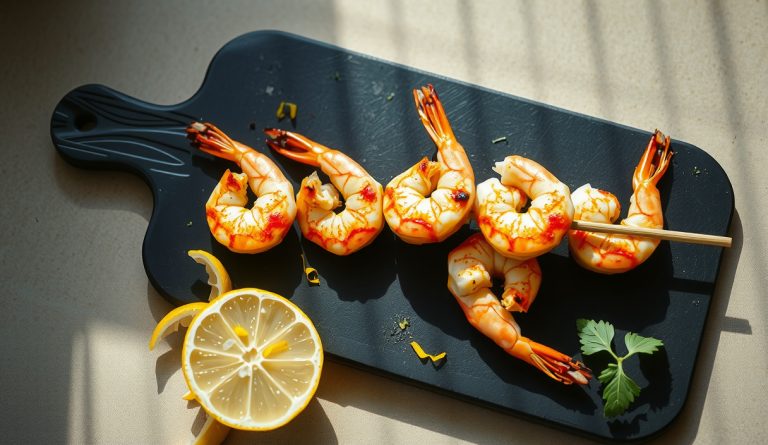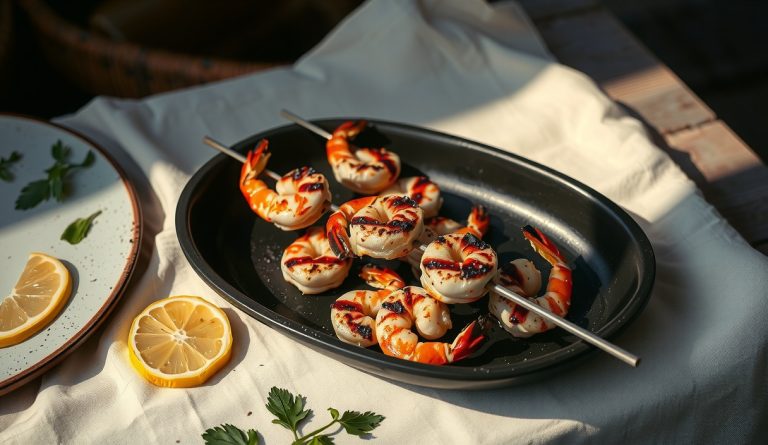
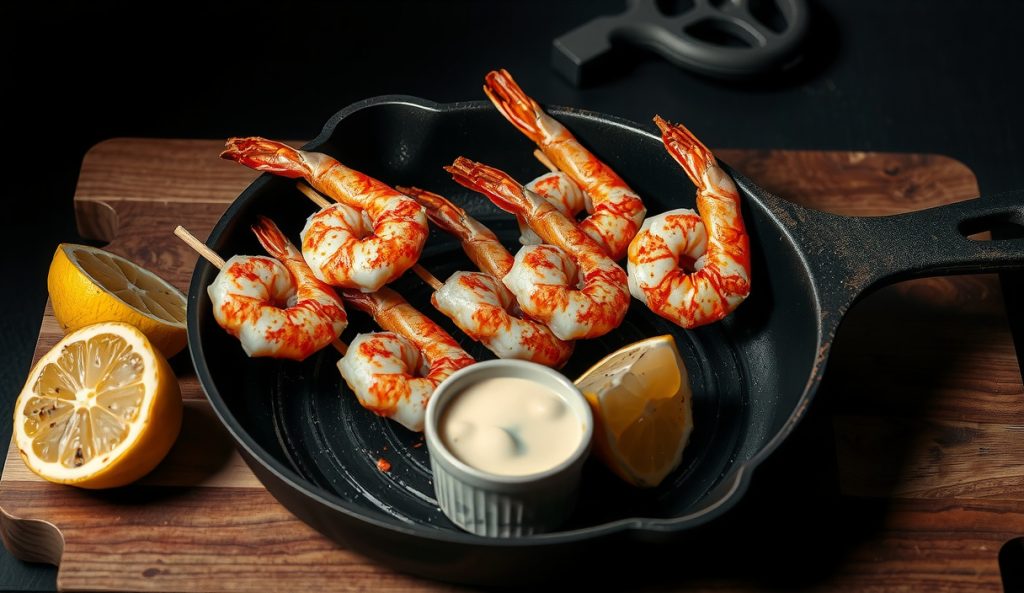
Good news first: shrimp, smoked paprika, cayenne, thyme, oregano, garlic powder, black pepper, and a neutral high-smoke-point oil are all inherently gluten-free. The canonical Cajun shrimp recipe is structurally very close to a safe gluten-free cook — but two quiet landmines require a deliberate audit before you light the grill.
What actually changes when you make Cajun shrimp skewers gluten-free?
The dry rub’s anti-caking agents. Commercial spice blends and pre-mixed Cajun seasonings frequently use wheat starch or wheat flour as an anti-caking carrier — listed on the label only as “starch” or omitted entirely under flavoring exemptions. If you are buying a pre-assembled Cajun rub rather than building the rub from individual spices, verify each tin carries a certified-GF mark (GFCO or equivalent). Building the rub from single-ingredient spices — smoked paprika, cayenne, dried thyme, dried oregano, garlic powder, onion powder, black pepper, salt — sidesteps the anti-caking problem entirely, because bulk whole or ground single spices almost never carry wheat-based fillers.
Worcestershire sauce and soy-adjacent condiments at the table. If the serving step involves a dipping sauce or compound butter that includes Worcestershire, know that most standard Worcestershire (Lea & Perrins U.S. formula excepted) contains barley malt vinegar — a gluten-containing grain derivative. Swap to a certified-GF Worcestershire or replace it with coconut aminos, which delivers the same umami-saline depth with zero gluten and approximately 65% less sodium. Any soy sauce in a butter baste should become tamari (brewed without wheat in most certified versions — check the label) or coconut aminos.
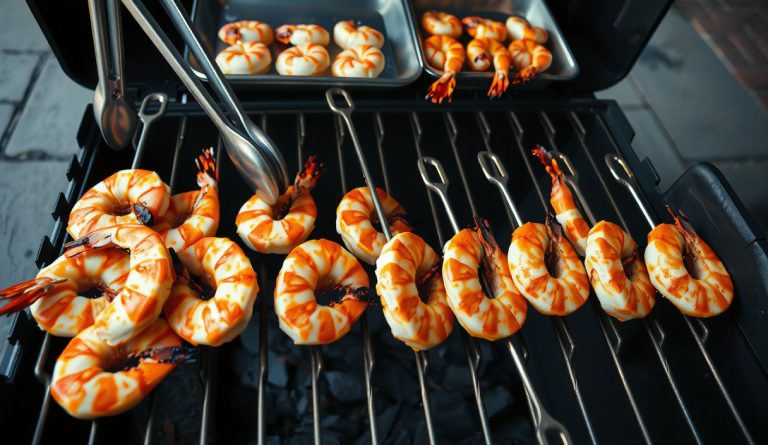
Cross-contamination at the grill. A wire brush that previously scrubbed a bun-toasting grate, or a marinade brush dipped into a shared bowl with breaded items, can deposit enough gluten protein to trigger a celiac response. Use a dedicated stainless scraper for the grate and a fresh silicone basting brush. Metal skewers are inert; bamboo skewers are naturally gluten-free but confirm they were not packaged with wheat-based coatings (rare but documented). The grate oil — any neutral high-smoke-point oil applied directly to the bars — carries no gluten risk.
What stays exactly the same in the gluten-free version?
The entire cook is completely unchanged. The 500°F direct-sear setup, the two-minute-per-side timing, the dual-point skewering technique to prevent C-curl, the smoked paprika Maillard cascade, and the 140–145°F internal temperature target all remain identical. Smoke, fire, shrimp protein chemistry, and the Cajun flavor triad of paprika, cayenne, and thyme are all naturally gluten-free. You are not compromising one milligram of crust or flavor by going gluten-free here.
Who should use the gluten-free version of this recipe?
This audit matters for the roughly 1% of the population with celiac disease and the broader group with non-celiac gluten sensitivity. It also matters any time you are cooking for a mixed crowd and want one skewer tray that everybody can eat without interrogating the rub tin. Building the Cajun rub from scratch — a five-minute task — removes all ambiguity and produces a fresher, more volatile terpene profile than any pre-mixed commercial blend, regardless of gluten status.
Follow the full timing, skewering, and heat-zone method at the original Grilled Cajun Shrimp Skewers recipe.