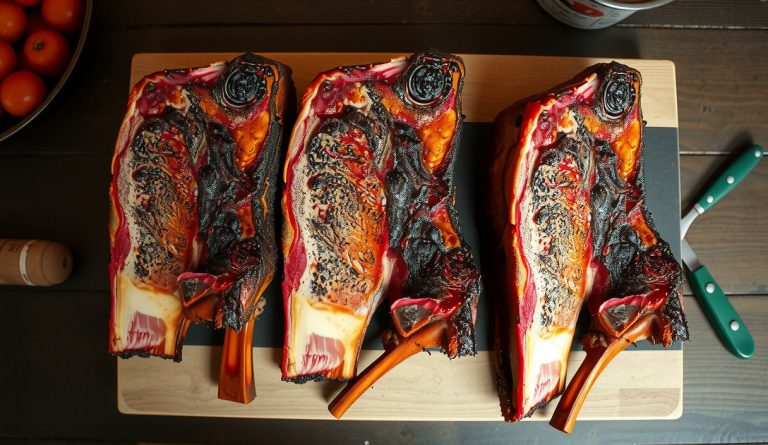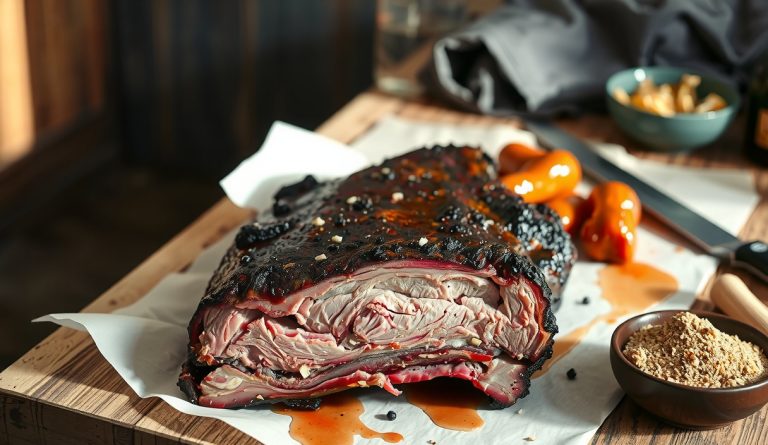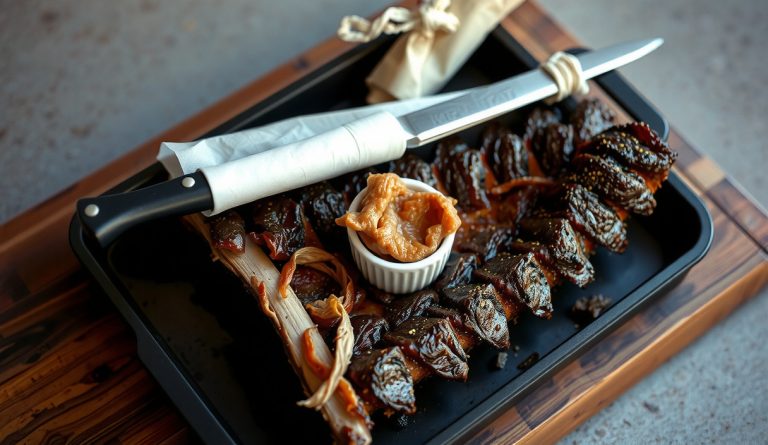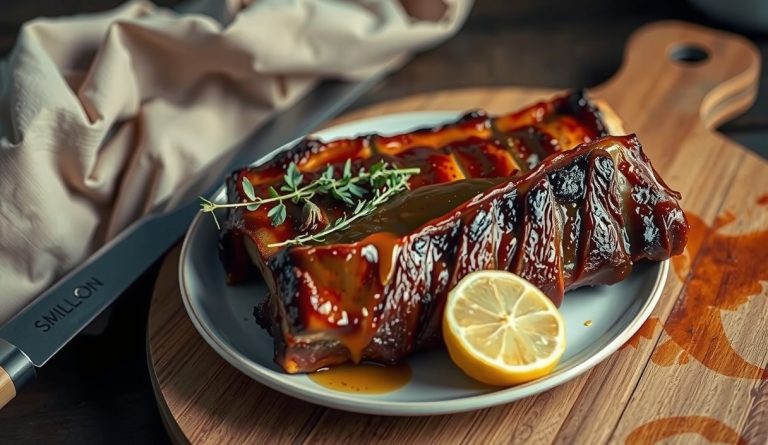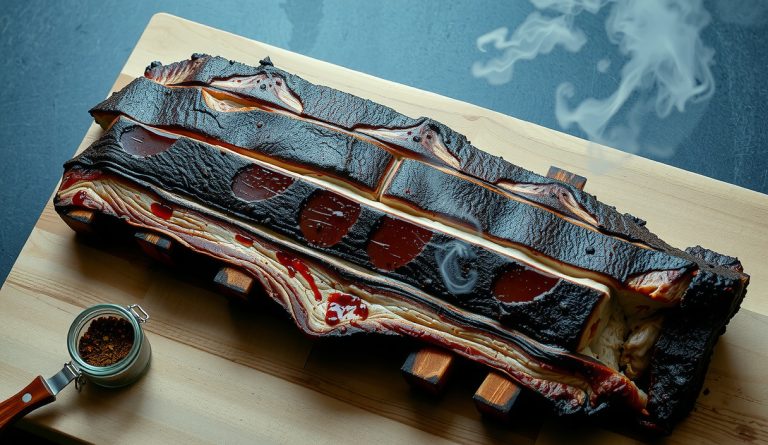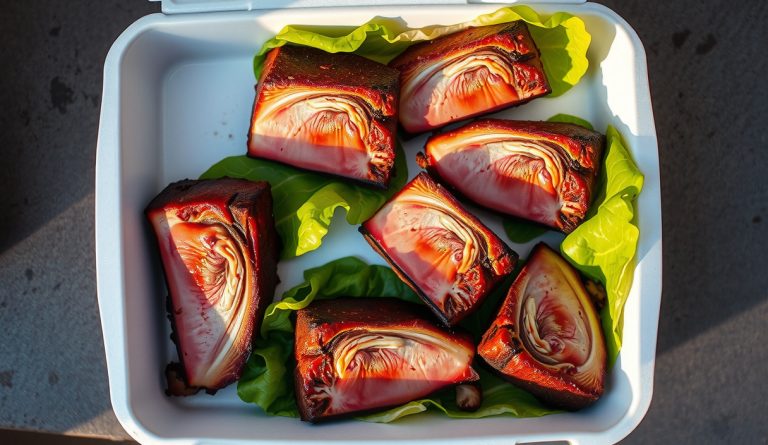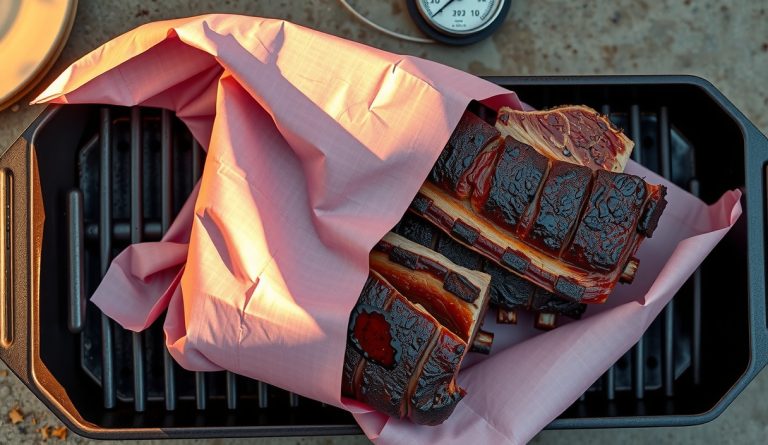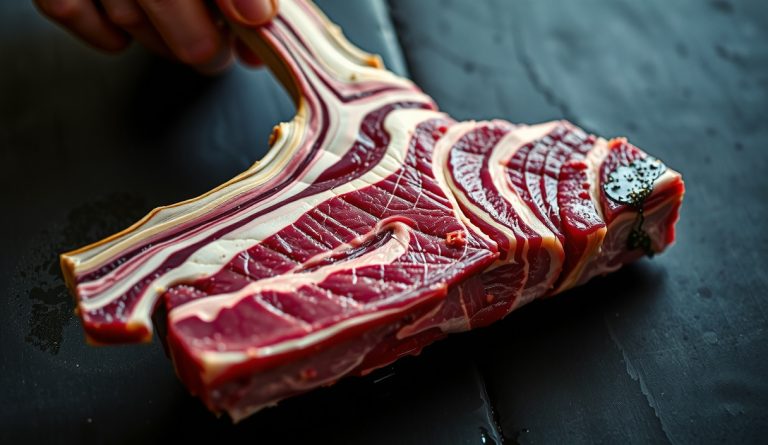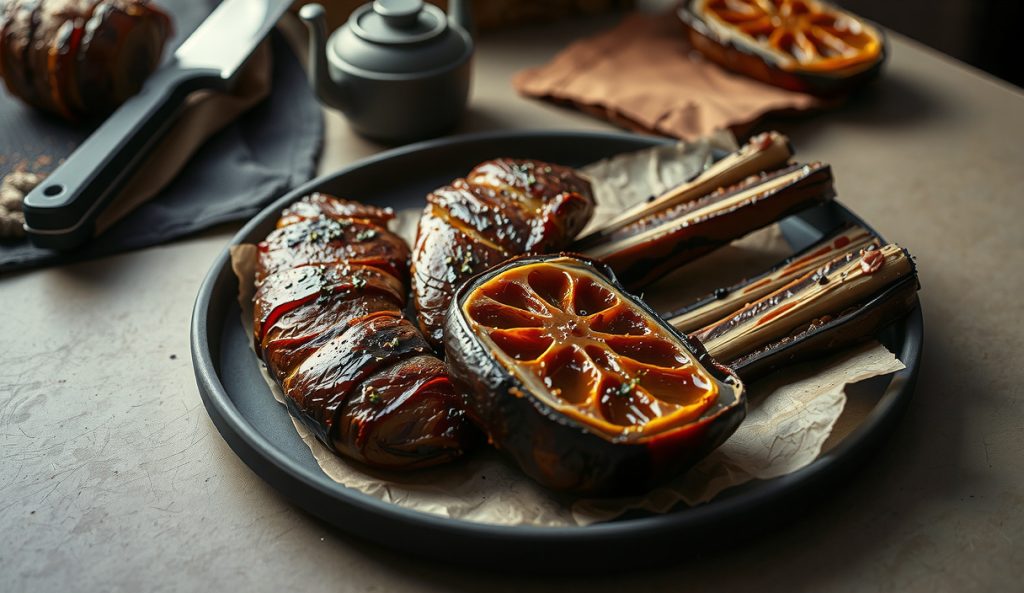
This vegetarian companion is not a replacement for plate ribs — nothing grown in the ground replicates 2.5 inches of collagen-marbled beef muscle. What this dish is: a companion cooked on the same pit, with the same rub, over the same post-oak smoke, earning its place at the table on its own terms. The vehicle is the king oyster mushroom stem — the one plant structure with the density, fiber alignment, and moisture content to absorb smoke, build a bark, and deliver a genuinely satisfying textural experience alongside the real thing.
What changes when you cook the vegetarian companion?
The analog — king oyster mushroom steaks: Select king oyster mushrooms (Pleurotus eryngii) with stems at least 1.5 inches in diameter. Cut each stem into 3-inch cylinders, then score the cut faces in a 1 cm crosshatch to a depth of 5 mm. This scoring is mechanically critical: it opens the dense mycelial fiber matrix, increases surface area for Maillard reactions, and creates channels for smoke-borne phenolic compounds — guaiacol and syringol — to penetrate the interior rather than simply coat the surface. King oyster mushrooms have a lower water activity (~0.97) relative to other mushrooms, which means the king oyster mushroom does not instantly steam out and collapse on a hot grate the way a portobello would.
Rub — same formula, one addition: Apply the canonical 50/50 coarse kosher salt and 16-mesh black pepper directly to all surfaces, including the scored faces. Add 1 teaspoon of smoked paprika per pound of mushroom — mushrooms carry far less intrinsic lipid than beef, so the paprika’s carotenoid pigments compensate visually for the absence of rendered-fat browning and contribute a secondary Maillard substrate. Bind the rub with a thin coat of neutral oil such as refined avocado or grapeseed: mushrooms lack the surface protein and collagen that make beef naturally tacky, so the oil provides the adhesion layer the rub needs to stay in contact through the full cook.
Cook temperature and time — adjusted: Run the pit at the same 250°F over post-oak, but the cook time is 2 to 3 hours, not 8 to 10. There is no collagen to hydrolyze. Target an internal temperature of 185°F–190°F, at which point the mushroom’s chitin-reinforced cell walls have softened, free moisture has largely evaporated from the surface, and Maillard browning on the scored faces is deep and caramelized. Pull the mushroom steaks and rest them on a rack for 10 minutes uncovered — do not wrap, because trapped steam will re-soften the bark. The texture target is a slightly resistant outer crust giving way to a dense, meaty, fiber-aligned interior that pulls apart along the score lines.
Smoke uptake: King oyster mushrooms are efficient smoke sponges relative to beef. The porous mycelial structure of the king oyster mushroom absorbs phenolic smoke compounds readily — 2 to 3 hours of post-oak exposure delivers a smoke-flavor intensity comparable to what 8 hours builds on a beef slab. Do not over-smoke: a single addition of post-oak chunks at the start and one replenishment at the 90-minute mark is sufficient for full penetration without bitterness.
What stays the same as the beef rib cook?
The pit temperature of 250°F, the post-oak wood, the canonical 50/50 salt-and-pepper rub, and the serving board all remain identical to the beef rib cook. These mushroom steaks come off the same cooker, carry the same smoke-ring aesthetic on their cut faces, and get plated at the same moment the beef ribs rest — a companion dish built from the same fire, not an afterthought assembled from a foil pan in a corner.
When is the vegetarian companion the better choice?
Any table that includes vegetarian guests benefits from a companion dish cooked with the same intention and the same fire. These king oyster mushroom steaks are not a consolation dish — they are a reason to fire the pit for a longer cookout and let every guest eat from the same smoke. The full beef method and science live at the original Smoked Beef Ribs — Dino Bones recipe.